
Yulong River Bamboo Rafting: Routes, Prices and Piers
Compare Jinlong Bridge and Shuiedi bamboo-raft routes near Yangshuo: fares per raft, different finish piers, weirs and the checks to make before paying.
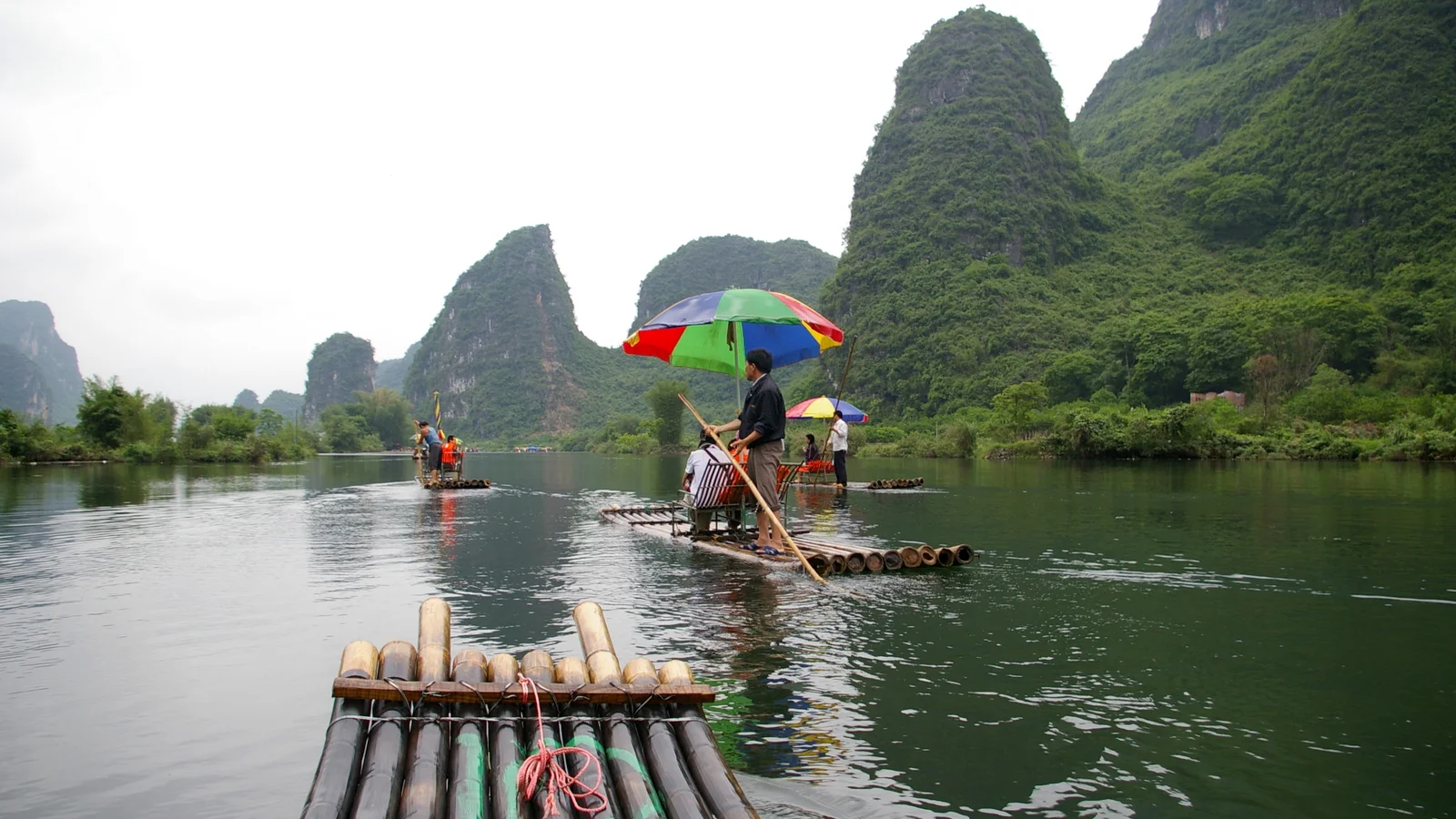
A Yulong River bamboo-raft ticket buys a named section of the river near Yangshuo, so choose the departure and finish piers before comparing prices. Jinlong Bridge takes you downstream to Jiuxian; Shuiedi finishes beside Gongnong Bridge. Those different endpoints affect the rest of your day as much as the length of the ride. A car waiting at the departure pier won’t automatically be useful when you step off somewhere else.
A boatman punts the raft downstream with a long bamboo pole, between rice fields and karst, and every so often you go over a weir: nine on the long route, four on the short one. It’s a separate outing from the Li River cruise, on a smaller river. The Guilin and Yangshuo guide places it in a longer stay, and our Yangshuo base guide helps if you’re choosing between a town room and a Yulong guesthouse; the two routes below are two of the more than a dozen in the operator’s catalogue.
Two river sections with different destinations
Jinlong Bridge to Jiuxian
The operator listed Jinlong Bridge at ¥320 per raft, about US$48, £36 or €43, when checked on 16 October 2026. The operator places Jinlong Bridge on the river’s upper reaches, about 12 km from Yangshuo county town and about 3 km from Baisha town, with the pier right beside the bridge. Its route runs 6.18 kilometres from Jinlong Bridge pier to the Jiuxian integrated wharf and descends nine weirs. Choose this option if the longer of these two river sections is the main activity you want to give the day.
The route description draws attention to the shapes of the surrounding hills and their reflections between the weirs. The card names the hills you pass with the playful labels locals use: Snail Hill, Frog Hill, Bat Hill, Five Finger Hill and one it calls the “map of China”. Jiuxian village also appears among nearby places of interest. That gives you a possible direction for the afternoon after landing, not a list of stops the raft will make; arrange any village visit and the ride from the wharf separately.
The finish name is worth keeping with your booking. Show a driver or your accommodation both Jinlong Bridge and Jiuxian, and ask them to identify the actual collection point at the latter. “Jinlong Bridge” alone doesn’t tell a driver where to meet you after the ride.
Shuiedi to the wharf beside Gongnong Bridge
Shuiedi’s listed fare was ¥200 per raft, about US$30, £23 or €27, on the operator catalogue checked on 16 October 2026. This route covers 2.48 kilometres and four weirs, finishing at the integrated wharf beside Gongnong Bridge. It’s a shorter section with a different finish, not a cut-price Jinlong: per kilometre it’s the dearer ride, about ¥81 against ¥52, and the long route gives you two and a half times the river and more than twice the weirs for 1.6 times the price.
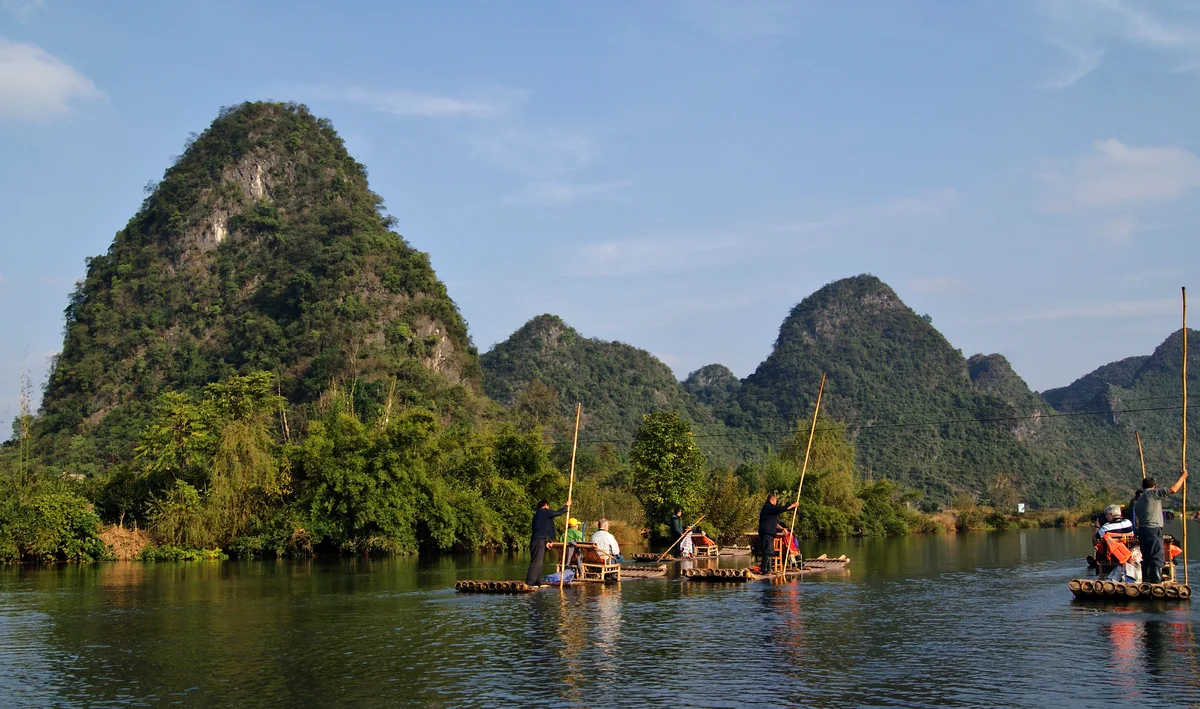
The operator places the Shuiedi pier on the river’s middle reaches, about 6 km from Yangshuo county town, so it’s the nearer of the two to town. Its card lists Echo Hill, Taro Hill, Longevity Hill and views towards Moon Hill along the way, with the villages of Shuiedi and Zhudoucai among nearby sights. The raft fare doesn’t cover a climb or a ride from the finish, so check how you’ll get on from Gongnong Bridge.
Don’t turn the difference in kilometres into a promised journey time. Ask for the expected duration and operating arrangements for your chosen departure, then leave room around the answer. The river distance helps you choose the section; it doesn’t tell you when you’ll be back at your accommodation or ready for a train.
Read the unit beside the price
Both tariffs are per raft, and the operator’s cards for these two routes don’t give a capacity, so ask how many people the raft takes before you split the fare. A per-person excursion price can include the raft, the drive and a guide, so ask for the breakdown before you call it expensive.
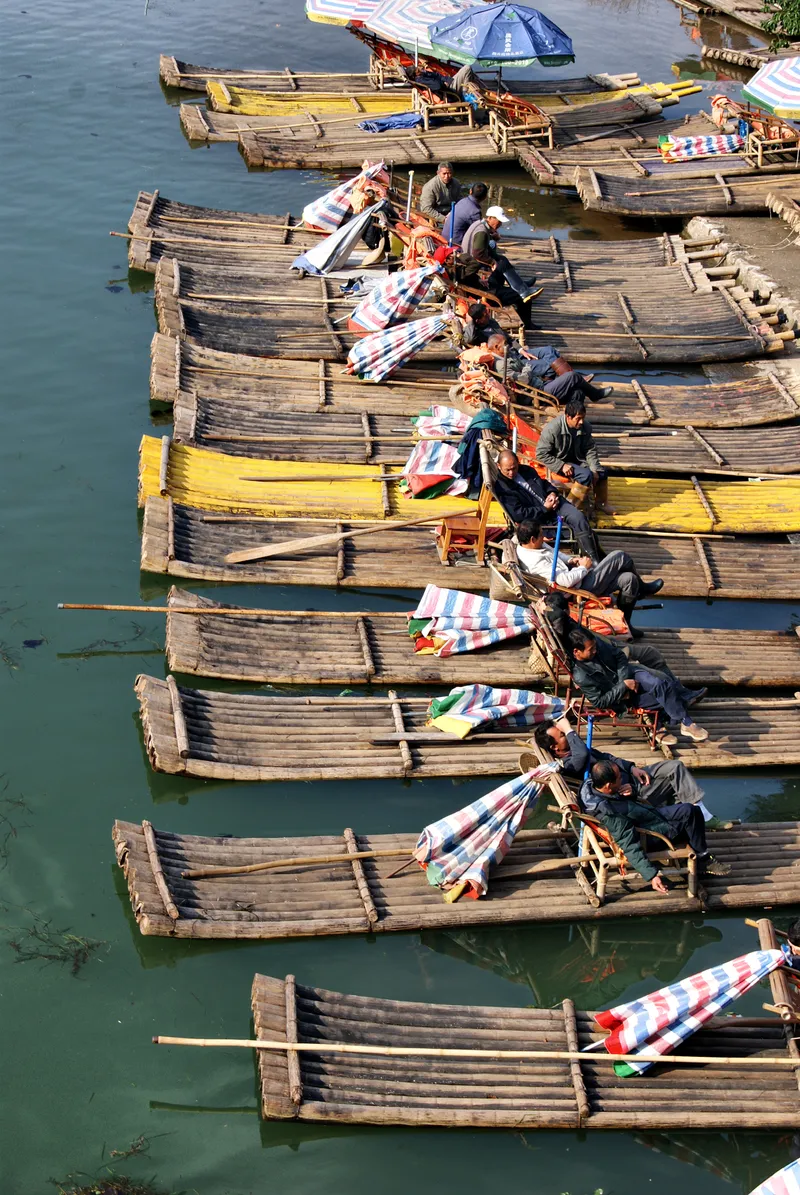
The catalogue lists several departures at similar prices, so get the boarding and landing piers named in the confirmation, plus any substitute if your route isn’t running. Our guide to paying in China covers the payment side; check which method this seller or pier takes.
Settle passenger eligibility before travelling to the pier
Fewer weirs on Shuiedi don’t settle who may ride it. Send the operator the real ages of the passengers and any mobility needs, ask about height and weight limits and how boarding works at both ends, and ask how a foreign passport is entered. If an excursion company booked it, find out who sorts out a problem at the gate and whether they’ll be there.
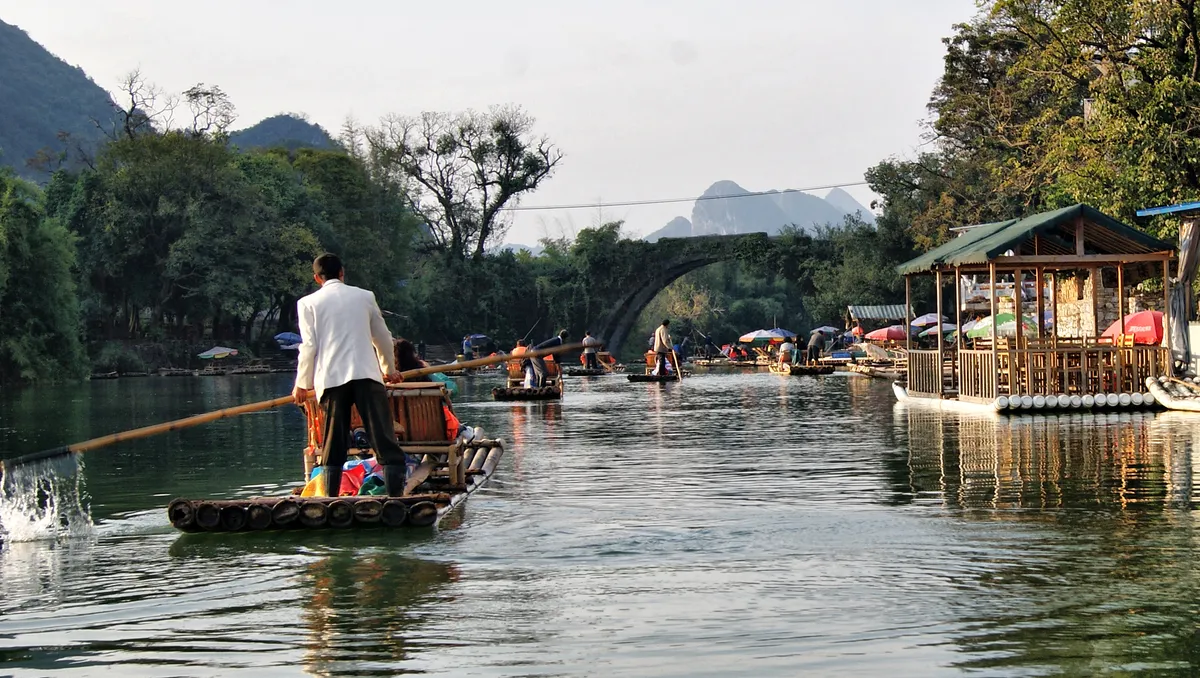
Once you’re at the pier, follow the staff’s boarding and safety instructions. Pack so that loose possessions are easy to secure, and ask about carrying bags before bringing your main luggage. The weirs are part of the route, so secure anything loose before the first one.
Arrange the road journey at both ends
Plan the raft and the road as two things, even when one company sells both. Establish the meeting point for the outward trip, the landing wharf for collection and where the vehicle will take you afterwards. If return transport is included, ask what the booking calls the return destination: your hotel, the original pier or a central meeting point can mean different arrangements.
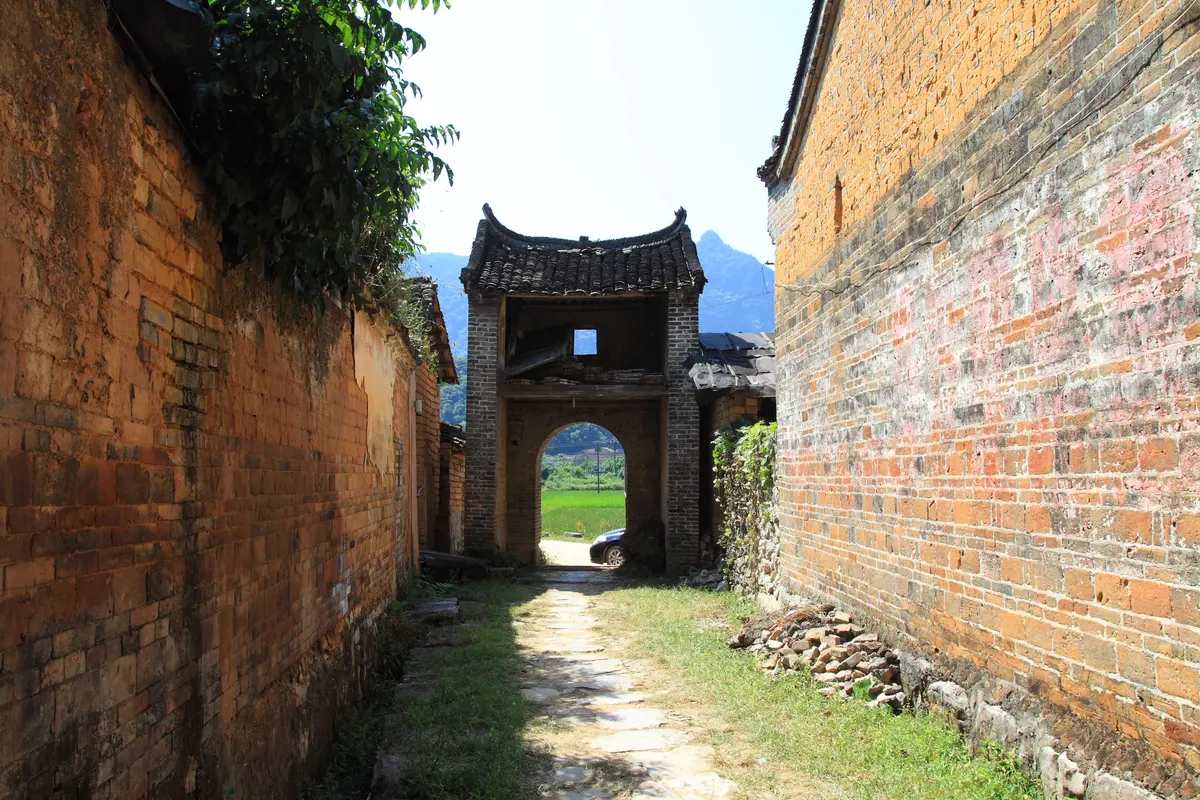
For Jinlong Bridge, you might want to explore around Jiuxian after the ride; tell the driver that before agreeing a collection time. With Shuiedi, plan around the finish beside Gongnong Bridge. In either case, avoid arranging the rest of the day around an assumed road-transfer time. Ask for an estimate based on your actual accommodation and the selected wharf.
A bicycle creates the same problem in a smaller form. Before cycling to the start, decide where it will remain and how you’ll recover it. Ask outright whether a bike or bags can go on the raft or in a shared transfer. It may be simpler to organise the river outing separately from a cycling excursion.
If you’re leaving Yangshuo that day, keep the connection to the railway station or airport separate in your planning. Decide how much slack you need before you book the ride. A later departure on paper is useful only if the final road journey, collection point and luggage arrangements also work.
Send the operator a complete request
A message that says only “Yulong rafting” leaves too much open. Give the date, named route, passenger details and preferred departure period, then ask for the exact departure arrangement and total price. Include the finishing wharf and whether you need road transport. You’re trying to get an answer you can use at the pier, rather than another general description of the river.
For example: “We’d like the Shuiedi route finishing beside Gongnong Bridge on our chosen date. These are our passengers’ ages and any relevant requirements. Please confirm eligibility, raft capacity, the documents and payment method needed, departure arrangements and whether transport from the finish is included.”
Ask what happens if high water or weather stops your route that day: a refund, another date or another section. Then check again on the morning you head to the pier.
Read also

What to see · 8 min read
Huangshan Tickets: Gates, Cableways and a Mountain Stay
Verified · 15 November 2026Plan Huangshan around the right entrance, separate cableway fares, three-day entry rules and seasonal hours, with the 2026 tariff expiry made clear.

What to see · 7 min read
Jiuzhaigou Valley Tickets and a Full Day in the Park
Verified · 15 November 2026Plan Jiuzhaigou around its lake valleys, separate entry and park-bus prices, passport reservations and the transfer from Huanglong Jiuzhai station.

What to see · 8 min read
Shanghai Disneyland Tickets: Prices, ID and Premier Access
Verified · 15 November 2026Shanghai Disneyland adult tickets run RMB 475-799 by date, children and over-60s pay about 25% less. Passport rules, Premier Access and refunds.

What to see · 7 min read
Zhujiajiao Tickets: Gardens, Boats and a Free Town Walk
Verified · 15 November 2026Walk Zhujiajiao free, choose separate garden tickets or the three-site combo, and check a rowing boat’s route, fare and finishing pier before boarding.