
Jiuzhaigou Valley Tickets and a Full Day in the Park
Plan Jiuzhaigou around its lake valleys, separate entry and park-bus prices, passport reservations and the transfer from Huanglong Jiuzhai station.
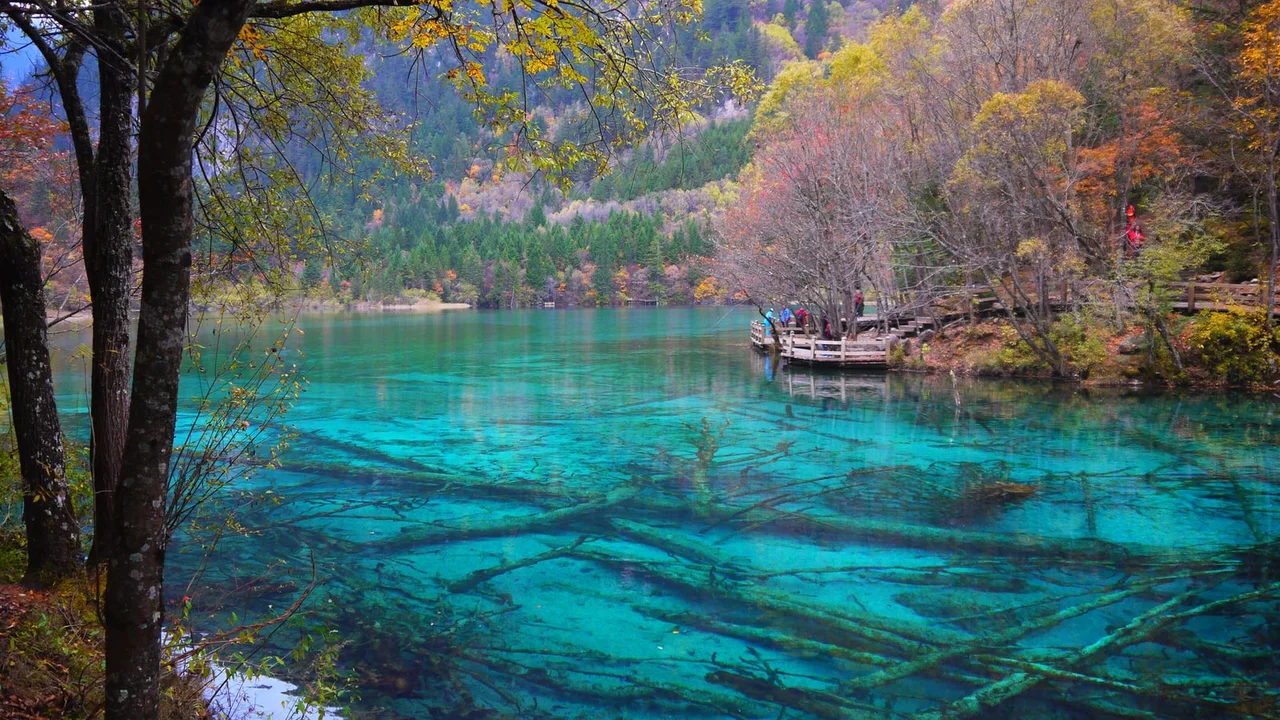
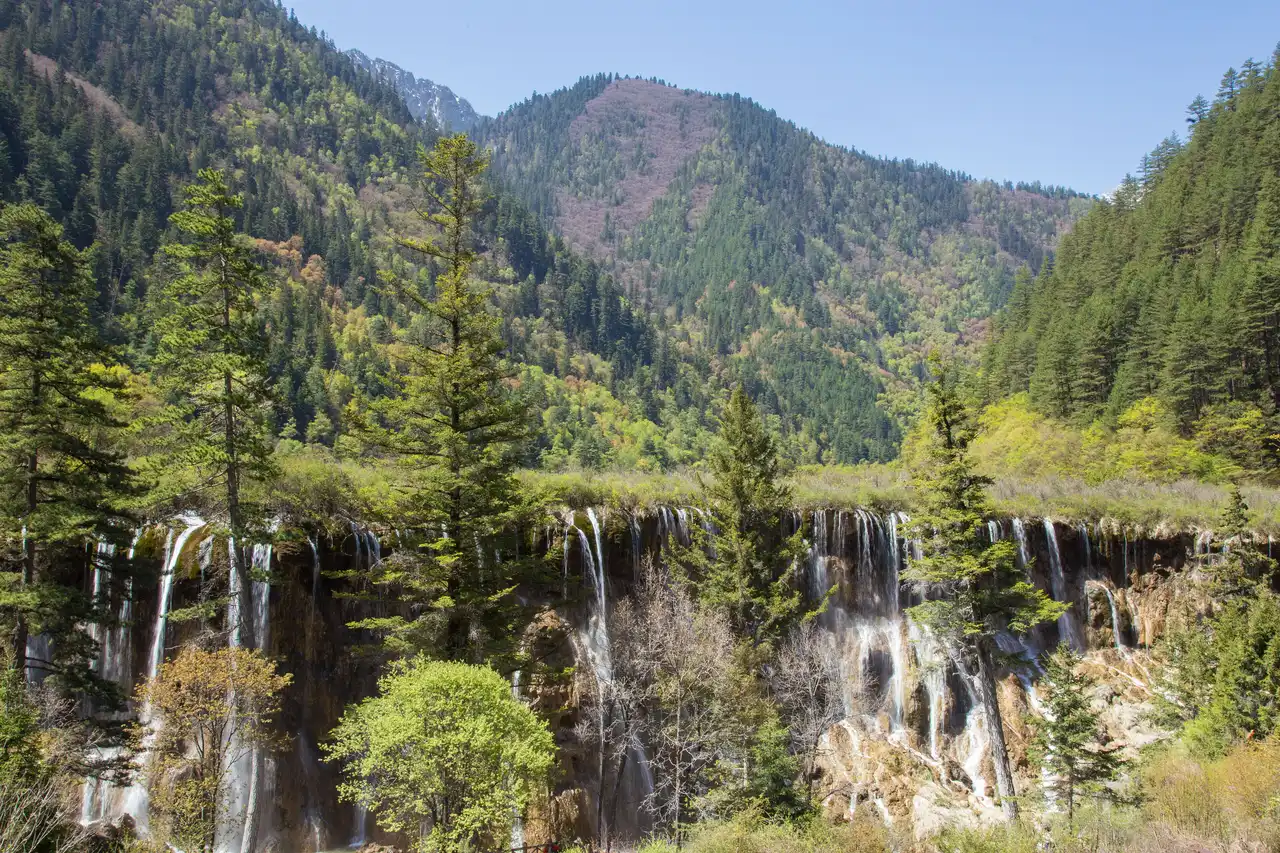
From 16 November 2026 to 31 March 2027, Jiuzhaigou Valley charges ¥80 for entry and ¥80 for the park bus, ¥160 together (about US$24, £18 or €21.35); from 1 April, the operator’s ticket page lists its regular rate of ¥190 plus ¥90, ¥280 (about US$42, £31.50 or €37.35). Give Five Flower Lake, Long Lake and the falls around Nuorilang a full day, because they sit in different branches of the valley. And the railway station named Huanglong Jiuzhai is still about two hours by road from the park entrance, so reaching it doesn’t mean you’ve reached the lakes.
For a first visit, a useful plan is to arrive in the area, sleep near the park entrance and visit the following morning. You can then use the daylight for the valley rather than spending the first part of it collecting luggage and finding your onward bus.
Use the valley map before choosing a walking route
The main visitor area forms a Y. Shuzheng Valley is the lower stem; Rize Valley and Zechawa Valley form the upper branches. Nuorilang is the connection to recognise on the park map. The operator’s suggested visits combine sightseeing buses with walking, so don’t approach the entire valley as a continuous walk from the entrance.
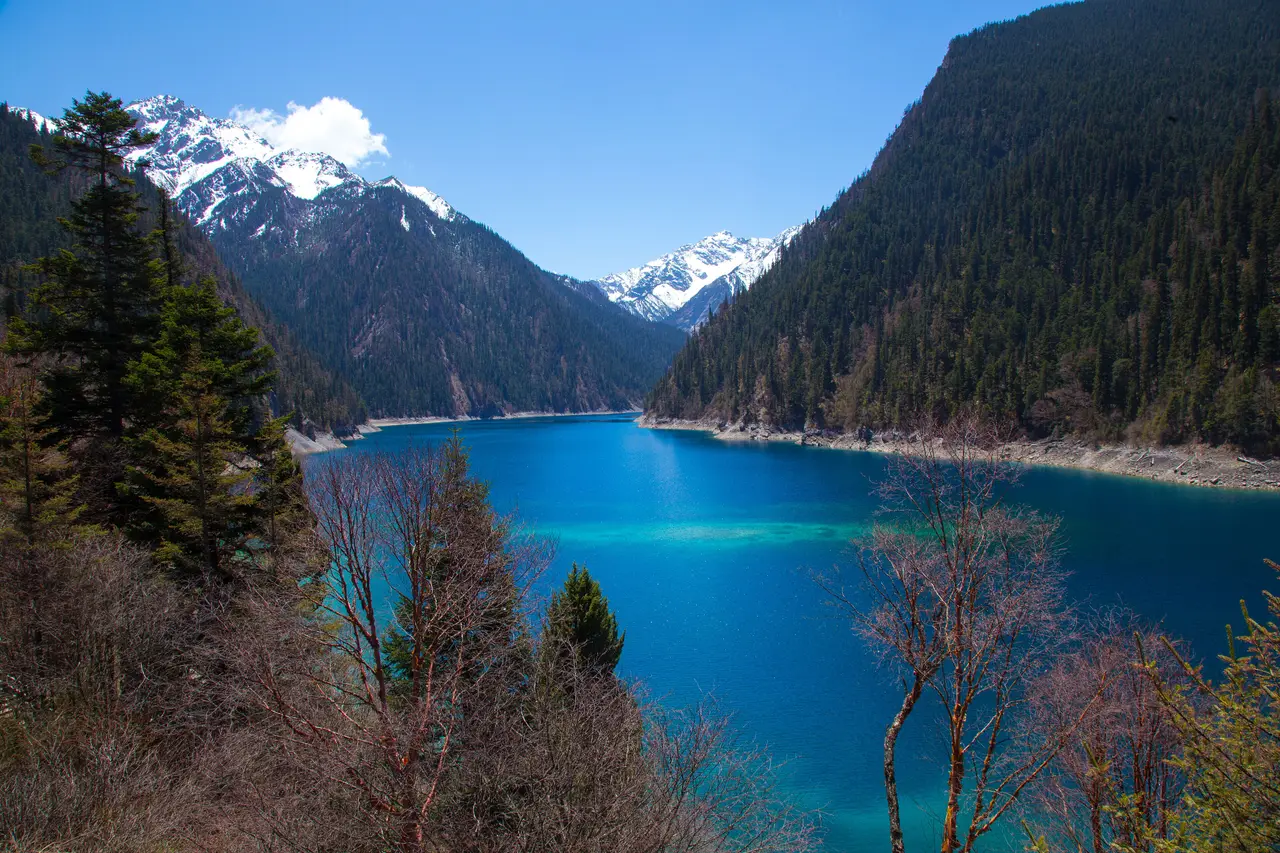
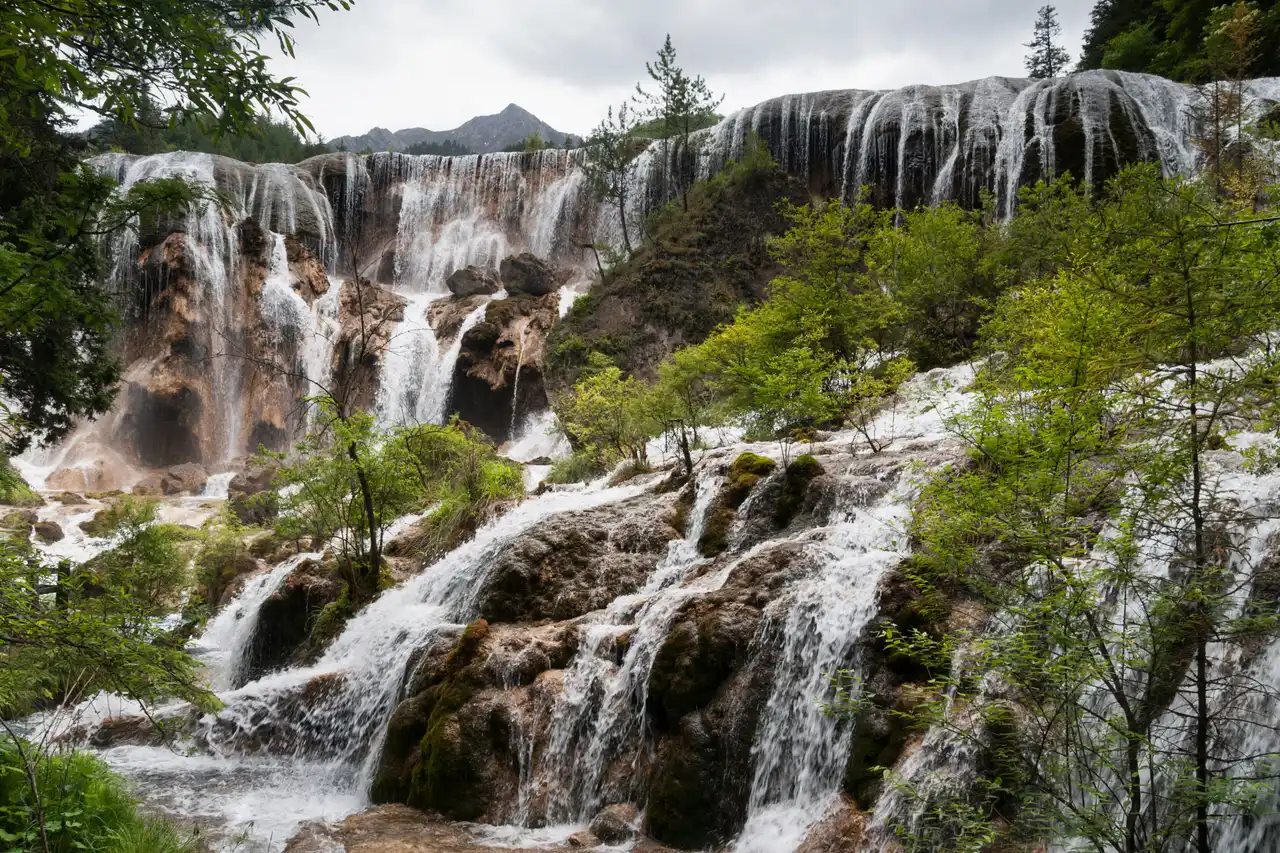
In Rize, Five Flower Lake offers clear views into coloured water and submerged wood; Pearl Shoal adds flowing water and a waterfall. Zechawa contains Long Lake and Five Colour Pond. Lower down, Shuzheng brings together lakes, cascades and the village landscape.
On arrival, compare that wish list with the day’s open areas and staff directions. If the first bus serves one branch, organise your stops around it. Keep Nuorilang in mind when changing branches, and leave enough time for the lower valley on the way out. A rigid list of photographs in a fixed order can create unnecessary backtracking.
Take the walking sections at a pace that lets you look at the water rather than continually watching the clock. At each stop, identify where you’ll next board a bus before setting off along the path. If anyone in your group needs an easier visit, ask about the actual steps and open walking sections; the buses link the viewpoints, but that doesn’t make every viewpoint step-free.
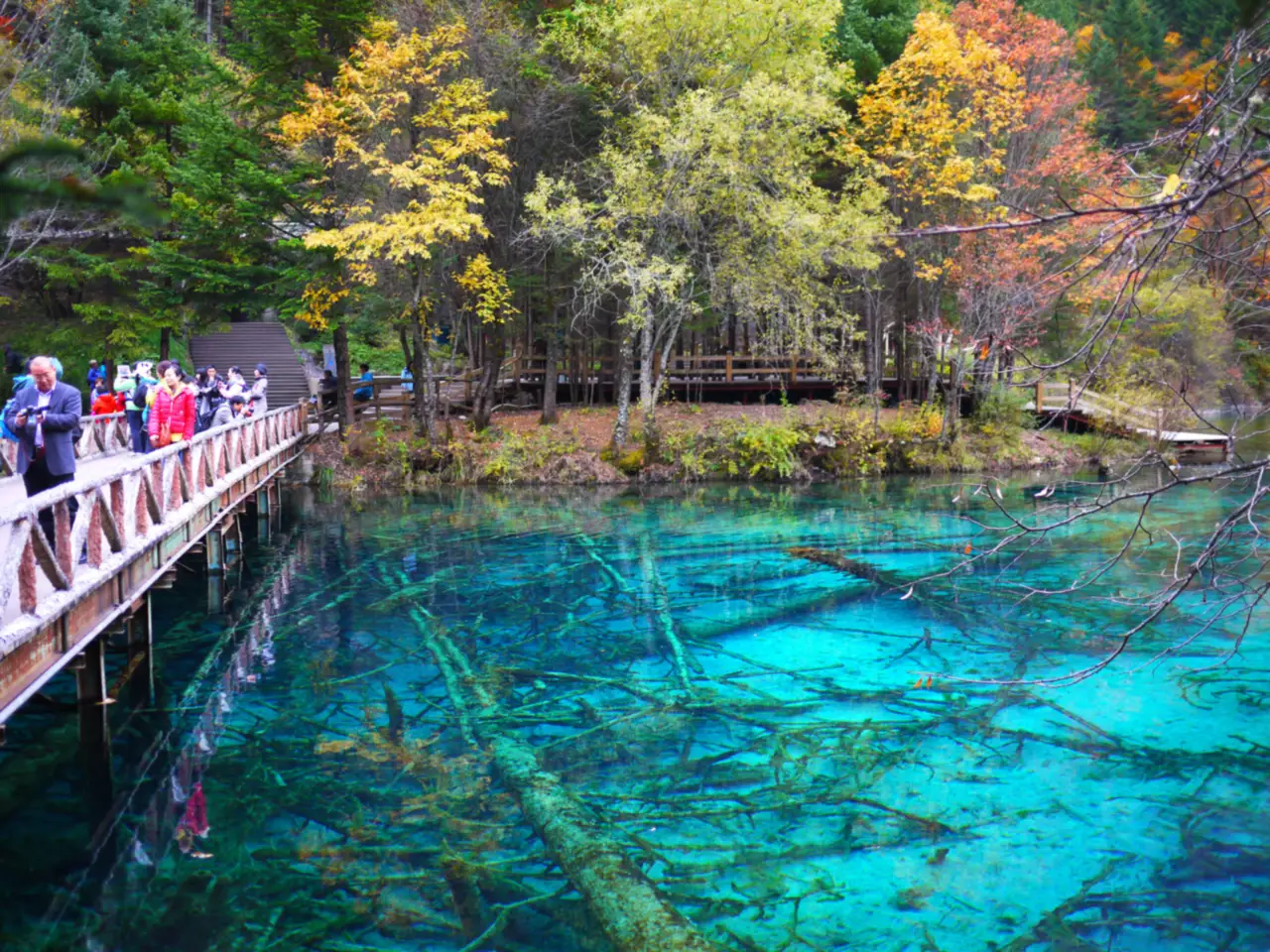
The ticket has a park-entry part and a bus part
The operator’s published annual tariff, checked on 15 October 2026, separates adult admission from the sightseeing bus inside the park, with the lower winter rate applying from 16 November:
- 16 November-31 March: admission ¥80 and internal bus ¥80, each about US$12, £9 or €10.70. Together they total ¥160, about US$24, £18 or €21.35.
- 1 April-15 November: admission ¥190, about US$28.40, £21.40 or €25.35; internal bus ¥90, about US$13.45, £10.15 or €12. Together they total ¥280, about US$42, £31.50 or €37.35.
These equivalents use ECB reference rates from 14 October 2026. The operator’s low-season notice of 10 November 2026 confirms ¥80 admission and ¥80 for the park bus from 16 November 2026 to 31 March 2027, with insurance of ¥10 offered as optional. Check the price for your selected visit date before paying.
The internal bus charge doesn’t cover getting from the railway station to Jiuzhaigou. When comparing an organised visit, ask for separate confirmation of admission, the park bus, the road transfer, guiding and accommodation. A headline saying “Jiuzhaigou transport” doesn’t tell you which of those journeys is included.
If you’re considering another day inside, check that day’s admission arrangement independently. The extra day also affects your hotel stay and the time of the train you take out of the area.
From Huanglong Jiuzhai station: two hours by road
Search for Huanglong Jiuzhai as the full station name. Zhenjiangguan is a different station, so directions written for it shouldn’t be pasted into a booking for Huanglong Jiuzhai. Check the station on the actual rail ticket, especially if an app offers several nearby alternatives.
The park’s 8 July 2026 transport notice names Jiulv Yuexing as the official connection from Huanglong Jiuzhai station and estimates about two hours by road to the park entrance. That’s the operator’s estimate; add time for the station exit, loading, weather and traffic. Confirm the transfer’s current departure and boarding point against your train.
Choose accommodation by its address and connection to the entrance, not simply by having Jiuzhaigou in the name. Ask whether the bus drops you at the park, at your hotel or at another stop. If you arrive after dark, arrange the final part of that journey before leaving the station.
For the return, work backwards from your railway departure. Include the journey from the hotel or park, collecting bags and reaching the platform. Leaving the valley near closing and catching a tightly timed train adds a deadline to every later stop; staying another night gives you more room if the weather changes.
You can organise the surrounding city stay separately with the Chengdu guide. Jiuzhaigou needs its own arrival and departure planning, even when the rail journey begins in Chengdu; if you’re coming after the three-day Chengdu plan, count the road transfer as its own half day.
Book with the passport you will carry
Jiuzhaigou requires an advance real-name reservation. The official channels include the park’s Jiuzhaigou WeChat account and Jiuzhaigou Tourism Official Platform mini program, linked from its website. Daily tickets are capped, at 23,000 visitors in the 2026/27 low season, and on 14 November 2026 the operator announced that bookings for 16 and 19 November had already reached that limit; its July 2026 notice advised booking 7-14 days ahead. Use the identity details of each traveller and check the visit date before completing the booking.
Enter your passport number carefully when reserving, then bring the original passport matching the reservation and keep the order confirmation to hand. If a reader doesn’t take your passport, ask staff for help; a screenshot on your phone won’t stand in for the original.
Set up the apps before the travel day; our China travel apps guide explains what WeChat and the other main tools do. If you use an intermediary, confirm that it has issued the admission for the correct traveller and date, rather than merely accepted a request to obtain it.
Concessions need their own eligibility check. Don’t select a student, senior or other reduced product just because its English label resembles a discount at home. Read the document conditions for the actual product and ensure you can show the required original proof at entry.
Winter hours: in by 14:00, out by 18:00
The operator’s low-season notice of 10 November 2026 gives entry from 08:30 to 14:00 between 16 November 2026 and 31 March 2027, with the park closing at 18:00; the summer 2026 notice had opened entry at 08:00. That last-entry time isn’t a sensible target for a full visit. It is the deadline for entering, with much less of the day left for buses and walking.
The same notice says some scenic spots and boardwalks will close during this seasonal rest period. Check the open route for your date before arranging a fixed pickup; copying a summer or holiday opening time into a winter itinerary can leave you waiting outside or planning around unavailable daylight.
The lower winter ticket price doesn’t promise the same walking options as an autumn visit. Dress for conditions on the day and keep your return arrangements flexible enough to follow staff instructions. Snow on the lakes is a good reason to come in winter, but check that the path to the lake you want is open that day.
On the day, pick three or four places from the route that’s open, for example Five Flower Lake in Rize, Long Lake in Zechawa and the falls at Nuorilang if they’re on it, and let the buses and boardwalks fill the hours in between.
Read also

What to see · 8 min read
Huangshan Tickets: Gates, Cableways and a Mountain Stay
Verified · 15 November 2026Plan Huangshan around the right entrance, separate cableway fares, three-day entry rules and seasonal hours, with the 2026 tariff expiry made clear.

What to see · 8 min read
Shanghai Disneyland Tickets: Prices, ID and Premier Access
Verified · 15 November 2026Shanghai Disneyland adult tickets run RMB 475-799 by date, children and over-60s pay about 25% less. Passport rules, Premier Access and refunds.

What to see · 7 min read
Zhujiajiao Tickets: Gardens, Boats and a Free Town Walk
Verified · 15 November 2026Walk Zhujiajiao free, choose separate garden tickets or the three-site combo, and check a rowing boat’s route, fare and finishing pier before boarding.

What to see · 8 min read
Li River Cruise Tickets: 3-Star or 4-Star from Guilin?
Verified · 12 November 2026Compare Li River cruise fares, boat classes and package inclusions, then match your Guilin pier with a confirmed sailing and your onward plans in Yangshuo.