
Chengdu Guide 2026: Pandas, Teahouses and How Long to Stay
Chengdu for a first trip: the panda base at opening time, Wuhou Shrine on a passport, tea in People's Park, trains from Xi'an and a museum shut until 2027.
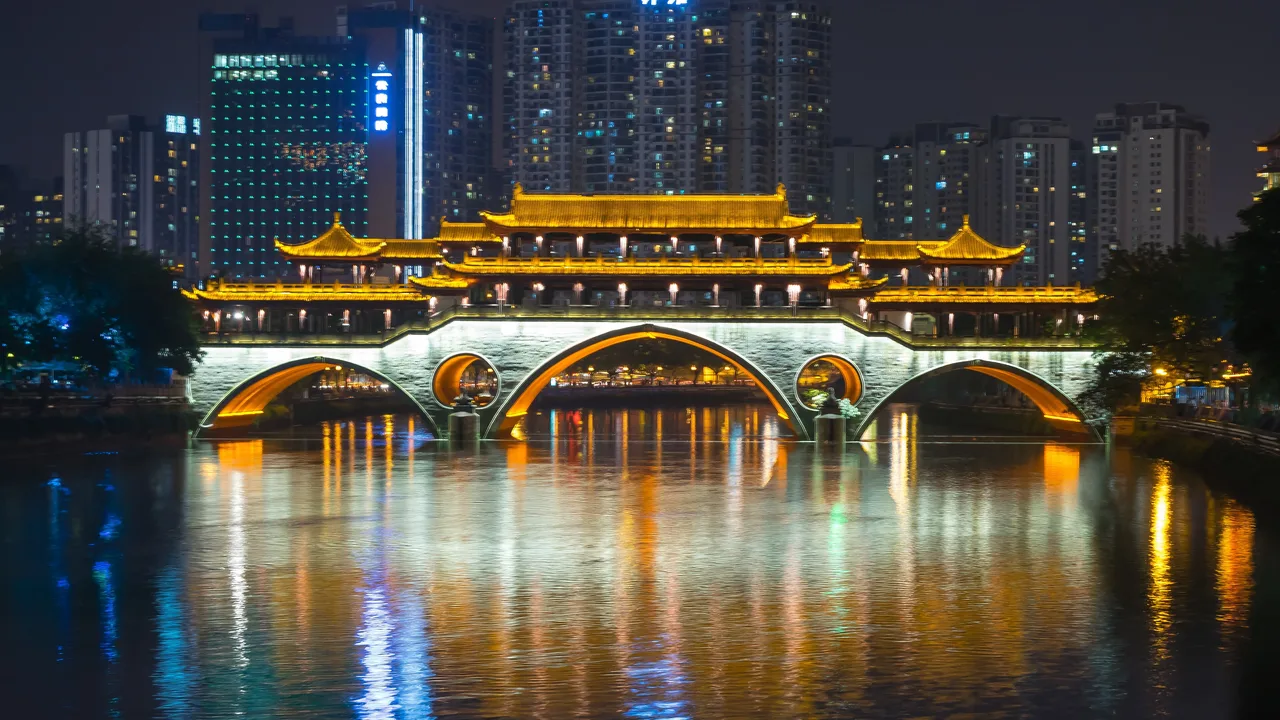
Leshan is the reason to give Chengdu a third day. Leshan station, the jumping-off point for the Giant Buddha, is 41 minutes away on the quickest train in 12306’s October 2026 timetable, near enough for a day out that still gets you back for dinner. The other two days belong to the city, and they’re worth taking slowly. Chengdu is less about one big sight than about pace, so leave room for long meals and an afternoon in a teahouse, and set your one early alarm for the panda base.
Two details change the usual list. The Jinsha Site Museum, Chengdu’s big archaeology museum, is closed from 5 December 2025 to 30 April 2027 for an upgrade, so leave it out of any plan before May 2027. And if you’re over 60 and visiting from abroad, Du Fu’s cottage will charge you full price: its free entry at that age covers Chinese citizens, residents of Hong Kong, Macao and Taiwan and holders of a Chinese permanent residence card.
Wuhou Shrine, Jinli and the red-walled lane
Wuhou Shrine is the city’s monument to the Three Kingdoms. Liu Bei crowned himself emperor of Shu Han in 221 and made Chengdu his capital, and the temple honours him, his chancellor Zhuge Liang and the other heroes of that state. The halls were destroyed in war at the end of the Ming dynasty and rebuilt in 1671, which is the layout you walk through today.
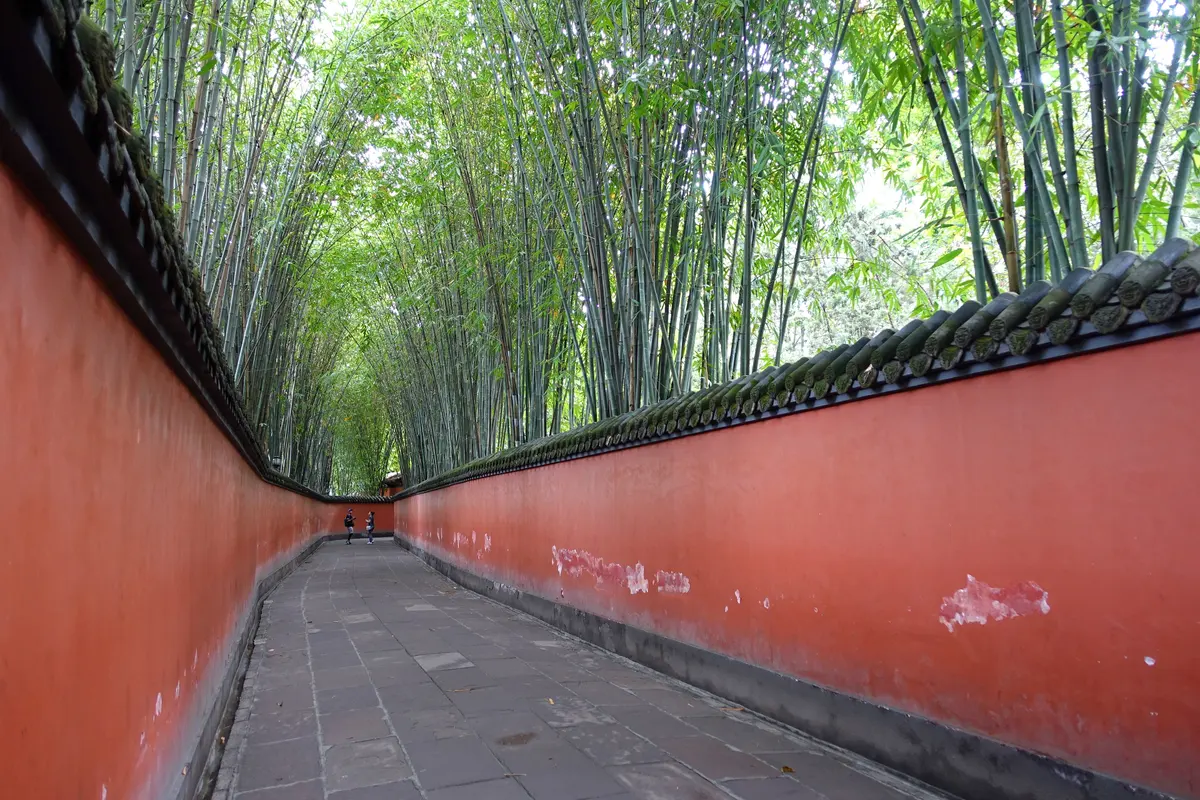
A ticket costs ¥50 (about $7.50 or £5.50). Children aged 6 to 18 pay half, ¥25, on their own passport, and under-6s or children up to 1.3 m go free once their passport has been swapped for a ticket at the service window. You book in your own name on the museum’s website or WeChat account, up to 14 days ahead, and online payment is WeChat Pay or Alipay only. If neither works for you, take your passport to the on-site window and pay in cash. The shrine is open 9:00-19:00 every day, with no entry after 18:00, and a booking you don’t use is refunded automatically at 22:00 that night.
Jinli, the shrine’s own street of snack stalls, teahouses and craft shops, opened in October 2004 as part of the same complex, so the two make one outing: the temple in daylight, then Jinli for dinner.
Du Fu’s cottage, and a museum on hold until 2027
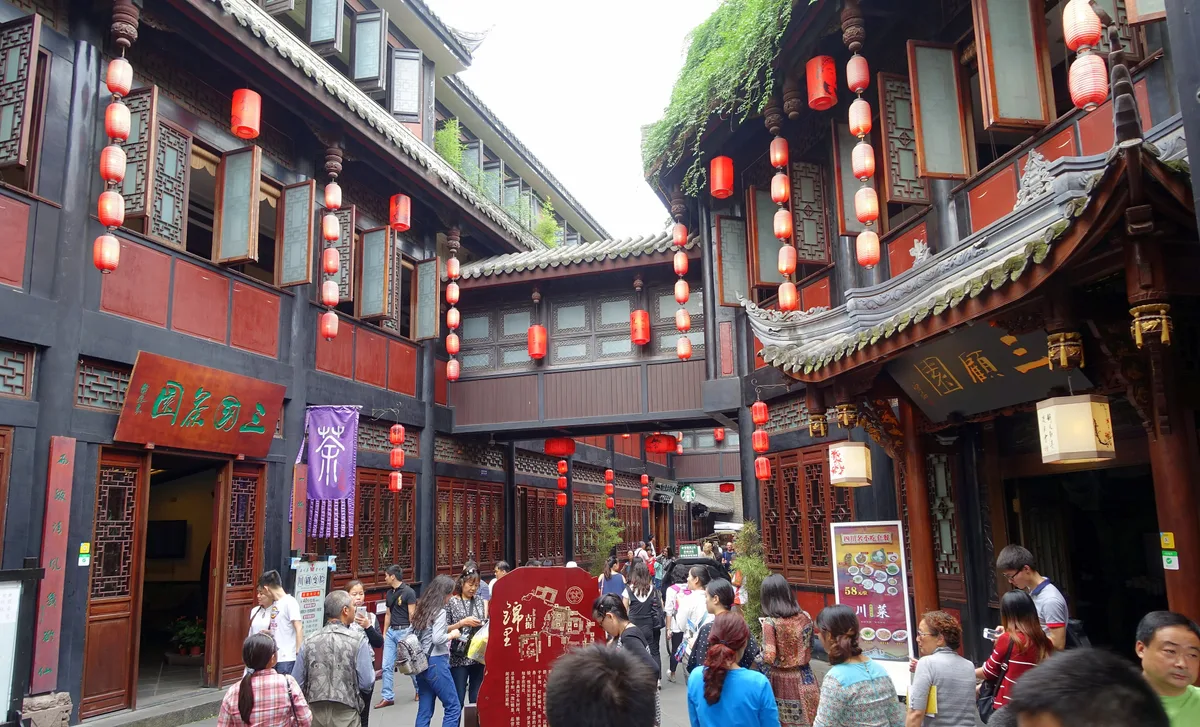
The Tang poet Du Fu came to Chengdu in the winter of 759, escaping war, and the next spring built a thatched house by the Blossom-Bathing Brook with help from friends. The museum on that site is a garden of bamboo, ponds and thatched pavilions, and a good morning’s wander.
Entry is ¥50, or ¥25 for full-time students up to undergraduate level with a student card. The museum’s English rules let under-18s in free on their ID, though its Chinese rules give that only to Chinese nationals, so bring your child’s passport and ask at the window. It’s open 9:00-18:00, with tickets sold until 17:00; at Spring Festival, Labour Day, the summer holidays and National Day it opens 8:30-18:30, with sales until 17:30. You can book on the museum’s WeChat account or buy at the ticket window; without a Chinese ID card to swipe at the gate, you’ll swap your booking for a paper ticket at that window anyway.
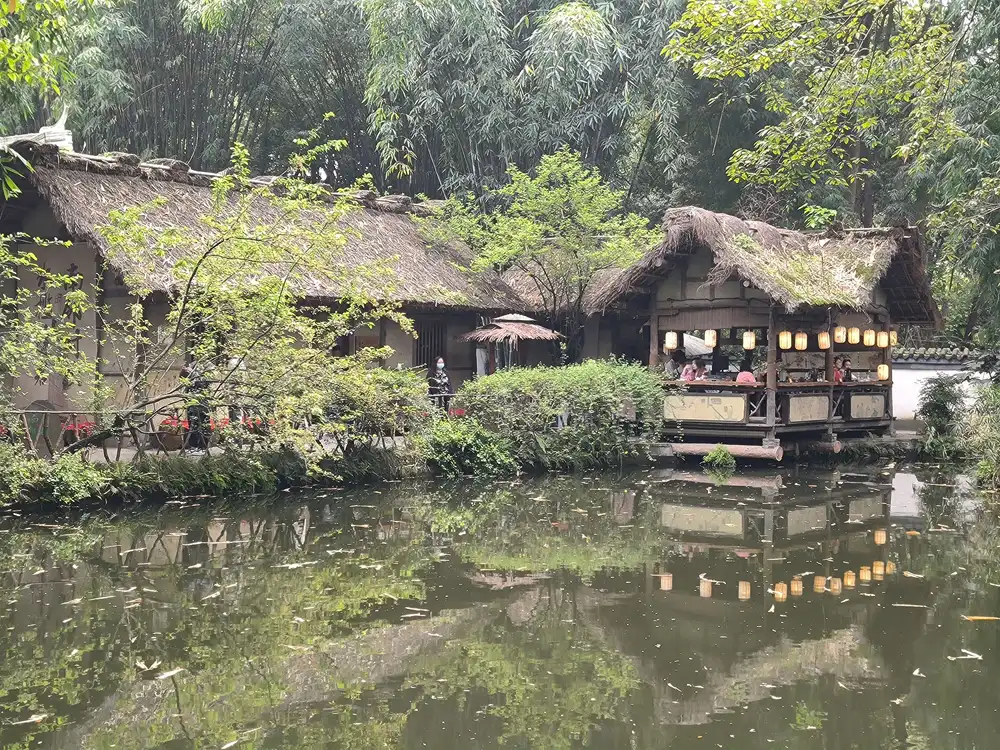
With Jinsha shut, the Chengdu Museum on the west side of Tianfu Square is the city-centre museum to book instead. Lines 1 and 2 stop at Tianfu Square. It opens 9:00-17:00 from Tuesday to Thursday and on Sundays, stays open until 20:30 on Fridays and Saturdays, and closes on Mondays except public holidays, so a Friday evening visit fits around a day elsewhere.
Tea in People’s Park
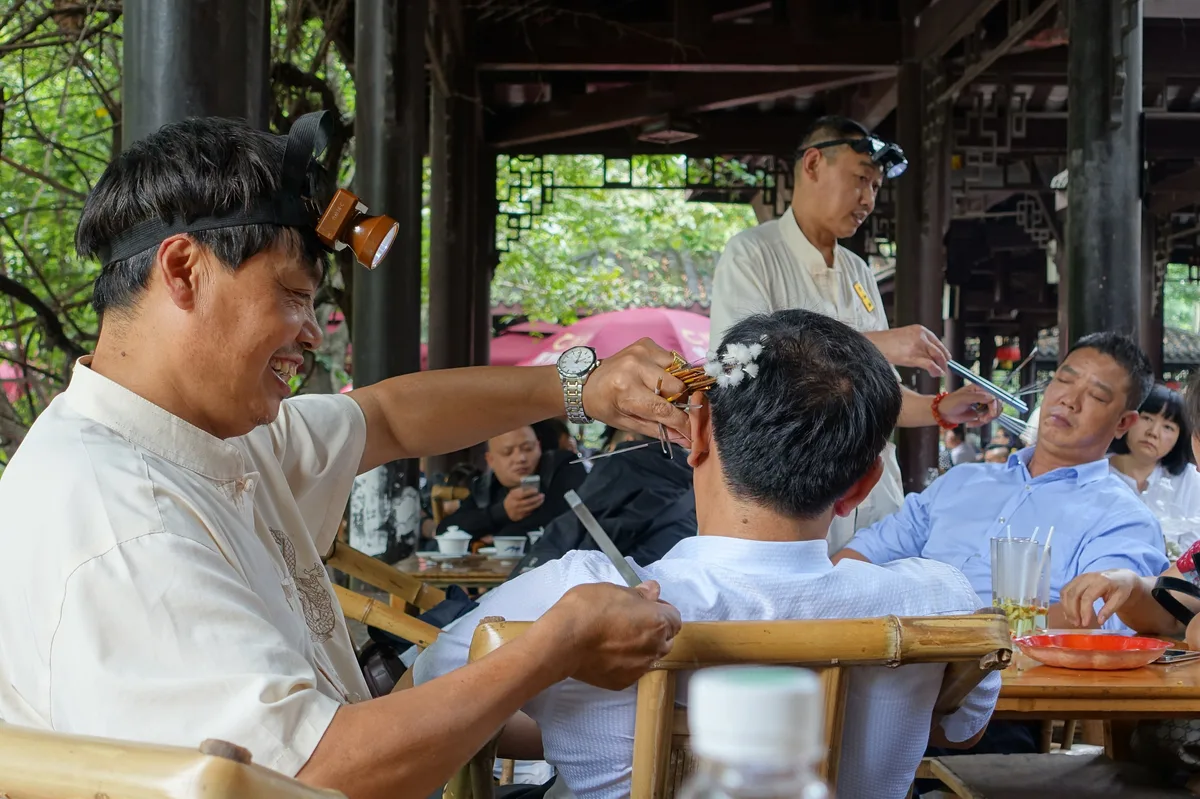
The Heming tea house in People’s Park has been pouring tea since 1923, with tables spread out under the trees by the lake. Locals settle in for the afternoon: tea, the flower beds, conversation and, for some, an ear-cleaning from one of the men who work their way between the tables in head torches. It’s the most Chengdu thing you’ll do, so give it two hours, not twenty minutes.
Wenshu Monastery and the Kuanzhai lanes
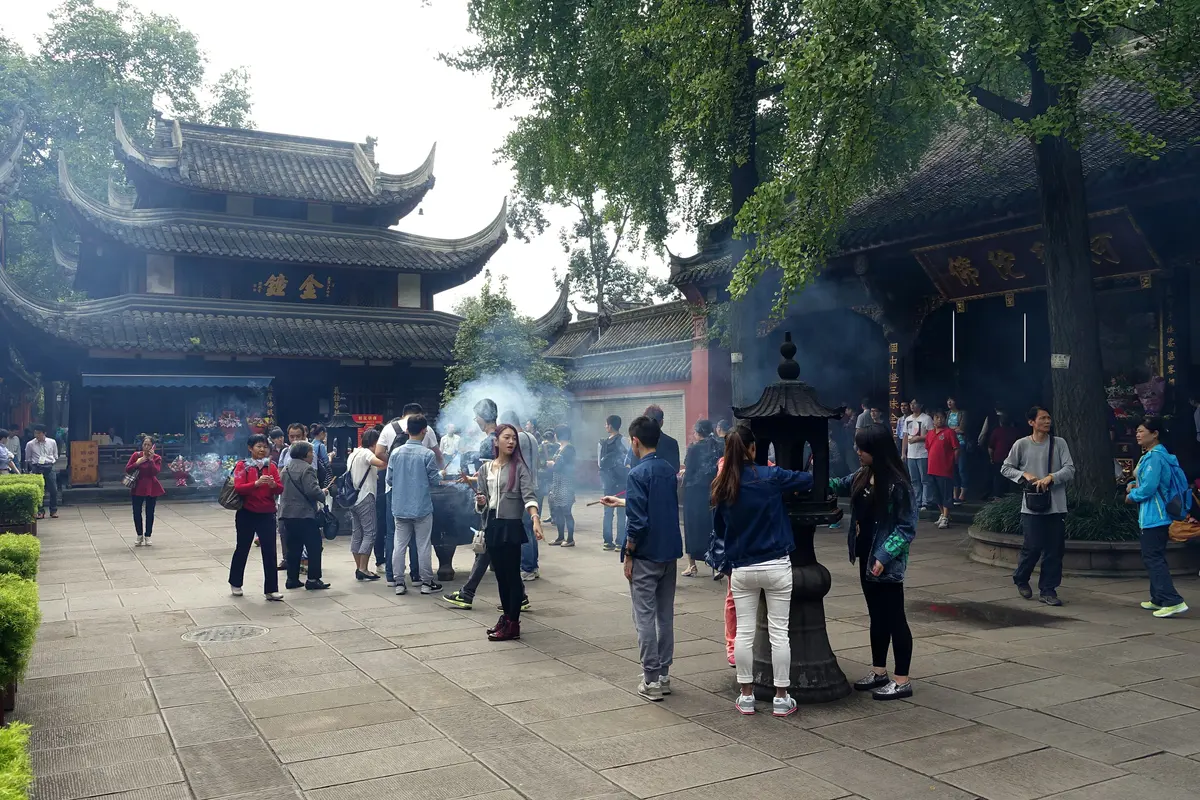
China Daily counts three historic blocks in the old centre: Kuanzhai Alley, the Daci Temple and Wenshu Monastery. Wenshu is a working Buddhist monastery, so expect incense, worshippers and monks going about their day, not a museum hush, and dress for a temple.
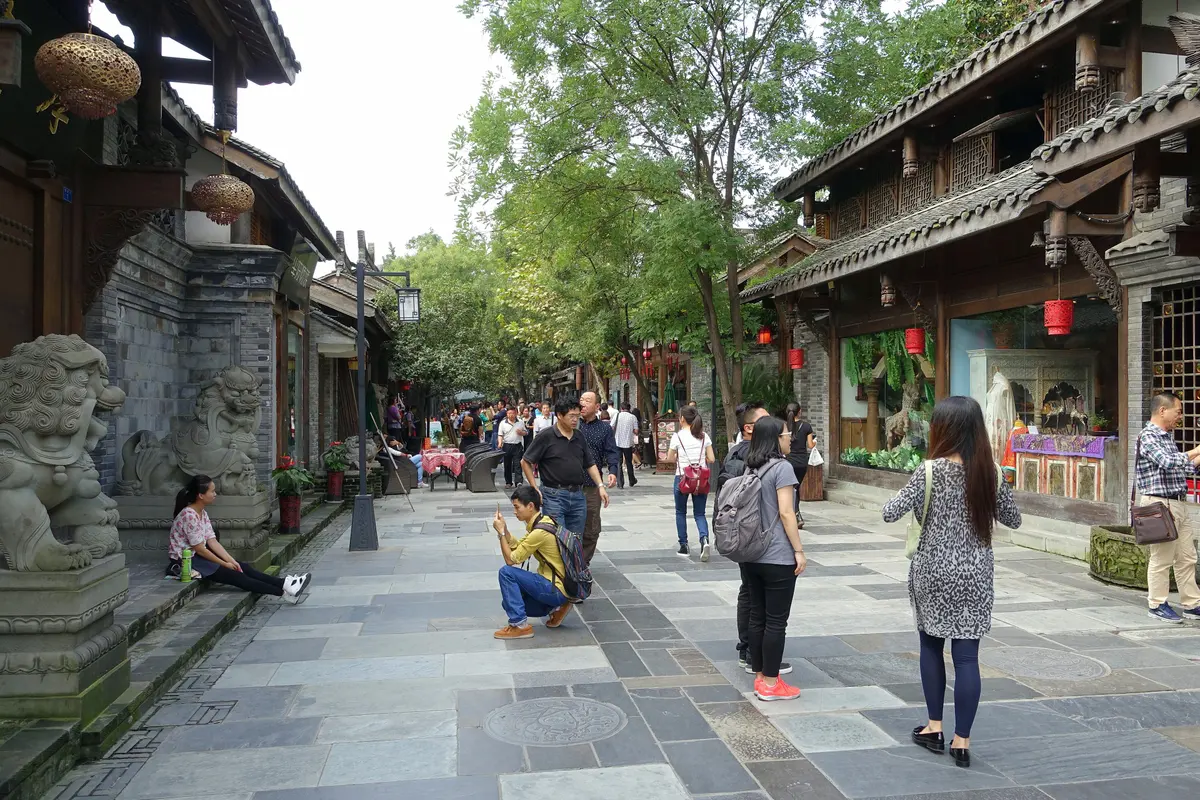
Kuanzhai’s lanes go back to 1718, when the Kangxi emperor sent soldiers to hold Chengdu after a Dzungar revolt and dozens of residential compounds went up to house them. Three parallel lanes survive: Kuan (Wide), Zhai (Narrow) and Jing (Well). They were renovated from 2005 and reopened in 2008. Kuan Alley keeps the most old buildings, with more than 20 courtyards, while Zhai Alley mixes late-Qing and early Republican houses with early western-style ones. Line 4 stops at Kuanzhaixiangzi station.
An early start for the pandas
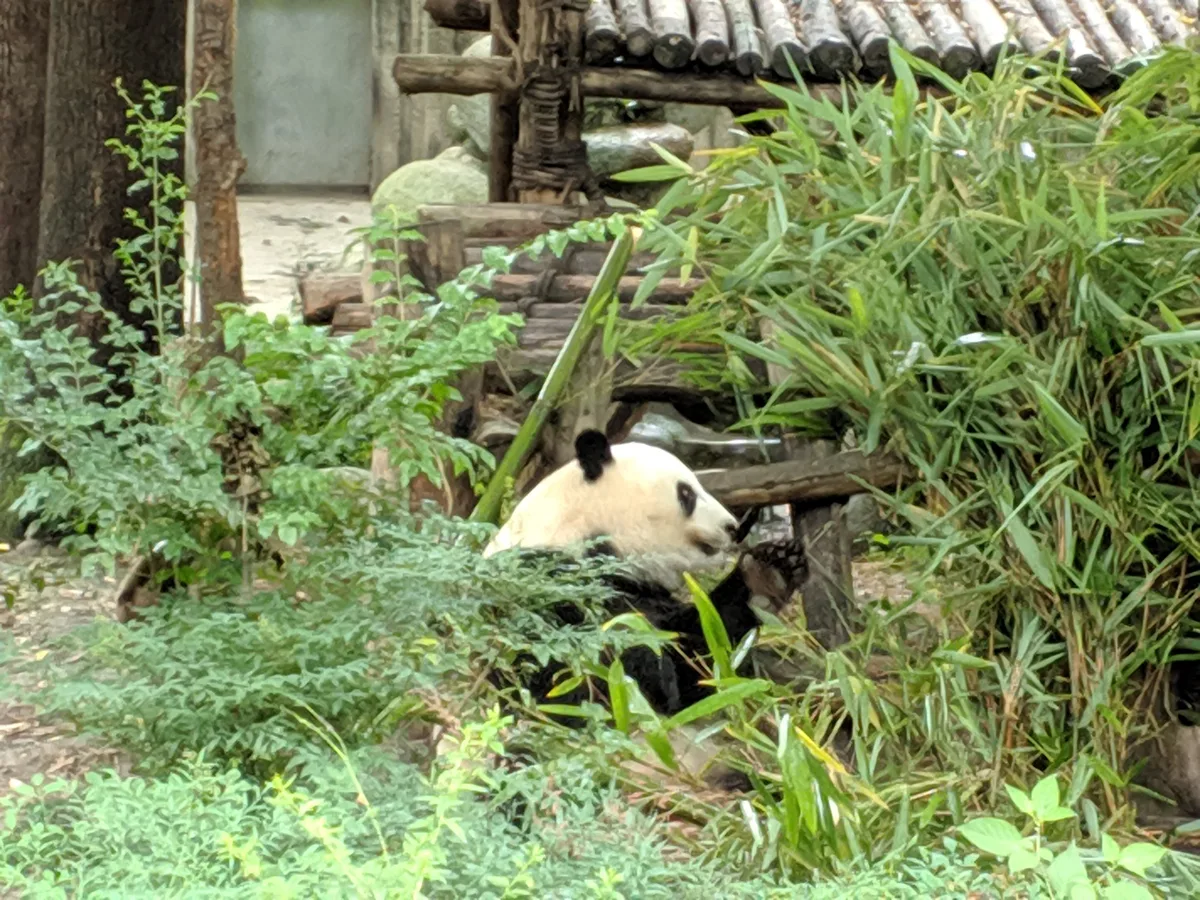
Go to the Giant Panda Breeding Research Base on the morning you’re freshest. Morning entry starts at 7:30 from March to October and at 8:00 from November to February, and runs until noon, but only with a ticket booked online in the name on your passport: booking opens 14 days ahead on the base’s WeChat account or an app it authorises, such as Trip.com, and closes when the day’s quota is sold out. Over-60s and children under 6 or up to 1.3 m tall don’t need to book. Its own website covers tickets and the tour bus inside the grounds; give it the whole morning and keep the teahouse or the Kuanzhai lanes for the afternoon.
Eating in Chengdu, beyond the chilli
UNESCO named Chengdu a Creative City of Gastronomy in 2010 and calls it the cradle of Sichuan cuisine. Its citation makes a point worth taking to the table: the hallmark of the cooking is range, sweet, sour, bitter, spicy and salty mixed together. Order one fiery dish and one mild one, and you’ll taste more of it.
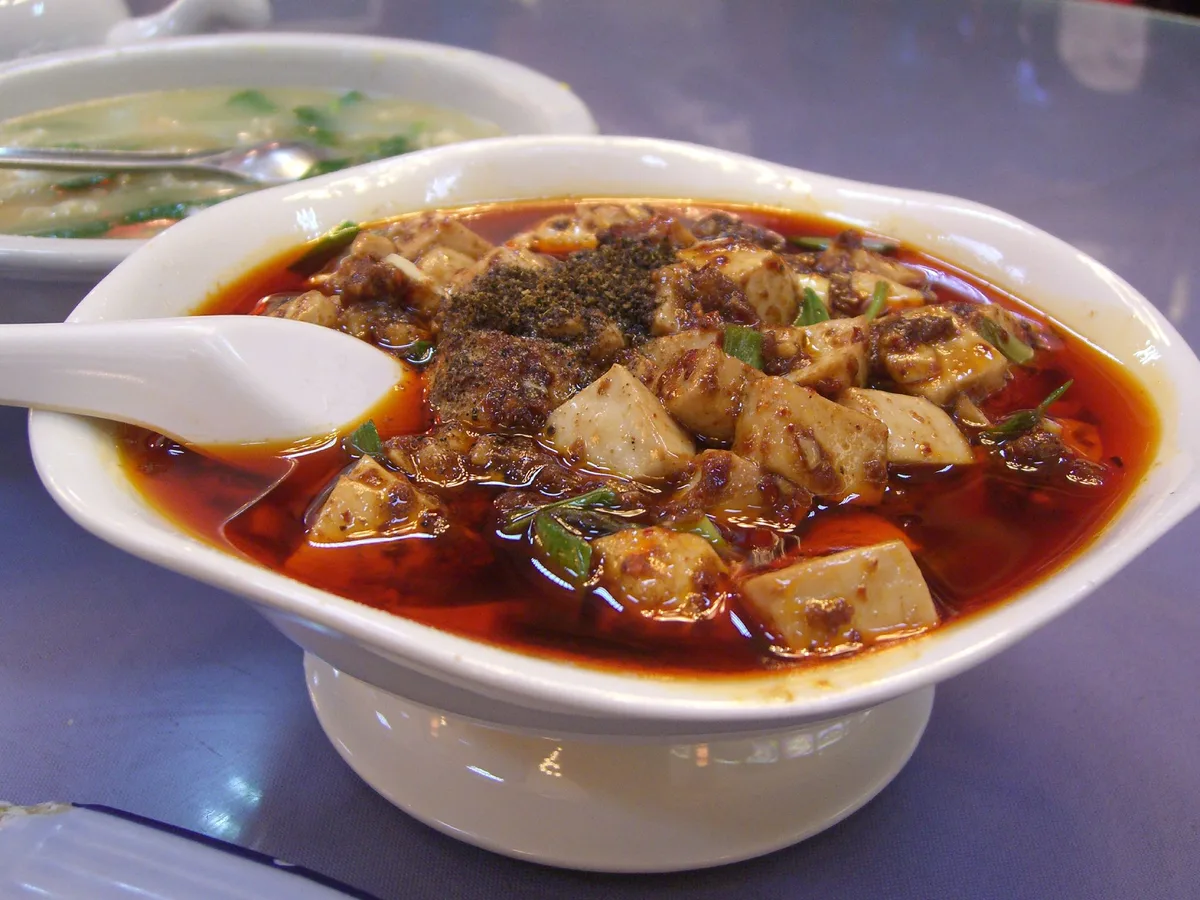
Mapo tofu is a Chengdu original. By the best-known account it was first served in 1862 at the Chen Xing Sheng restaurant by Wanfu Bridge, in the north of the city, and takes its name from Chen Mapo, the pockmarked widow who ran the kitchen.
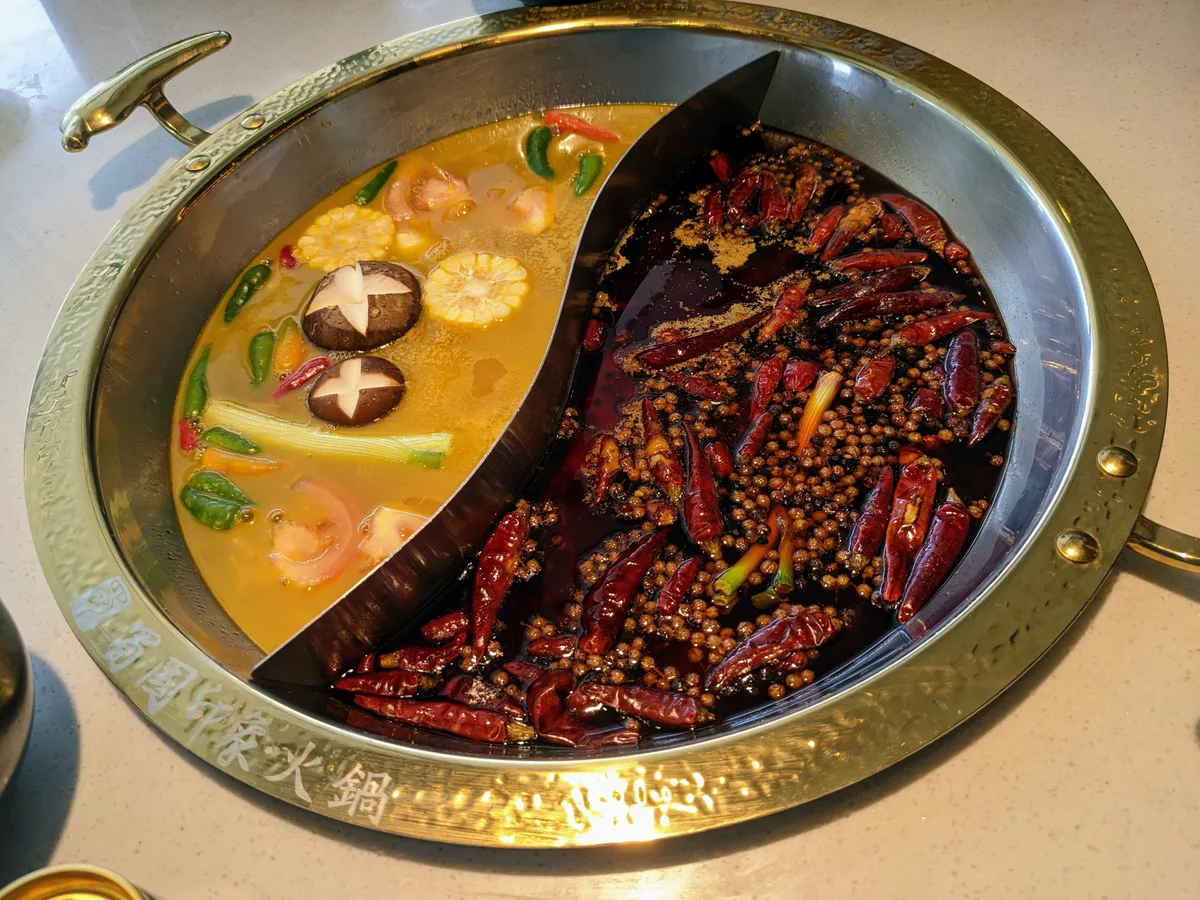
Hotpot is the meal to share. Ask for a split pot, with a numbing red broth on one side and a mild one on the other, and the table can go at its own pace. If you plan to pay by phone, link your own card to WeChat Pay or Alipay; they’re also the only two ways to pay for Wuhou Shrine tickets online.
Taikoo Li for evenings, the west side for walking, Wuhou for Shuangliu
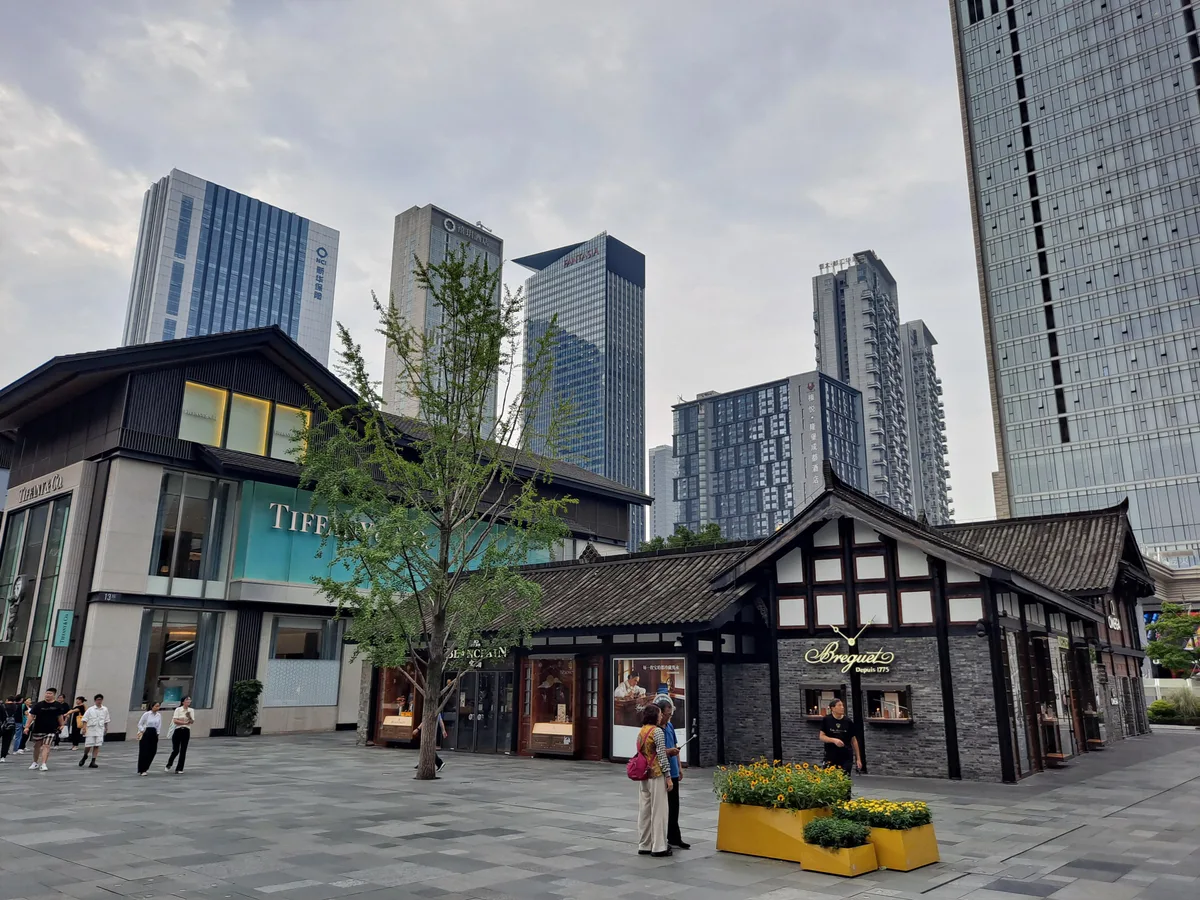
Chunxi Road and Taikoo Li. Taikoo Li, a low-rise shopping quarter laid out round the 1,600-year-old Daci Temple, opened in April 2015 and connects straight into Chunxi Road station, where Lines 2 and 3 cross. Stay here for evenings out, with two metro lines at the door.
Kuanzhai, People’s Park and Tianfu Square. The old west side puts the Qing lanes and the teahouses on your doorstep, with Line 4 at Kuanzhai and Lines 1 and 2 at Tianfu Square. It’s the pick for a slower trip built around walking.
Wuhou and Jinli. If you’re flying into Shuangliu, one of Chengdu’s two airports, metro Line 10 runs from its terminals to Wuhouci station by the shrine, so a room here saves a change after a long flight.
Trains in from Xi’an, Chongqing, Beijing and Shanghai
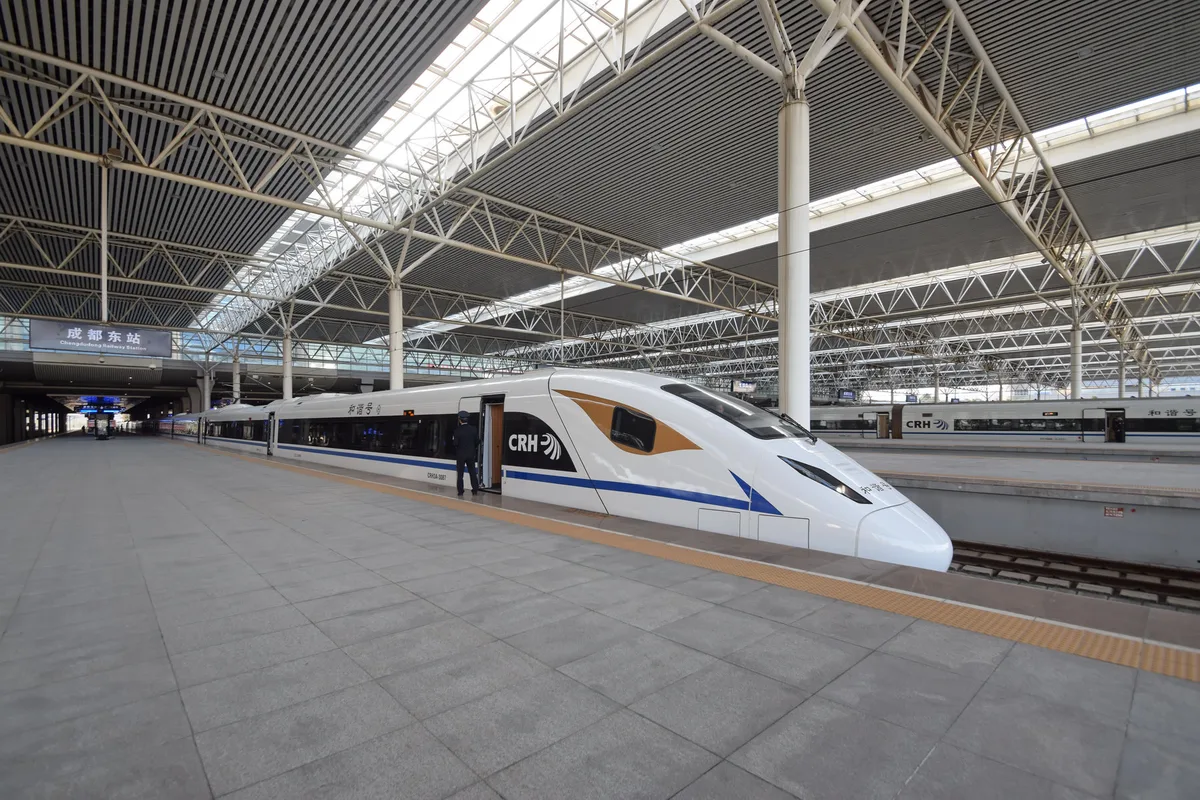
Most trains arrive at Chengdu East and a few at Chengdu South. Times and fares are for trains on Tuesday 13 October 2026, read on China Railway’s 12306 on 6 and 10 October 2026; fares shift a little from train to train and day to day.
| Route | Direct G and D trains that day | Quickest | Second class |
|---|---|---|---|
| Xi’an North to Chengdu | over 60 | 3h05 (G321) | ¥210-316 |
| Chongqing stations to Chengdu | over 120 | 1h02 (G8612 from Shapingba) | ¥85-237 |
| Beijing West to Chengdu East | 4 G, plus overnight D | 7h28 (G323) | ¥779-887 on the G |
| Shanghai Hongqiao to Chengdu | 8 G, plus 2 D | 10h31 (G237) | ¥935-1,244 on the G, ¥707-721 on the D |
From Xi’an, trains take from just over three hours to about four and a half, so you can leave after breakfast and you’ll still have the afternoon in Chengdu. From Chongqing, the quickest trains leave from Shapingba station and take just over an hour for around ¥150 (about $22 or £17); the cheapest seats, ¥85 (about $12.50 or £9.50), are on slower D trains from Chongqing North that take about two to two and a half hours. From Beijing, the two fastest G trains, at 07:00 and 15:00, take about seven and a half hours; from Shanghai, it’s a full day on board even on the quickest G train.
Our comparison of 12306 and Trip.com covers when sales open and how to book with a foreign passport and card.
Tianfu or Shuangliu: check your ticket
Chengdu has two international airports, Tianfu (TFU) and Shuangliu (CTU), so check which one’s on your ticket before you plan the ride in. International flights use Tianfu: Sichuan Airport Group moved all of Shuangliu’s international passenger flights there on 26 March 2023, and the flights it began moving back to Shuangliu on 30 July 2026 were Hong Kong, Macao and Taiwan services. From Tianfu, take metro Line 18. Its direct trains run without stopping between the airport and Chengdu South railway station, a 33-minute trip when Chengdu Metro introduced them in June 2023, and you change there for other lines. Line 10 runs from Shuangliu’s terminals into the city at Wuhouci, and Line 19 links the two airports. Metro fares start at ¥2, and our page on China’s travel apps covers paying for the metro by phone.
Both airports are ports for the 240-hour visa-free transit, which needs a confirmed onward ticket to a third country or region, and on the National Immigration Administration’s list of 20 August 2026 its permitted area in Sichuan covers Chengdu, Leshan and nine other cities, so a day trip to the Giant Buddha won’t take you outside it. Who qualifies, and how the 30-day visa-free entry differs, is on our China visa page.
November’s eight wet days, October’s fourteen
Chengdu is warm, damp and often overcast. July and August are the wettest months, with 231 mm and 224 mm of rain and average highs just under 30°C. October’s average high is 20.6°C, but it still has 14 wet days; November is cooler, with highs of 15.6°C, and drier, with eight, so if you’re after dry days and don’t mind a jacket, it’s the better bet. April, with highs of 21.6°C and 13 wet days, is the spring equivalent of October. Winter is mild by northern standards, with January highs of 9.5°C and lows of 2.4°C, and the panda base keeps its winter hours from November to February.
A day trip to the Giant Buddha at Leshan
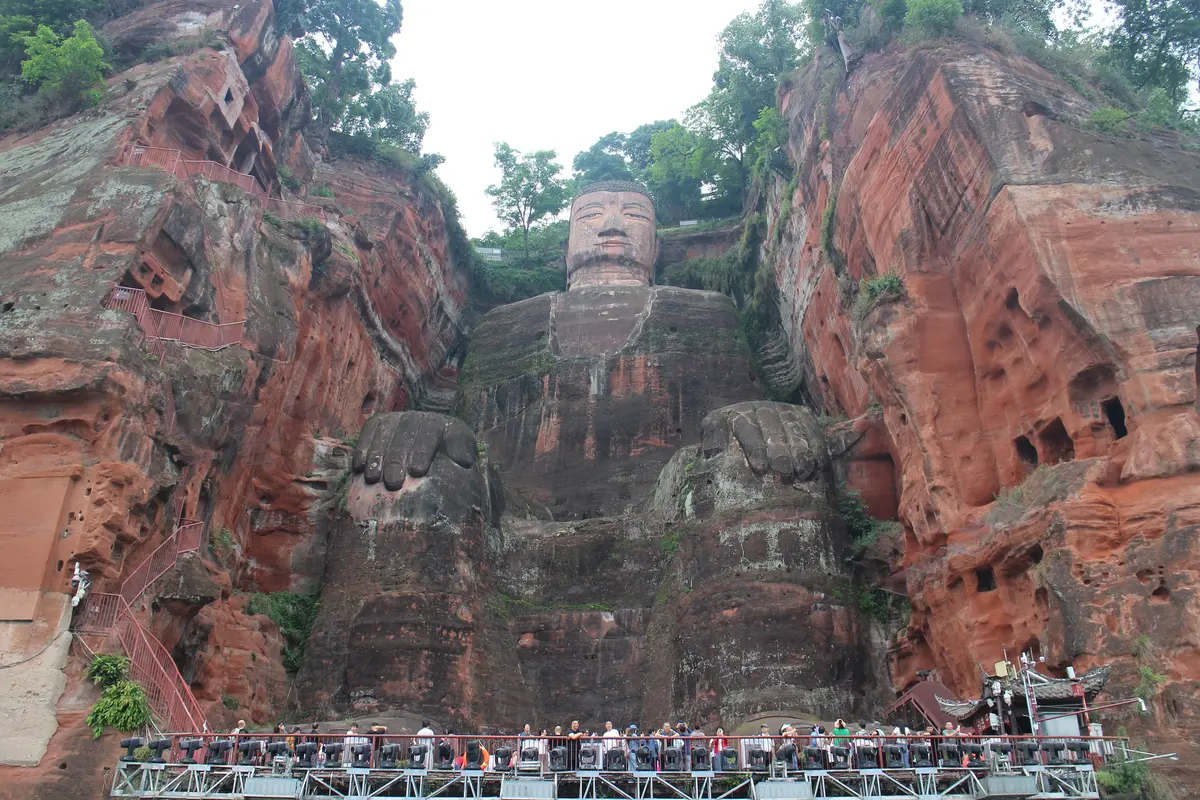
The Leshan Giant Buddha was carved out of a hillside in the 8th century and sits 71 metres high above the meeting of three rivers. UNESCO lists it with Mount Emei as one World Heritage Site, inscribed in 1996. On Tuesday 13 October 2026 the quickest train, G5415 from Chengdu South, took 41 minutes and cost ¥51 (about $7.50 or £6) in second class; from Chengdu East most trains took 46-58 minutes for ¥54, and the 07:00 G3707 cost ¥30. The scenic area charges its own entry on top of the train fare, so check that price, and the last leg from Leshan station to the Buddha, before you go.
The sights, the Leshan train and the metro add up to very little. Wuhou Shrine and Du Fu’s cottage come to ¥100 between them, a second-class return to Leshan at the usual fares is ¥102-108, and metro rides start at ¥2: roughly $30, £23 or €27 in all on the European Central Bank’s rate for 2 October 2026, with the panda base and the Leshan scenic area charging their own entry on top.
From Chengdu, the next stop east is Chongqing, an hour away, and the karst country of Guilin and Yangshuo is further south-east. For Yunnan, a direct D train runs from Chengdu South to Lijiang, below the Jade Dragon Snow Mountain.
On the map
The map loads on click, to keep the page light.
The map didn’t load. Check your connection and refresh the page.
Tickets and opening hours
- Ticket price
- Wuhou Shrine ¥50, or ¥25 for 6- to 18-year-olds on their passport; children under 6 or up to 1.3 m free. Du Fu Thatched Cottage ¥50, or ¥25 for full-time students up to undergraduate level; under-18s free on their ID under the museum's English rules (its Chinese rules limit this to Chinese nationals); free entry at 60 and over applies only to Chinese citizens, residents of Hong Kong, Macao and Taiwan and holders of a Chinese permanent residence card. Metro fares from ¥2.
- Opening hours
- Wuhou Shrine 9:00-19:00 every day, no entry after 18:00. Du Fu Thatched Cottage 9:00-18:00, ticket sales stop at 17:00; 8:30-18:30, sales until 17:30, at Spring Festival, Labour Day, the summer holidays and National Day. Chengdu Museum 9:00-17:00 Tuesday to Thursday and Sunday, 9:00-20:30 Friday and Saturday, closed on Mondays except public holidays. Giant Panda Breeding Research Base: morning entry from 7:30 (March to October) or 8:00 (November to February) until 12:00, only with a real-name online booking made up to 14 days ahead (over-60s and children under 6 or up to 1.3 m exempt).
Prices and hours from the museums and the panda base, checked on 6 October 2026. The Jinsha Site Museum is closed from 5 December 2025 to 30 April 2027. Holiday hours differ, so check before you go.
Details checked: 6 October 2026
Read also

Cities · 11 min read
Chongqing in Two Days, Plus a Yangtze Cruise (2026)
Verified · 6 October 2026Hongyadong lit up from the river, a monorail through a block of flats, the Yangtze cableway, hotpot, and which way to take a Three Gorges cruise.

Cities · 10 min read
Guilin and Yangshuo: the Li River Cruise and 3-4 Days (2026)
Verified · 6 October 2026Why the Li River cruise means a night in Yangshuo, booking it by passport, when the river closes, the 20-yuan view and trains from Hong Kong.

Cities · 12 min read
Harbin Travel Guide 2026: Russian Architecture and Winter
Verified · 6 October 2026Two days for Harbin: Central Street and St Sophia, Daowai, booking the Unit 731 site, where to sleep, the metro, and January nights at -22.9°C.

Cities · 14 min read
Lijiang Travel Guide 2026: Old Town and Snow Mountain
Verified · 6 October 2026Three days in Lijiang: the Old Town at 2,400 m and its ¥50 fee, booking Jade Dragon Snow Mountain's cable car, Tiger Leaping Gorge, where to stay, trains.