
2-3 Days in Xi'an: City Wall, Muslim Quarter and Museums
Cycle the 13.74 km city wall, book the two big museums five days ahead, sleep by the Bell Tower or South Gate and save a day for the warriors.
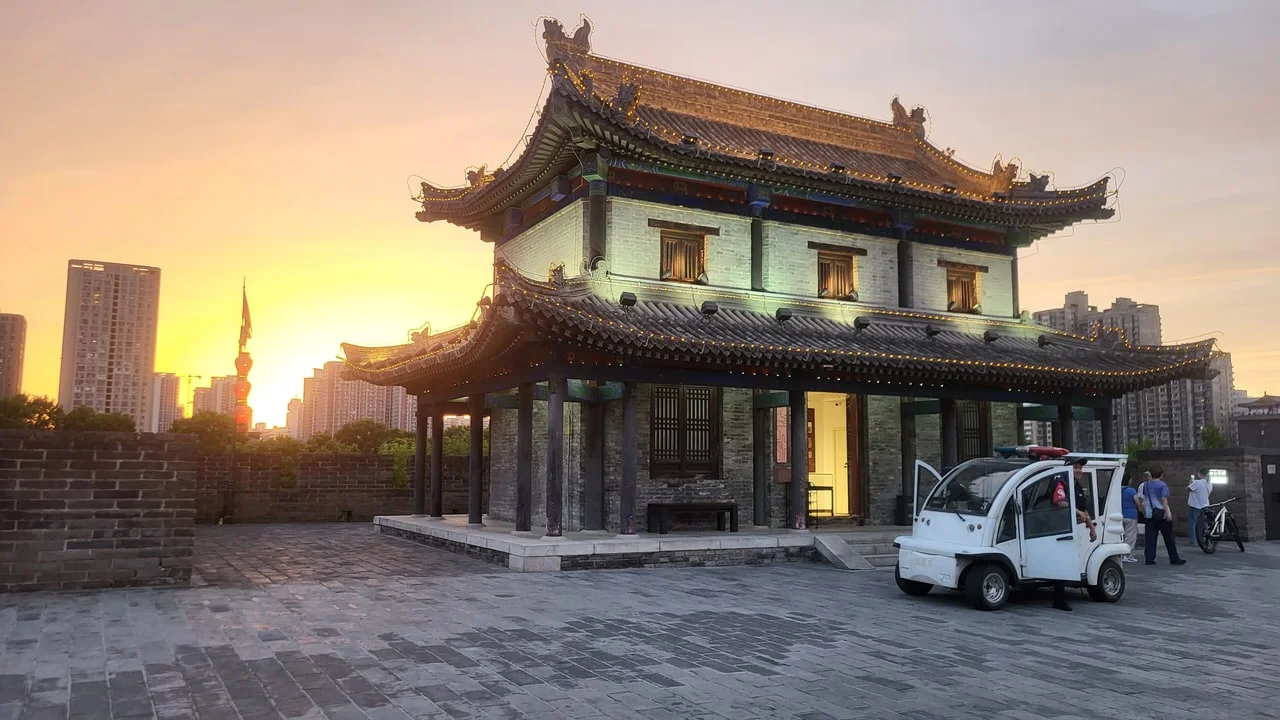
Two days cover Xi’an itself: a bike ride around the Ming city wall, the Bell and Drum Towers, the Muslim Quarter, the Big Wild Goose Pagoda and the Shaanxi History Museum. The Terracotta Army, outside the city, needs a third. From a hotel inside the wall, near the Bell Tower or the South Gate, most of it is a walk or a few metro stops away.
How smoothly it goes depends on the booking calendar more than the map. The Shaanxi History Museum is free, but it releases time slots five days ahead at 17:00 Beijing time, and a booking you neither use nor cancel can stop you booking there again for 180 days. The Xi’an Museum, around the Small Wild Goose Pagoda, opens its slots at 18:00, also five days out. Book those two first and fit the wall and the towers around them.
Reading Xi’an from its wall
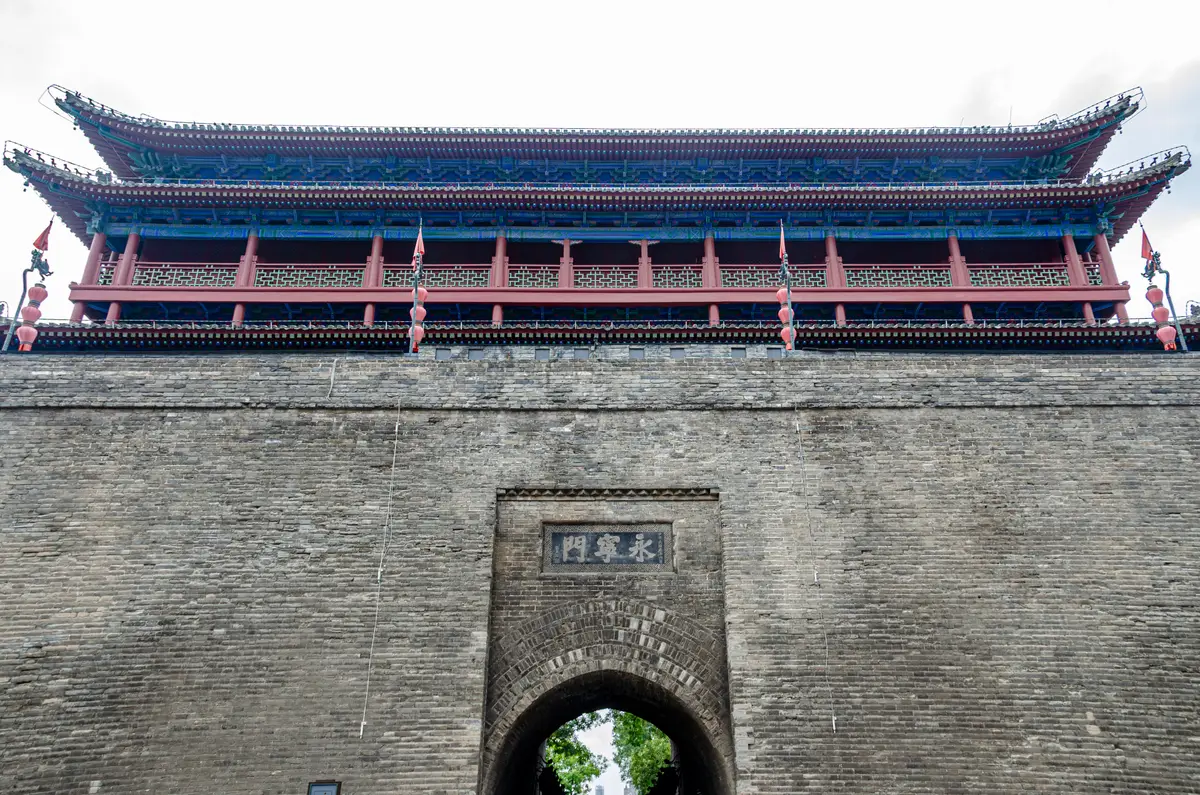
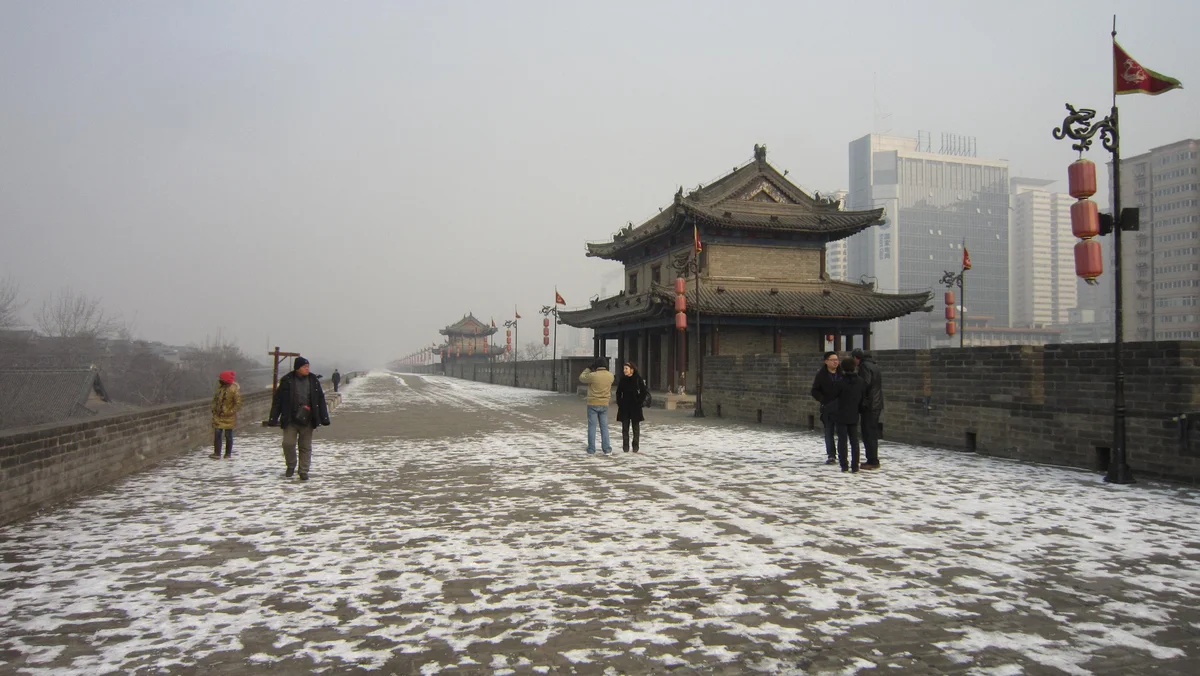
The Ming wall runs 13.74 km around the old centre, on the footprint of the Sui and Tang imperial city. Of its 18 gates, the South Gate, Yongningmen, first built in 582, is the oldest and has been in use the longest.
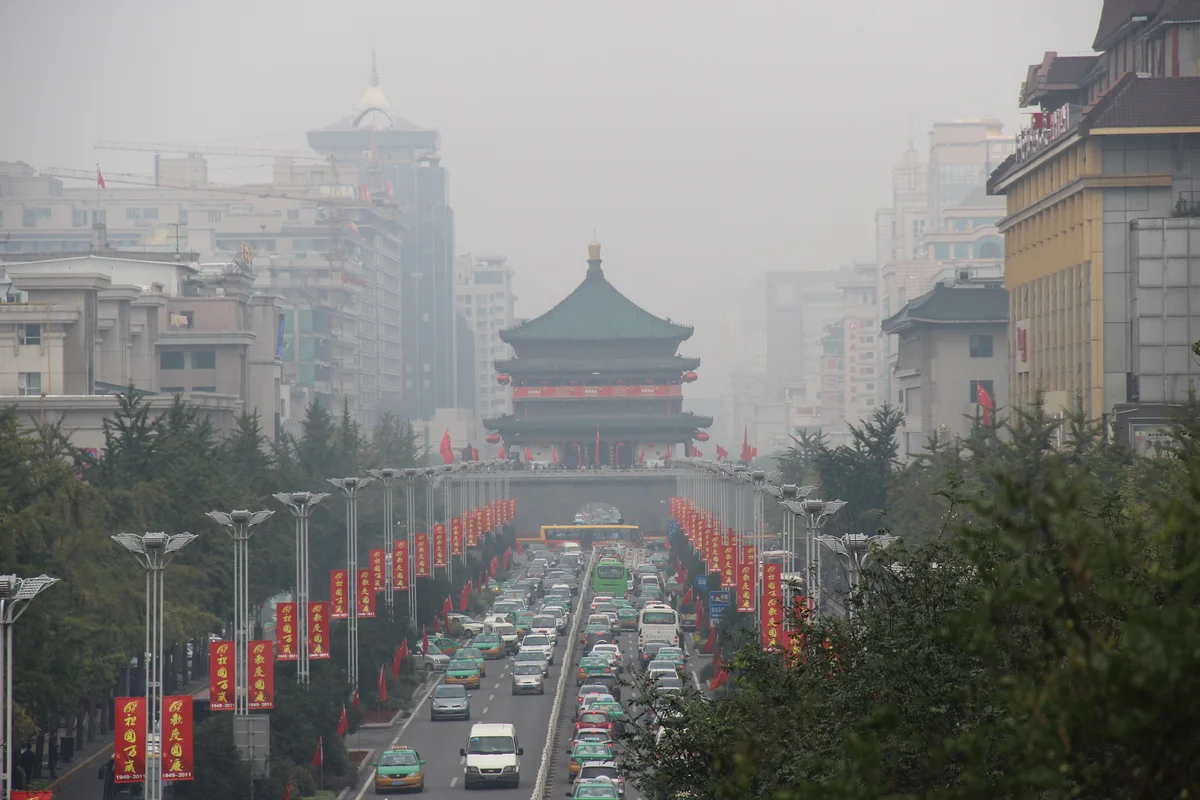
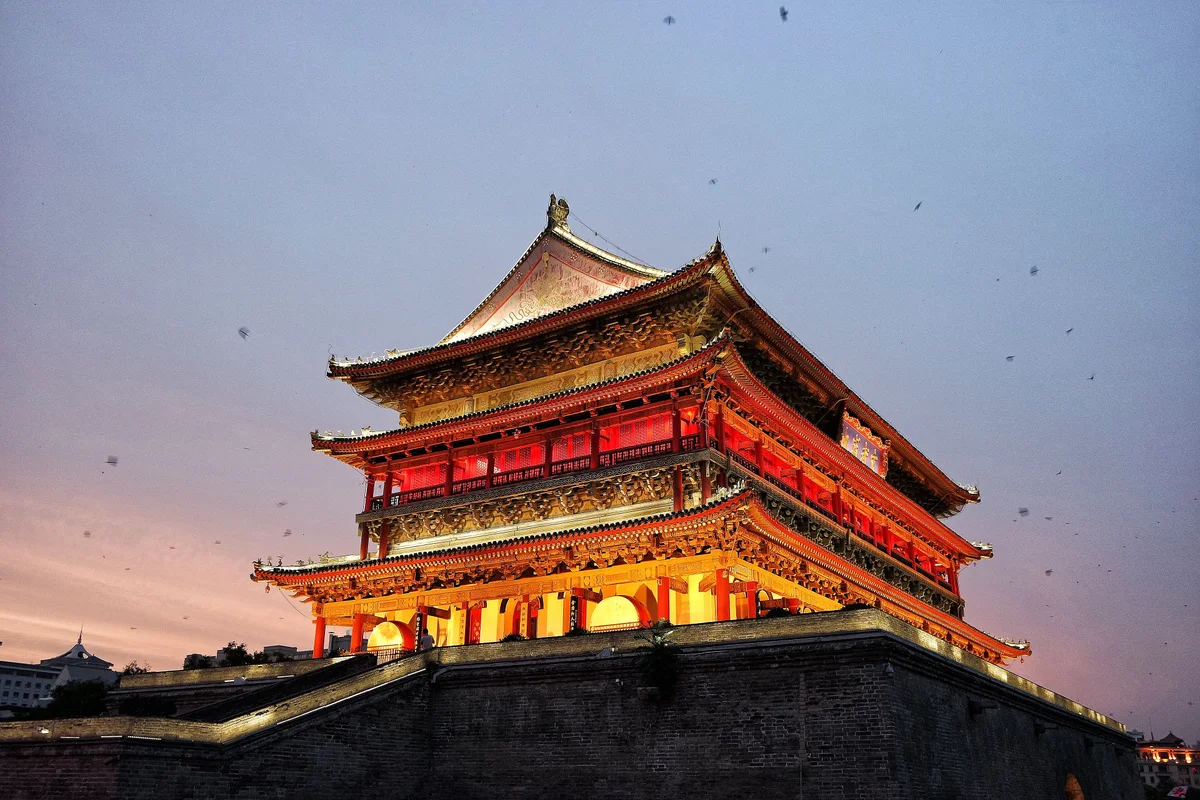
Inside, the Bell Tower stands where the four main streets cross and the Drum Tower about 200 metres to its north-west. Near the South Gate you’ll find Shuyuanmen, a stone-paved street of calligraphy shops, and the Beilin Museum, which shows more than 4,000 steles and stone inscriptions from the Han dynasty to modern times. South of the wall are the two Tang-dynasty wild goose pagodas and the Shaanxi History Museum, whose station, Xiaozhai, is three stops down Line 2 from the South Gate.
Up on the wall: tickets, bikes and the right hour
A ticket for the wall costs ¥54 (about $8 or £6), or ¥27 for 7- to 18-year-olds and full-time students up to bachelor’s level. Free entry for young children and over-65s is tied to a Chinese ID card, so older visitors from abroad pay in full. Each ID can buy one ticket a day, through the wall’s WeChat mini programme, platforms such as Meituan or Douyin, or the ticket windows. Since 1 July 2026 the turnstiles read an ID card or a face, not a QR code; on a foreign passport you book online, swap the booking for a paper voucher at a ticket window, and have the voucher scanned and your face checked at the gate. The South Gate is open 8:00-22:00; other gates may close earlier, so start a late visit there.
A single bike costs ¥45 (about $6.70 or £5.10) for three hours and a tandem ¥90 (about $13.40 or £10.10). That’s plenty for the full 13.74 km circuit with stops, on a broad paved top. In March 2026 the operator listed hire points at the East, West and North Gates and several smaller ones, but none at the South Gate while a lantern festival ran there; an older service page on its website, from when hire was for two hours, names a hire point on each of the four main gates, South Gate included.
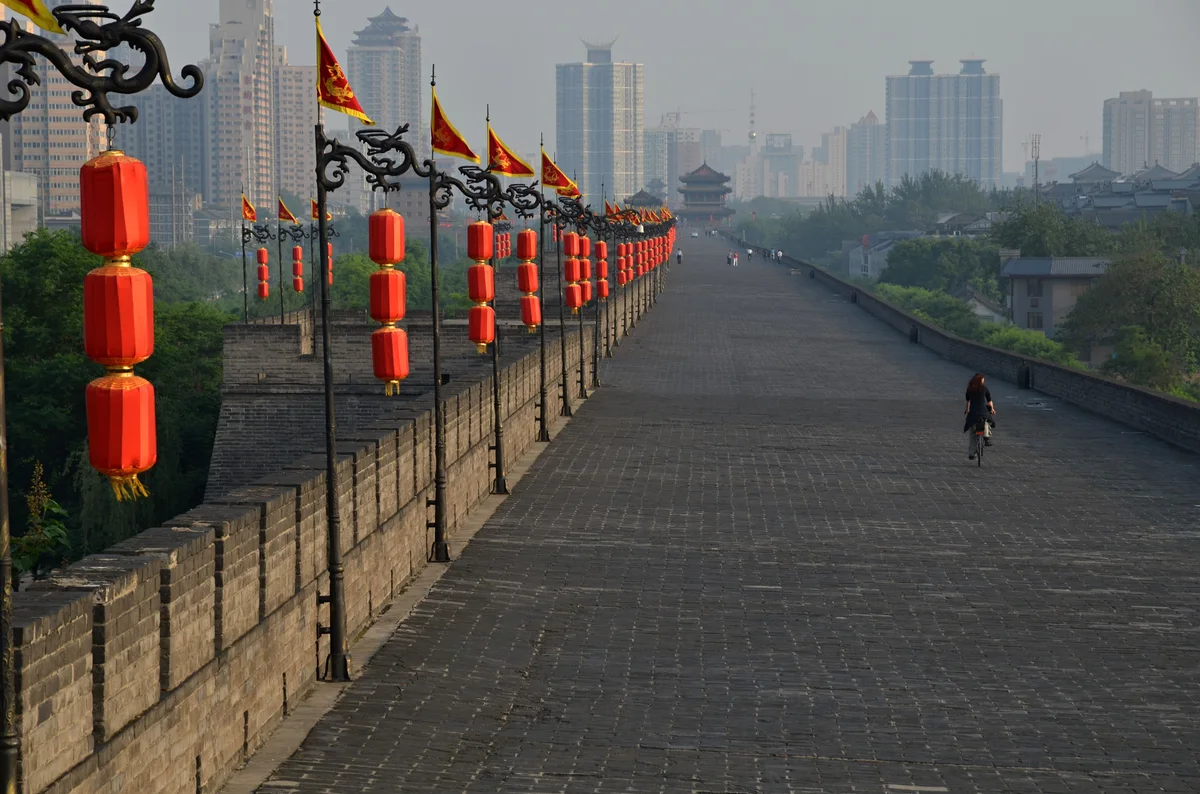
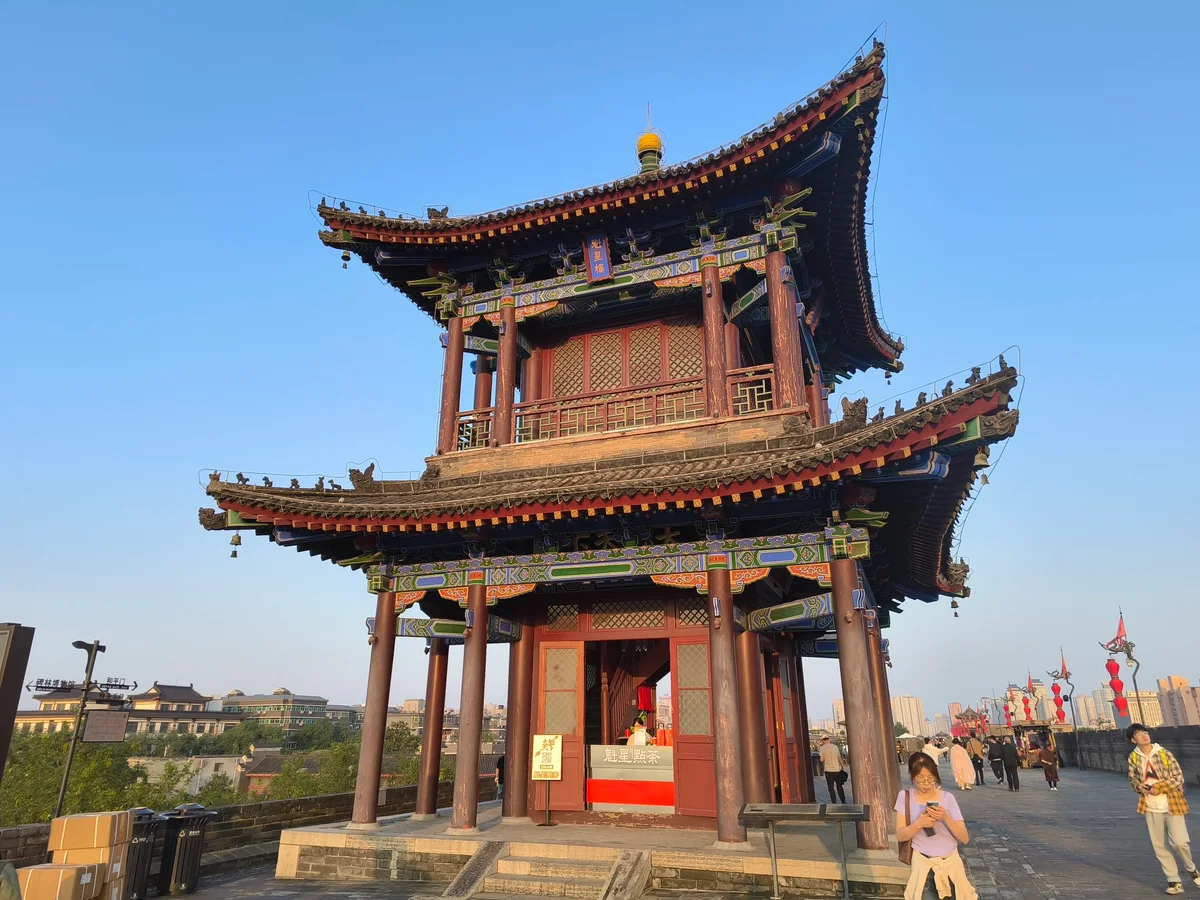
When July 2026 brought a run of 37-40°C, the South Gate section advised going up after 17:30 or between 8:00 and 10:00, and nearly half of that month’s visitors to the wall came in the evening. In autumn 2026 a themed Tang procession runs at Yongning Gate from 17:30 to 17:50, Tuesday to Sunday, and the operator’s own sunset picks are the South Gate’s tower and drawbridge and Kuixing Tower, above Wenchang Gate.
Bell Tower, Drum Tower and the lanes behind them
The Bell Tower, built in 1384, is the largest and best-preserved bell tower in China and now sits on a traffic island at the central crossroads. The Drum Tower, four years older, faces it across a square. Either costs ¥30 (about $4.50 or £3.40), the price the city set in 2018, and both ¥50 (about $7.50 or £5.60). During the autumn 2026 gallery works the museum has cut a single tower to ¥15 (about $2.20 or £1.70), so ask about the combined ticket when you book. You book on the museum’s WeChat account or on Ctrip, up to three days ahead, entering your passport number. A combined ticket can’t be refunded once you’ve climbed one tower, and every concession, over-65s and children included, is for Chinese citizens only.
From 11 October 2026 both towers keep off-season hours, 8:30-18:00 with the last ticket check at 17:30, so climb them before the wall rather than after it. Their indoor galleries close for refurbishment this season, the Bell Tower’s from 11 October to 15 November and the Drum Tower’s from 1 to 30 November 2026, but you can still climb to each tower’s second-floor terrace for the view.

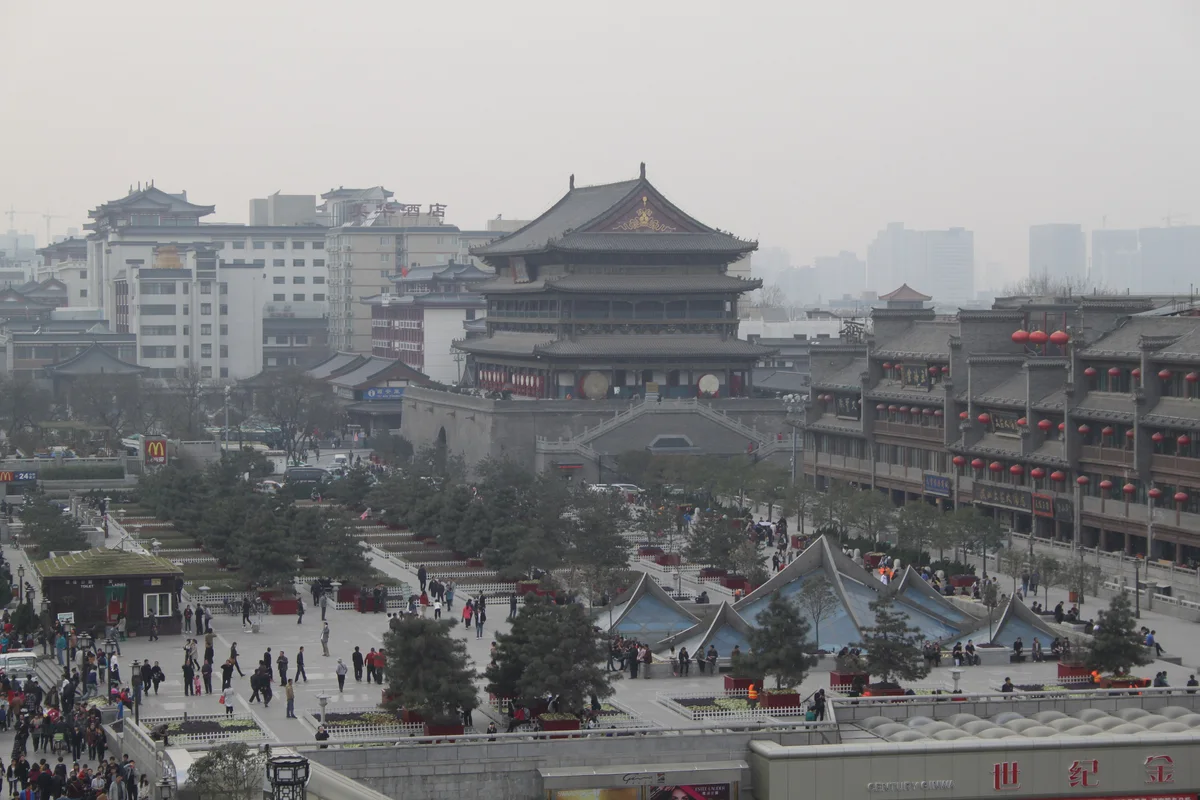
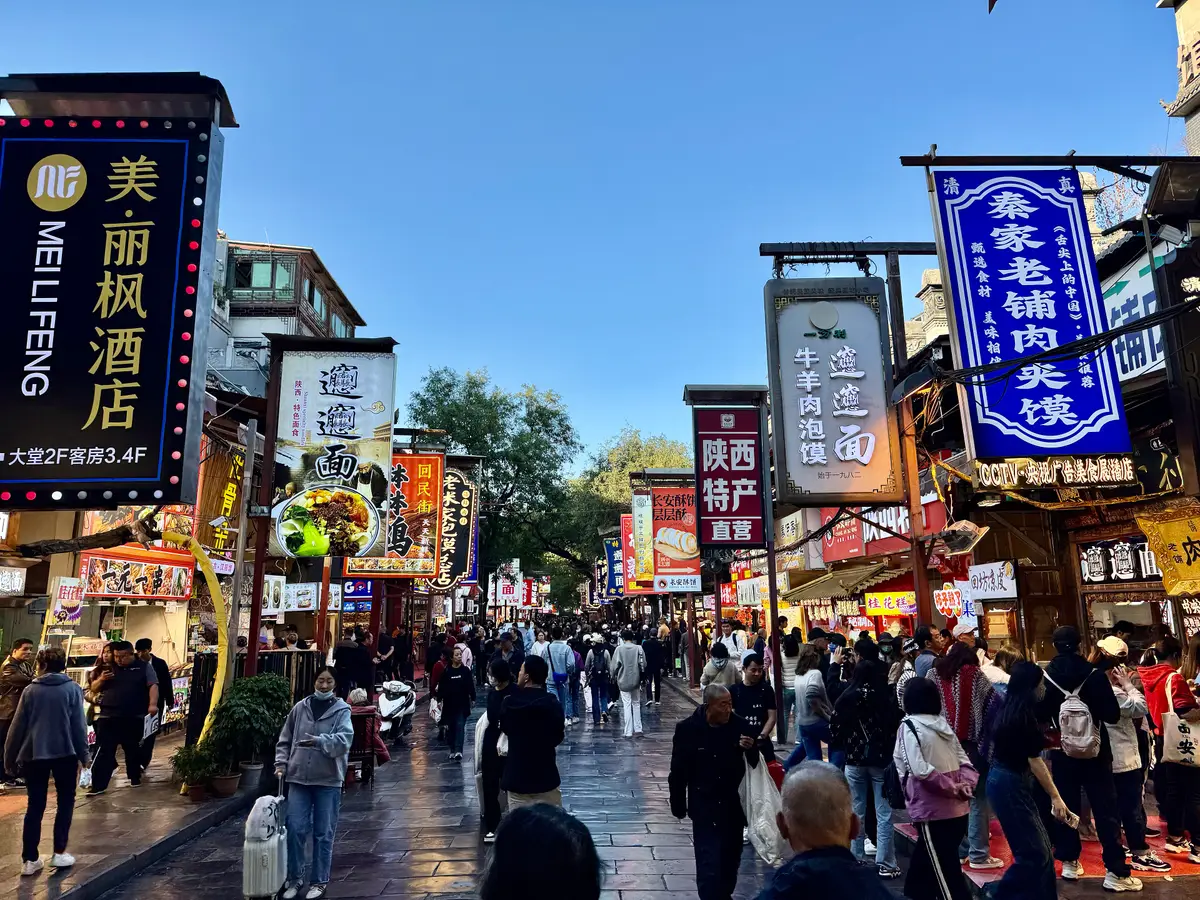
The Muslim Quarter begins behind the Drum Tower and takes in several streets, Beiyuanmen, Beiguangji Street, Xiyangshi and Dapiyuan among them. Its shops and stalls are run by the city’s Hui Muslims, so the food is halal. Two dishes to look for there are roujiamo (a baked bun stuffed with chopped meat) and yangrou paomo (lamb soup with broken bread). Across the city, look for biang biang noodles, oil-splashed noodles, jiangshui mian (noodles in a fermented vegetable soup) and guotie, open-ended dumplings fried crisp underneath.
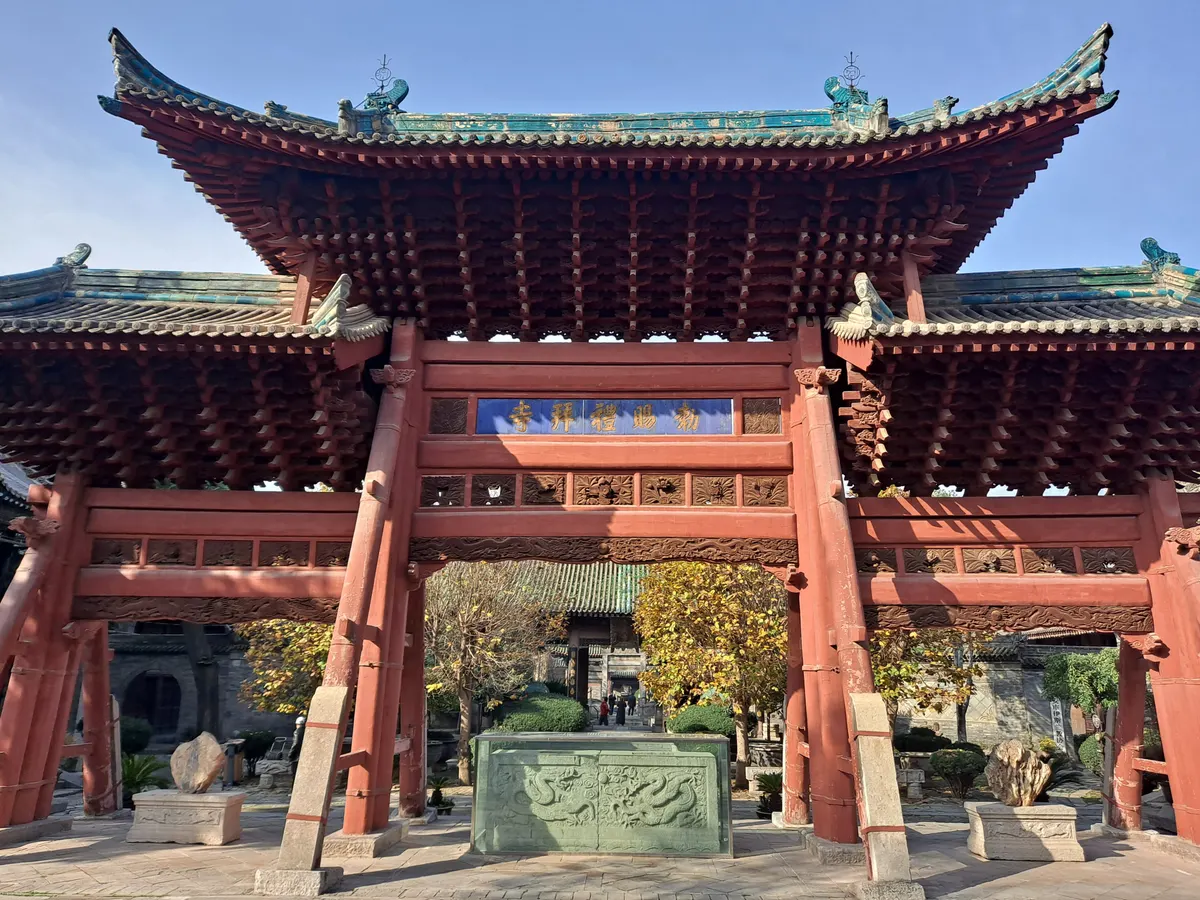
The Great Mosque on Huajue Lane was founded under the Tang, but most of what you see is Ming, extended under the Qing: five courtyards, a carved wooden archway and a prayer hall for 2,000 worshippers. There’s a small entry fee.
Two Tang pagodas and the Shaanxi History Museum
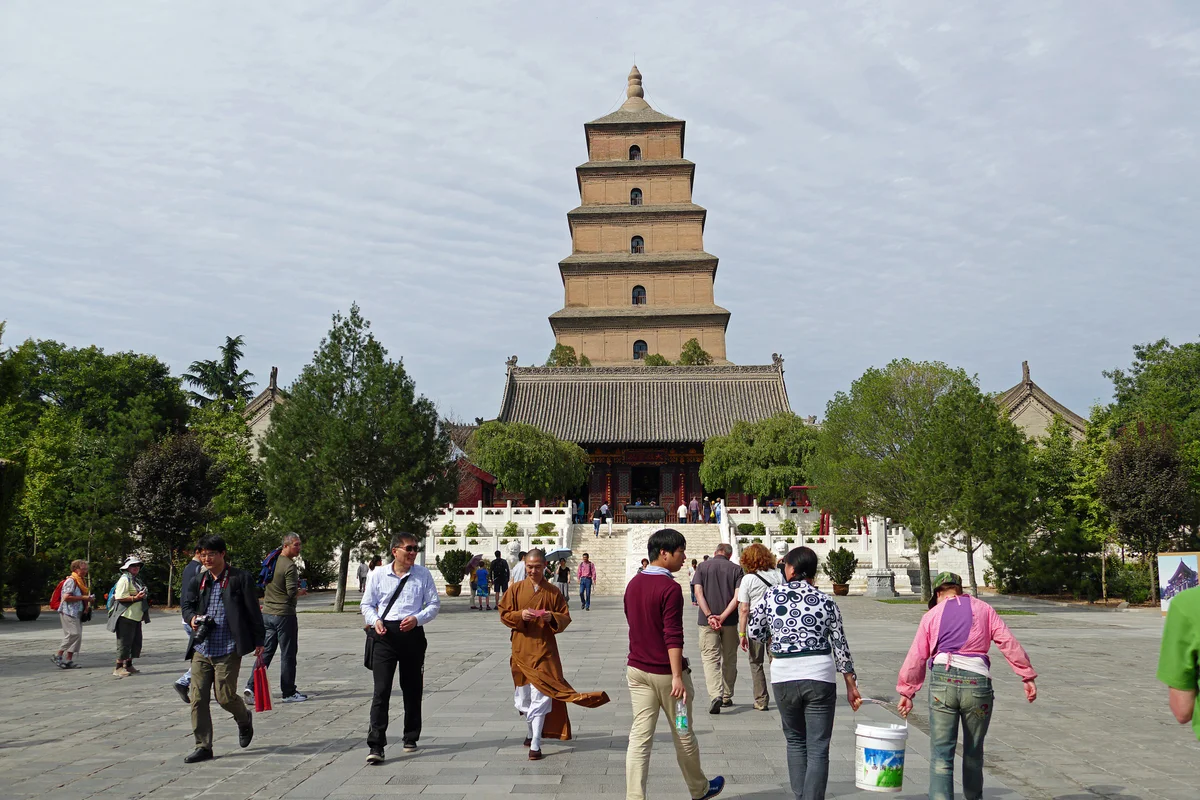
The Big Wild Goose Pagoda was built in 652 under the monk Xuanzang to hold the statues and scriptures he’d brought back from India, and its seven brick tiers still rise over the Da Ci’en Temple. It’s ¥2 on the metro from the Bell Tower to Dayanta (Lines 3 and 4). The temple charges at its gate and sells a separate ticket for the climb; we couldn’t get either price from the temple, so check there.
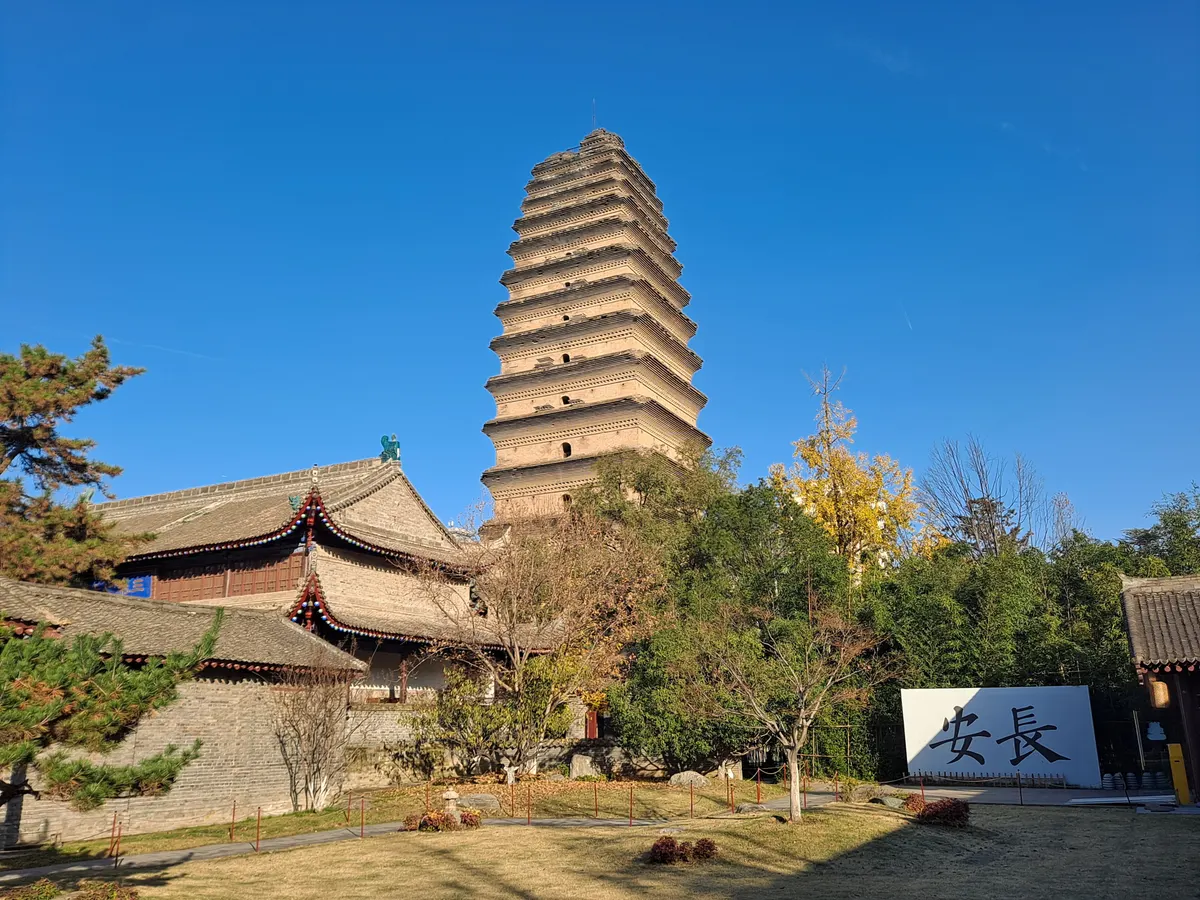
Both pagodas are part of the Silk Roads World Heritage Site that UNESCO inscribed in 2014. The Small Wild Goose Pagoda, finished between 707 and 710 in the grounds of the Jianfu Temple, now belongs to the Xi’an Museum. Entry is free but needs a booking on the museum’s WeChat account, its website or the Ctrip app. Foreign visitors book the same way, then swap the booking for a ticket at the staffed window with their passport. It’s open 8:30-18:00, with tickets checked until 17:00; last winter it closed on Tuesdays from November to April. From Nanshaomen station (Lines 2 and 5), take exit A or F and walk about 200 metres west.
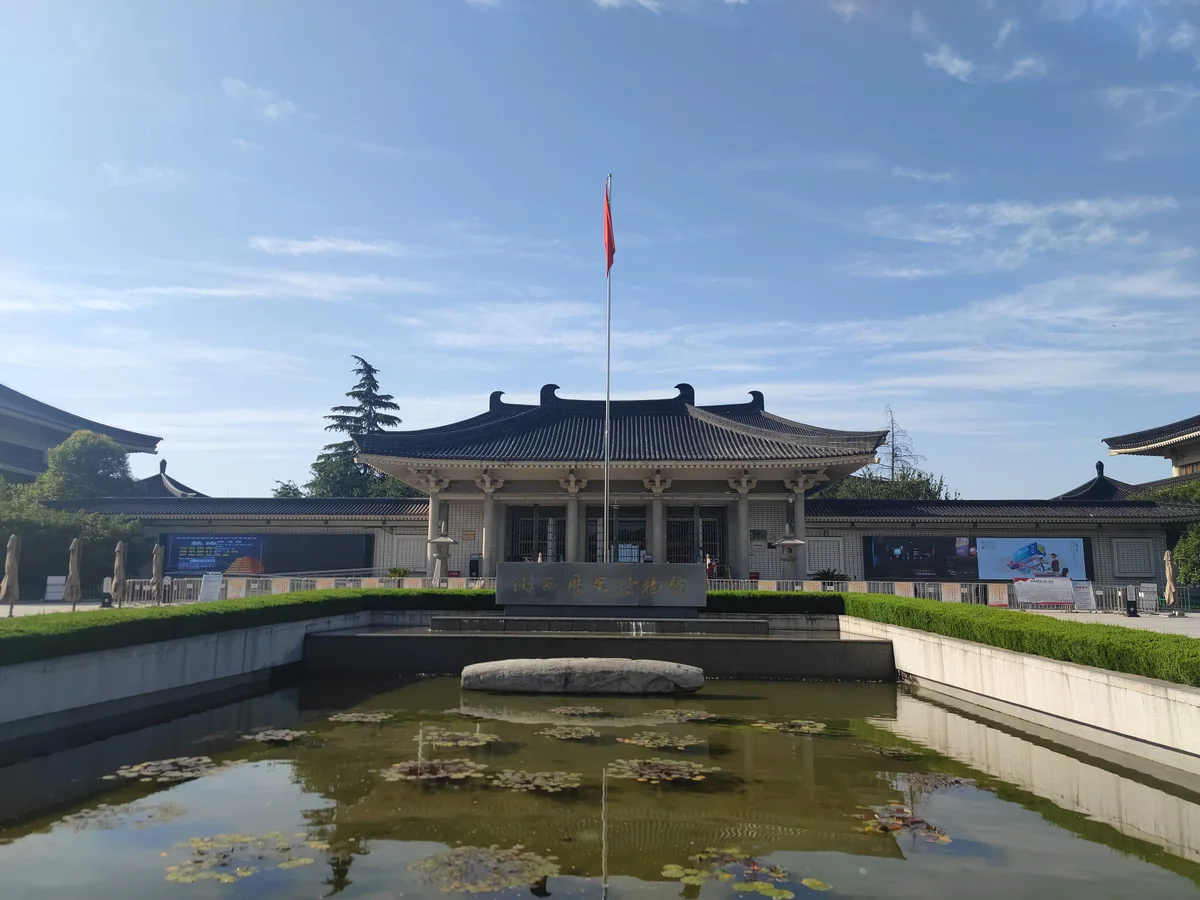
The Shaanxi History Museum, at 91 Xiaozhai Donglu, deserves a whole morning: its collection runs to more than 1.7 million objects, from Shang and Zhou bronzes to Tang gold and silver. It’s free with a reservation on the museum’s WeChat account, a passport counts as ID, and one booking covers up to five people, with a limit of four bookings per ID in any 30 days. Until 14 November 2026 the main building opens every day, Mondays included, 8:30-19:00 with last entry at 18:00, and it’s about 780 metres from Xiaozhai station (Lines 2 and 3). Its Qin-Han Gallery is a separate building out in the Xixian New Area, so check which one you’ve booked.
Two days or three: museums by morning, the wall by evening
Book museum slots for the morning and leave the wall for the last hours of light.
Start the first day with a morning slot at the Shaanxi History Museum, then walk to the Big Wild Goose Pagoda, about a kilometre to the south-east in a straight line: going back to Xiaozhai for one stop on Line 3 is no shorter. Late in the afternoon, hire a bike at the East, West or North Gate and ride round to the South Gate for the sunset; ask at the hire point where you can hand the bike back. Finish on the square between the two towers (from 11 October 2026 they close to visitors at 18:00) and eat in the Muslim Quarter. On the second day, book the Xi’an Museum for the morning, one metro stop south of the South Gate, spend the afternoon at the Beilin Museum and on Shuyuanmen, and see the Great Mosque by daylight. The Beilin Museum opens every day and charges ¥85 (about $12.70 or £9.60); book up to five days ahead on its WeChat account, its website or Alipay.
A third day goes to the Terracotta Army, whose museum takes bookings, foreign visitors included, on its own website and WeChat account. If you’re heading on to the south-west, Chengdu and Chongqing are both direct high-speed rides from Xi’an North.
Two days on that plan come to about ¥250 in tickets and fares: the wall ¥54, a bike ¥45, both towers ¥50, the Beilin Museum ¥85, ¥8 in from the airport and four short metro journeys at about ¥2 each. That’s roughly $37 or £28 at European Central Bank rates for 24 September 2026. During the autumn 2026 gallery works, if both towers are at ¥15, two single tickets come to ¥30 and the total to about ¥230, roughly $34 or £26. The temple, the pagoda climb, the mosque, rooms and meals come on top.
Sleeping inside the wall: Bell Tower or South Gate
Inside the wall you’ll walk to most sights. Around the Bell Tower you’re at the crossing of Lines 2 and 6, on a direct Line 2 route from Xi’an North railway station (¥4) and one change from the airport. The Drum Tower and the Muslim Quarter are close enough to walk to, handy after a long day.
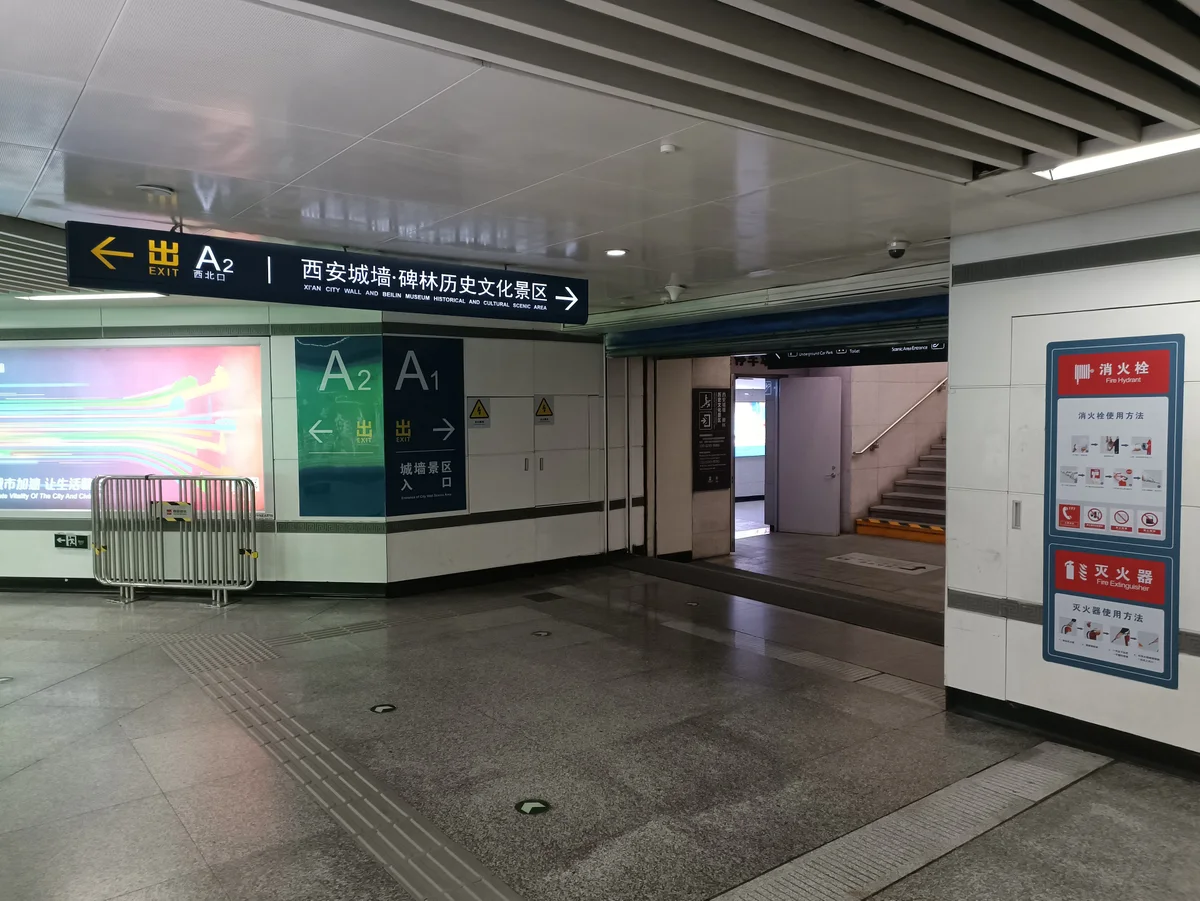
By the South Gate, exit D of Yongningmen station comes out at the gate, the wall stays open above you until 22:00, and Shuncheng Lane, along the foot of the wall, has hostels, bars and cafés. The Bell Tower is one metro stop north and the Xi’an Museum one stop south. Choose it if the wall is the reason you came.
Line 2, the airport and paying with a foreign card
It’s Line 2 you’ll use most. From Xi’an North railway station it runs south through Anyuanmen (the North Gate), Zhonglou (the Bell Tower) and Yongningmen (the South Gate), then on to Nanshaomen for the Xi’an Museum and Xiaozhai for the Shaanxi History Museum. A journey inside the old city costs the base fare, ¥2; from the airport’s T5 station to the Bell Tower it’s ¥8.
If you’re paying with a foreign bank card, go to the service desk: since 2024, 13 stations, among them Xi’an North, Zhonglou, Yongningmen, Xiaozhai, Dayanta and both airport stations, have had terminals that take Visa, Mastercard, American Express, JCB, Diners Club, Discover and UnionPay, and staff sell you a single ticket. Ticket machines take cash, WeChat Pay and Alipay.
The airport’s T5 station, on Line 14, opened in February 2025; change at Xi’an North for Line 2. When it opened, the last train towards the city left T5 at 22:24. If you’re switching between T1-T3 (Airport West station) and T5, or you’ve got off at the wrong one, show your flight details at the ticket office and the journey between the two airport stations is free.
On a US passport, the visa-free way in is the 240-hour transit, with a confirmed onward ticket to a third country or region. Xianyang airport is one of its ports and all of Shaanxi its permitted area, and within the 240 hours you can also visit other permitted areas, Beijing and Shanghai among them. Travellers from the UK, Ireland, Canada, Australia and New Zealand get up to 30 days without a visa until 31 December 2026, the end date China has set so far; entry rules turn on the passport you hold, so confirm yours before you book flights. In Xi’an, the wall’s ticket mini programme and the Shaanxi History Museum’s bookings run inside WeChat, so you’ll want the app, with a card added to WeChat Pay.
Choosing your month
April and October have much the same average highs, 20.4°C and 19.3°C, and so do May and September, at 25.8°C and 24.7°C. What separates each pair is rain: nine wet days in April and in May, against 11 in October and 12 in September, which with 108 mm is the wettest month of the year. For the same warmth with fewer wet days, pick the spring month. July’s average high is 32°C, and January is cold and dry, with highs of 4.8°C and lows of -4.2°C.
The Shaanxi History Museum raises its daily quota from 12,000 to 17,500 visitors for the National Day holiday, 1-7 October in 2026, and the Xi’an Museum from 15,000 to 18,000.
A booking calendar for Xi’an
| Sight | Price | Window | How to book |
|---|---|---|---|
| Shaanxi History Museum | Free | 5 days ahead, slots at 17:00 | Museum’s WeChat account, passport as ID |
| Xi’an Museum and Small Wild Goose Pagoda | Free, booking required | 5 days ahead, slots at 18:00 | WeChat account, museum website or Ctrip app; ticket from the staffed window |
| Beilin Museum | ¥85 | Up to 5 days ahead | Museum’s WeChat account, website or Alipay |
| Bell and Drum Towers | ¥30 each, ¥50 both (¥15 a tower during the autumn 2026 works) | 3 days ahead | Museum’s WeChat account or Ctrip, passport number |
| City Wall | ¥54, bike ¥45 | Can be bought on the day | WeChat mini programme, Meituan or Douyin, or the ticket windows (entry by ID card or face, not QR, from 1 July 2026) |
All five take bookings in your own name, and on the day it has to match: the Shaanxi History Museum checks your passport against the booking at the door, and the wall matches your face at the gate.
On the map
The map loads on click, to keep the page light.
The map didn’t load. Check your connection and refresh the page.
Tickets and opening hours
- Ticket price
- City Wall ¥54, or ¥27 for children aged 7 to 18 and full-time students up to bachelor's level; free entry for young children and over-65s needs a Chinese ID card. Bike hire on the wall ¥45 for three hours, tandem ¥90. Bell Tower or Drum Tower ¥30, both towers ¥50, with concessions for Chinese citizens only; during the autumn 2026 gallery works (Bell Tower 11 October-15 November, Drum Tower 1-30 November) the museum charges ¥15 for a single tower. Beilin Museum ¥85. Shaanxi History Museum and Xi'an Museum free with a booking. Metro journeys from ¥2.
- Opening hours
- City Wall at the South Gate 8:00-22:00; other gates may close earlier. Bell and Drum Towers 8:30-18:00 from 11 October 2026 (off-season hours), last ticket check 17:30; indoor galleries closed for works, Bell Tower 11 October-15 November, Drum Tower 1-30 November 2026. Shaanxi History Museum 8:30-19:00 (last entry 18:00), open every day until 14 November 2026. Xi'an Museum 8:30-18:00, tickets checked until 17:00.
Prices and hours from the operators, the museums and Xi'an Metro, checked on 26 September 2026, the Bell and Drum Tower hours and single-tower prices on 9 October 2026. Holiday hours differ, so check before you go.
Details checked: 26 September 2026
Read also

Cities · 14 min read
Chengdu Guide 2026: Pandas, Teahouses and How Long to Stay
Verified · 6 October 2026Chengdu for a first trip: the panda base at opening time, Wuhou Shrine on a passport, tea in People's Park, trains from Xi'an and a museum shut until 2027.

Cities · 11 min read
Chongqing in Two Days, Plus a Yangtze Cruise (2026)
Verified · 6 October 2026Hongyadong lit up from the river, a monorail through a block of flats, the Yangtze cableway, hotpot, and which way to take a Three Gorges cruise.

Cities · 10 min read
Guilin and Yangshuo: the Li River Cruise and 3-4 Days (2026)
Verified · 6 October 2026Why the Li River cruise means a night in Yangshuo, booking it by passport, when the river closes, the 20-yuan view and trains from Hong Kong.

Cities · 12 min read
Harbin Travel Guide 2026: Russian Architecture and Winter
Verified · 6 October 2026Two days for Harbin: Central Street and St Sophia, Daowai, booking the Unit 731 site, where to sleep, the metro, and January nights at -22.9°C.