
Terracotta Warriors from Xi'an: Tickets, Bus or Tour 2026
¥120 all year, booked by passport on the museum's own site; Line 9 and a local bus, a car or a tour; who gets in free and how to fit in both sites.
An adult ticket to the Terracotta Warriors costs ¥120 all year, about $18, £14 or €16, and you book it ahead, by name, with your passport, on the museum’s own ticket site, one of its two WeChat accounts or the booking channel for overseas visitors that the museum’s English website links to. That one ticket covers the three pits and Lishan Garden, the park around Qin Shi Huang’s tomb, on the date you booked. Until 15 November 2026, ticket checks run from 08:30 to 17:00. To cover the 41 km or so from Xi’an’s Bell Tower on your own, the museum points you to metro Line 9 and a local bus; a car or a tour does it door to door. We read the prices, hours and routes on the museum’s website on 9 October 2026.
What its English pages leave vague is who gets in free. The museum’s free tickets for over-65s and for children up to 16 are written for Chinese nationals. Children of other nationalities go by height instead, free up to 1.4 metres, and a foreign visitor over 65 should budget the full ¥120.
Two sites on one ticket
The museum’s official name is Emperor Qinshihuang’s Mausoleum Site Museum, and it’s two places a short ride apart. The Terracotta Army museum holds the three pits, each in its own hall. Lishan Garden is the archaeological park around the mound of the emperor’s tomb, and that’s where the two bronze chariots are shown. The museum’s Chinese notice reckons on about an hour and a half at each, with a free shuttle bus between them, and your ticket is checked three times during the day.
| Season | Ticket checks | Site closes |
|---|---|---|
| 16 March-15 November | 08:30-17:00 | 18:30 |
| 16 November-15 March | 08:30-16:30 | 18:00 |
In the high season both sites stop checking tickets at 17:00, and that’s the line that shapes your day. With an hour and a half at the pits before the shuttle, a slot much after 15:00 can leave you at the Lishan Garden gate after its checks have closed. National holidays get their own hours by announcement: over May Day in 2023, the museum started checking tickets at 07:30 and kept going until 18:00.
Booking with a passport
The museum sells by real name only, foreign visitors included, and that goes for free tickets too. Its ticket notice names three channels: its ticket website, reached from bmy.com.cn, where you book with a passport number, and two WeChat accounts, which it names in English as Qin Shi Huang Emperor’s Mausoleum Site Museum and Terracotta Warriors Ticket Service Online. Visitors from abroad have a fourth: in April 2024 the museum launched a booking platform for overseas visitors with Ctrip Group, paid by Visa or Mastercard in your own currency, and on 9 October 2026 the “Ticket” link on the museum’s English website went to the attraction’s page on Trip.com. The museum’s own platform sells admission only, with nothing extra bundled in, so if a site makes you buy a package to get in, it isn’t the museum’s.
Each ticket is for a time slot, and the museum asks you to be at the gate half an hour before yours. The gate checks that you, your ticket and your passport match, so bring the passport whose number is on the booking: the document itself, not a photo or a copy. Plans changed? Cancel before your ticket’s checked: a ticket that’s been used isn’t refunded, and refunds reach the account you paid from within 3-5 working days.
How far ahead should you book? The museum caps a day at 65,000 visitors and stops selling when it gets there, and Chinese holidays fill first. On 9 February 2024, Shaanxi’s cultural heritage administration announced that tickets for 12 to 14 February, the third to fifth days of the Spring Festival, had already sold out. Away from the holidays there’s less pressure. The museum’s open pages don’t say how many days ahead a date goes on sale, so if yours isn’t bookable yet, try again closer to the trip rather than turning to a reseller. If the booking stalls, the museum’s ticket line is +86 29 8139 9127.
Children, students and over-65s
The concession list on the museum’s ticket page is where nationality comes in, so read it before you pay for a family:
- Children. Chinese nationals up to 16 go free with a parent or guardian. For children of other nationalities, the museum’s English notice uses height: up to 1.4 metres, inclusive, free with their parents. Either way, the free ticket still has to be booked in advance.
- Over-65s. The Chinese version of the list makes this free for Chinese nationals, so budget ¥120 for a foreign visitor over 65.
- Students. Half price, ¥60, for full-time students up to undergraduate level with a valid student card, which is checked at a separate student-ticket channel at the gate. The Chinese list says Chinese students and the English summary doesn’t mention nationality, so with a foreign student card, ring the ticket line first and keep ¥120 in the budget.
Getting there on Line 9 and a local bus
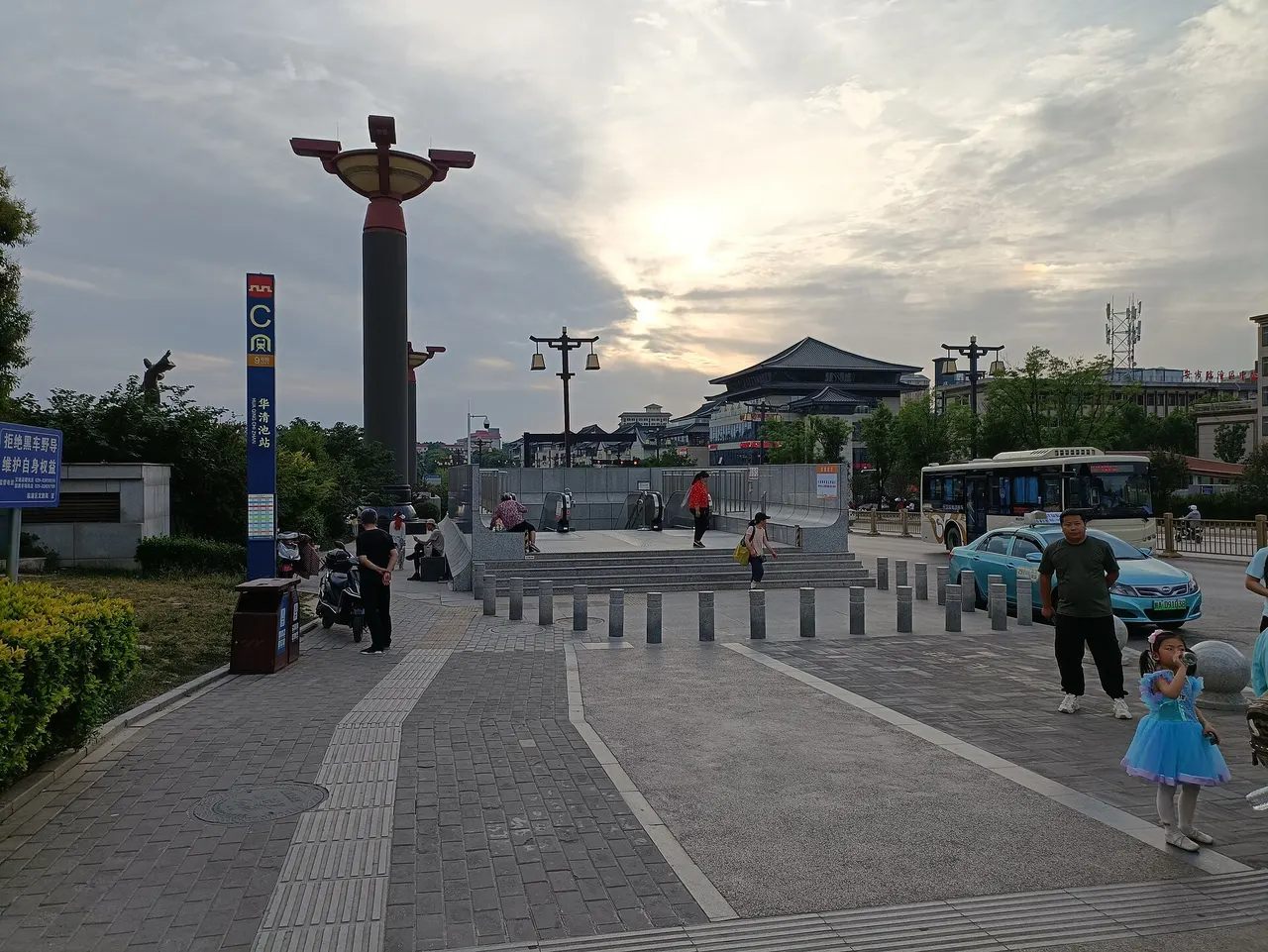
The museum’s route page sends you by metro. Change at Fangzhicheng onto Line 9 towards Qinlingxi, get off at Huaqingchi, leave by exit C, walk about 200 metres to the Huaqingchi bus stop and take Lintong bus 613 or 602 for the last stretch. From the Bingmayong stop it’s 170 metres to the museum. How you reach Line 9 depends on where you start:
| Starting point | Metro | Last leg |
|---|---|---|
| Xi’an North, for fast trains | Line 2 to Beidajie, Line 1 to Fangzhicheng | Line 9 to Huaqingchi, then bus 613 or 602 |
| Xi’an station, by the city wall | Line 4 to Wulukou, Line 1 to Fangzhicheng | Line 9 to Huaqingchi, then bus 613 or 602 |
| Tonghuamen, on Line 3 | Exit D, then 310 metres on foot to the Qinfeng bus depot | Direct scenic-area bus to the museum |
That last row is the museum’s own alternative: a direct scenic-area bus from the Qinfeng depot to the museum’s stop, which skips Line 9 altogether. The museum’s page gives neither bus fare, so check it at the stop. Metro fares go by distance; for sample fares and which stations take foreign cards, see the Xi’an guide. Don’t expect speed: three lines and a bus is the cheap way out to Lintong, not the quick one, and the museum’s estimate from the airport is about two and a half hours.
Most fast trains from Beijing arrive at Xi’an North, at the top of the first row, but a few, such as G655, run into Xi’an station, the second row. Two overnight D trains from Beijing, the D15 (05:11) and the D117 (01:16), call at Xi’an East instead; they’re not worth planning around. To book one on a foreign passport, compare 12306 and Trip.com first.
A driver, DiDi or a tour
Three metro lines and a bus are fine if you’re travelling light with the whole day free; with children, luggage or a train to catch the same evening, a car makes more sense. DiDi works in English and takes foreign cards; set it up at home along with the other apps you’ll need in China. By our routing on OpenStreetMap data, the museum is 41 km by road from the Bell Tower. If you’re being collected afterwards, agree the spot before you go in: you go in by the North Gate, and the way out is the museum’s East Gate exit.
A guided tour from Xi’an folds the transport, the timing and the history into one booking. Before you pay for one, ask three things the museum’s own rules make matter: whether your admission is booked in your name and passport number through the museum’s channels, or left to you; whether the day goes on to Lishan Garden for the bronze chariots, which your ticket already covers; and what time you’ll reach the gate, since both sites stop checking tickets at 17:00, or 16:30 from 16 November. If you’d rather take the metro and still have someone walk you through the pits, the museum runs its own guide service from the Pit 1 information desk, on +86 29 8139 9047 or 8139 9048; ring ahead to ask whether an English-speaking guide is free for your slot.
The pits, the chariots and the bag desk
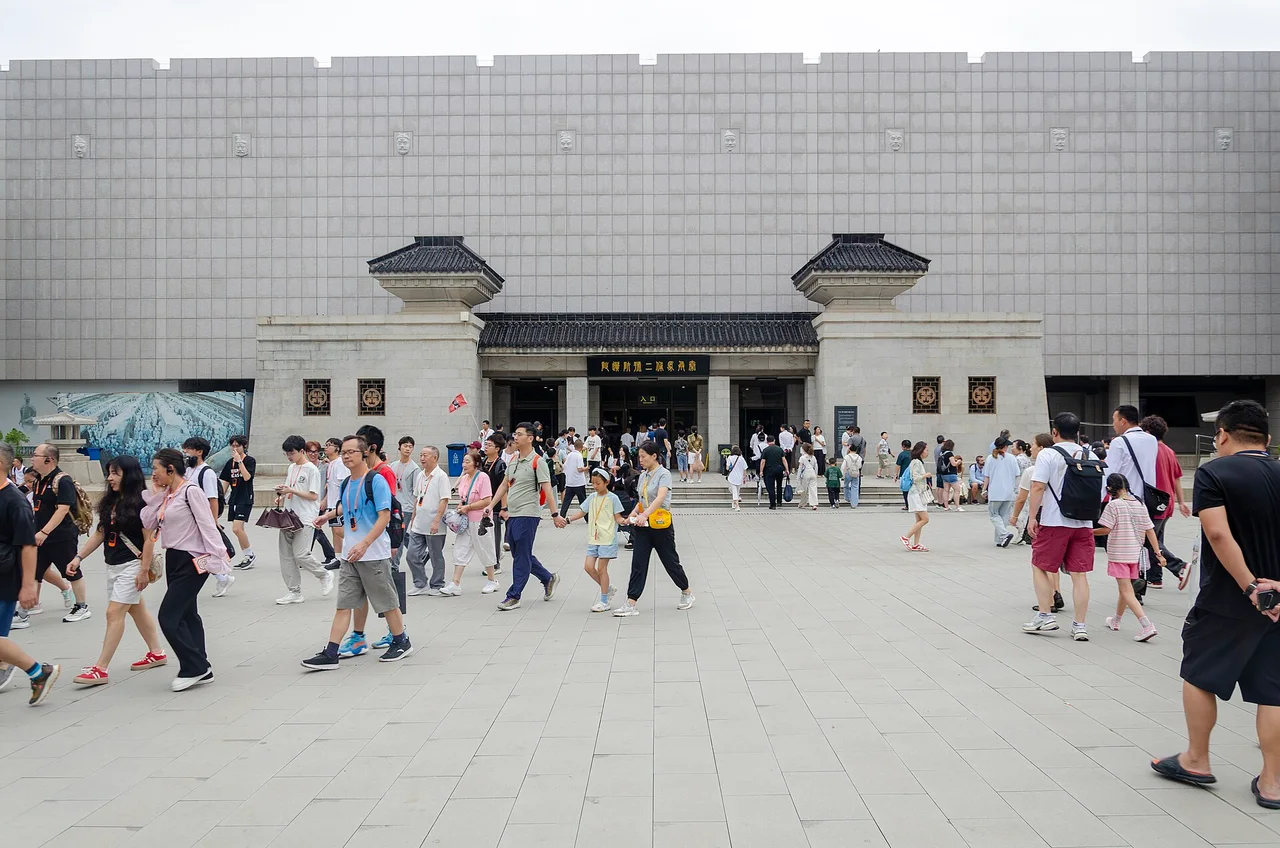
The route through the museum runs one way, in at the North Gate and out at the East Gate. Bags can be left free at the luggage desk east of the ticket hall, behind the LED screen wall, which helps if you’ve checked out and have a train later. It won’t take valuables, though: cash, phones, computers and other electronics, documents and jewellery stay with you, and so do drinks and food. Drones, kites, loudspeakers, lighters, bicycles and scooters are among the things that aren’t allowed in at all; the full list is on the museum’s ticket page.
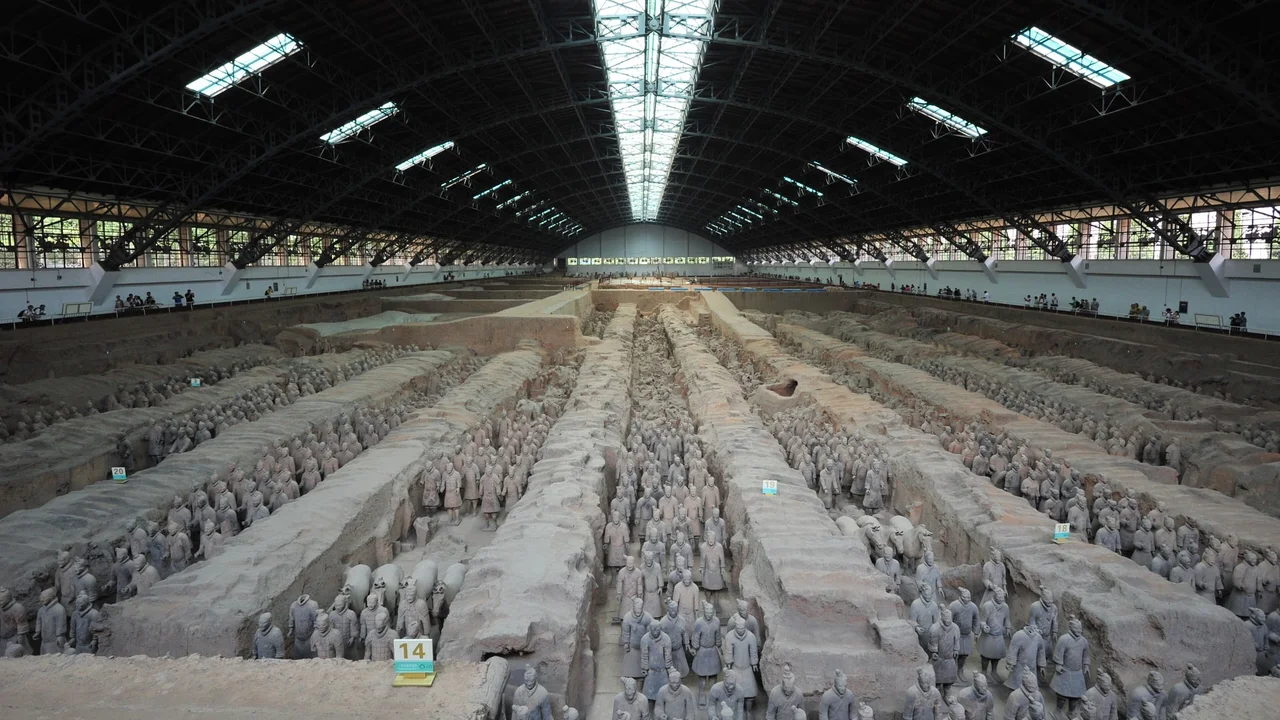
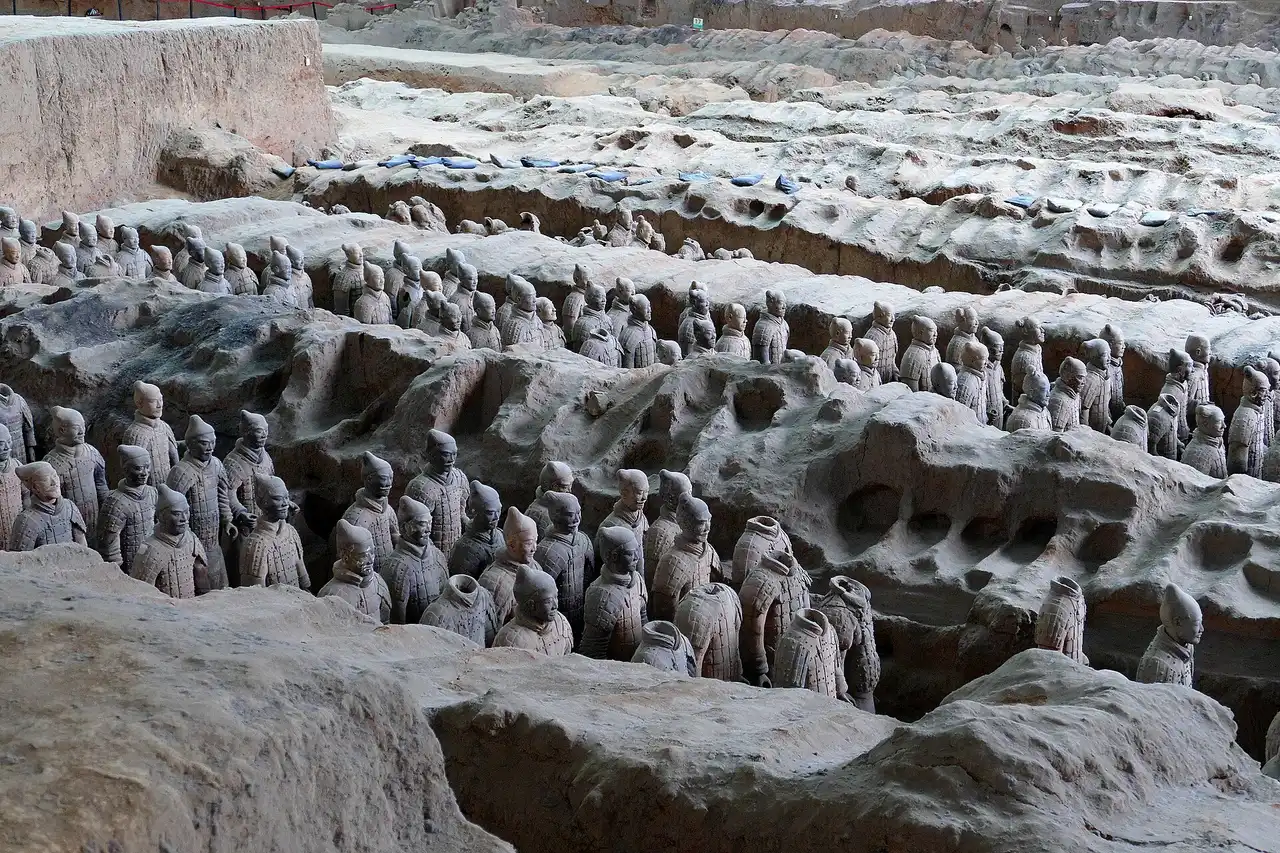
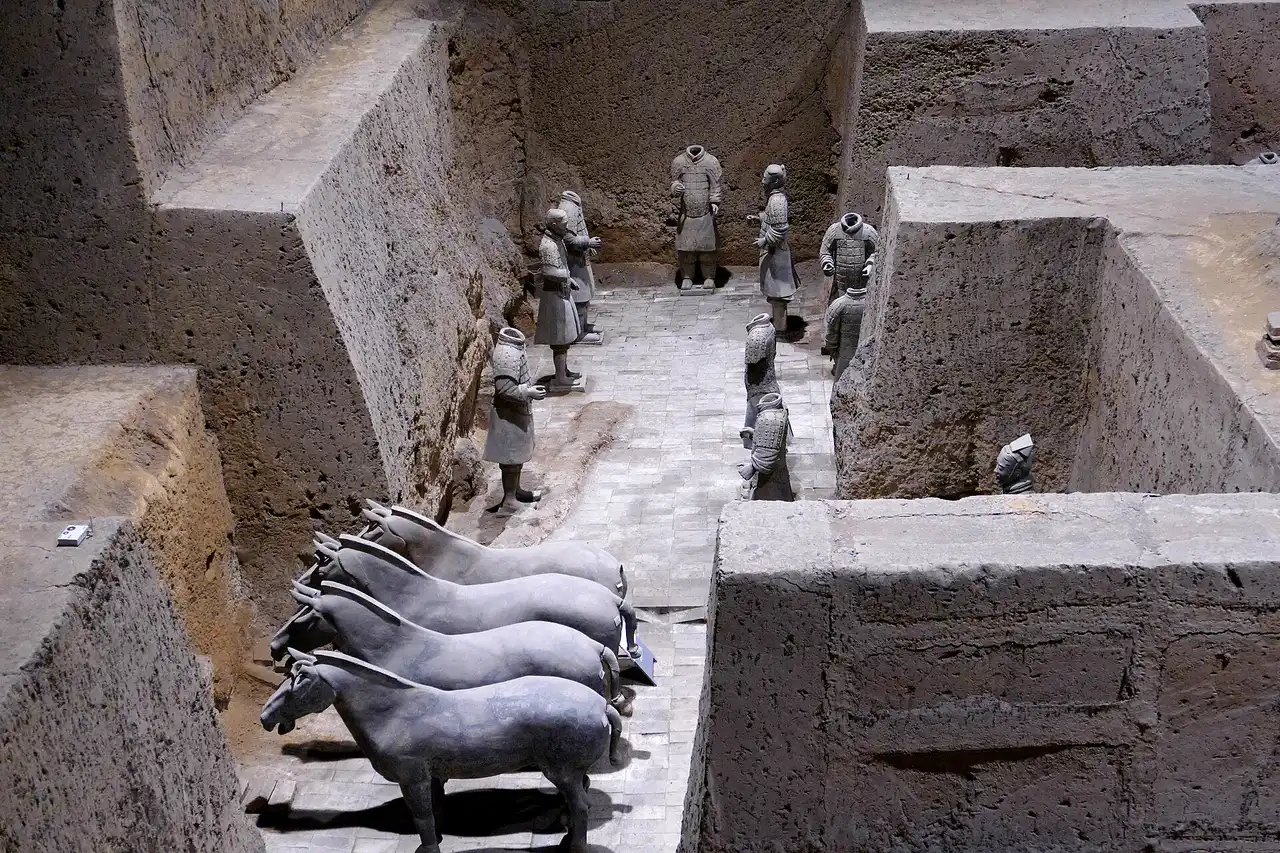
Pit 1 is the one from the photographs, 14,260 square metres with about 6,000 figures and horses; villagers digging a well found it in March 1974. Pit 2 turned up in April 1976 and covers about 6,000 square metres, where test digs suggest more than 1,300 figures and horses. Pit 3, found in May that year, covers 520 square metres, and some scholars read it as the command post for the other two. The museum’s suggested two-hour route goes Pit 1, Pit 3, Pit 2, then on to the bronze chariots.
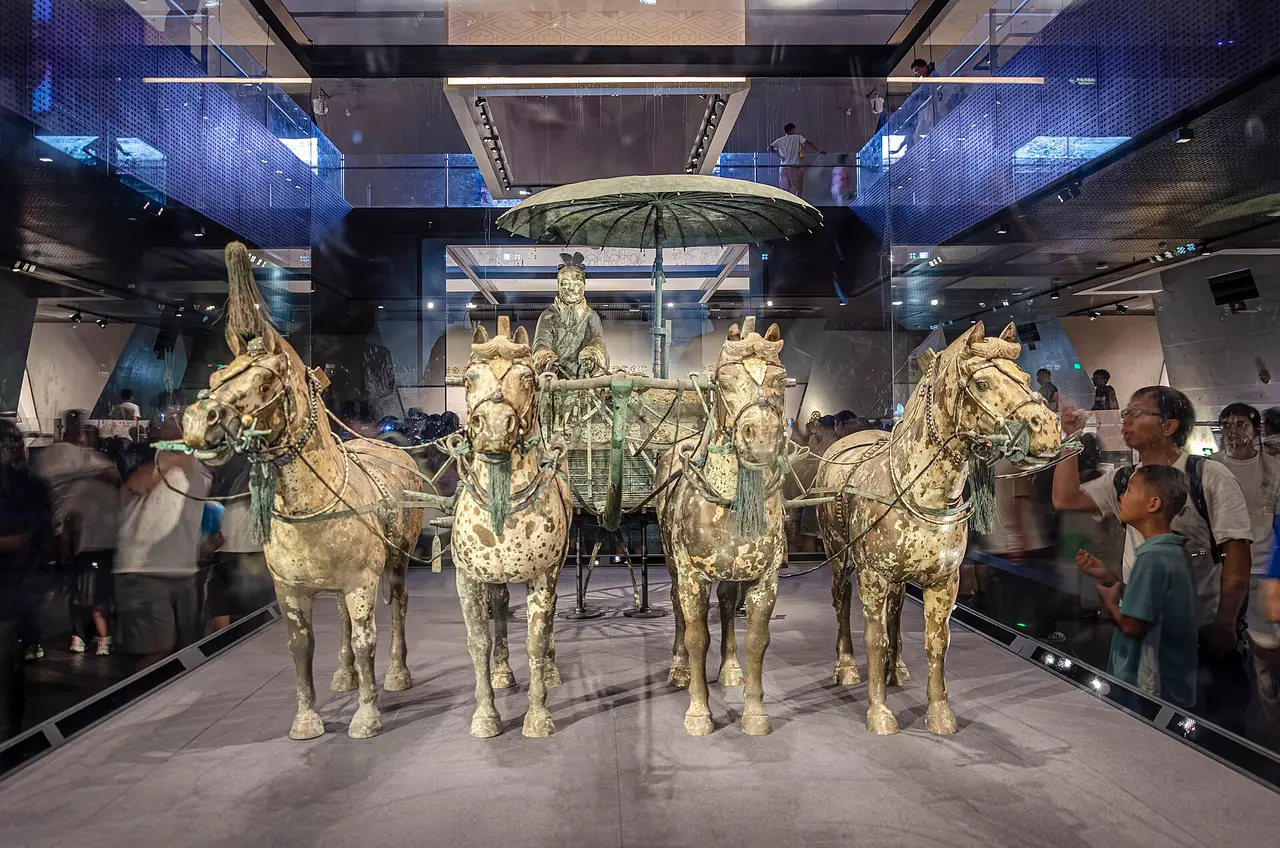
For Lishan Garden, the free shuttle leaves from the museum’s car park once you’ve come out, on the same ticket. The bronze chariots there were found in December 1980, 20 metres west of the tomb mound and 7.8 metres down: two four-horse carriages at half size, carrying 14 kg of gold and silver fittings between them. If the walking’s a struggle, electric carts cost ¥5 a person at the museum and ¥15 in Lishan Garden.
Before you leave the hotel
Five things to check on the morning itself:
- Your passport, the same one the ticket was booked on.
- Your slot time, with half an hour in hand to reach the North Gate before it.
- A plan for both sites. Until 15 November 2026 ticket checks stop at 17:00 at the pits and at Lishan Garden alike, and from 16 November at 16:30, so leave time for the shuttle after the pits.
- A light bag, or the free luggage desk, with your valuables and electronics kept on you.
- The way back. Metro, the direct bus or a car booked for the East Gate exit; the site closes at 18:30 until 15 November and at 18:00 after that.
If you’re arriving from Beijing on the night train, as our 10-day China itinerary does, give Xi’an itself the first day and Lintong the second; the wall and the city’s museums for that first day are in the Xi’an guide. The Forbidden City in Beijing books by passport too, on a stricter timetable: here’s how its booking night works.
On the map
The map loads on click, to keep the page light.
The map didn’t load. Check your connection and refresh the page.
Tickets and opening hours
- Ticket price
- ¥120 per adult all year, for the Terracotta Army museum and Lishan Garden on the same day; ¥60 half-price student ticket. Booked in advance by real name, foreign visitors with a passport.
- Opening hours
- Ticket checks 8:30-17:00 from 16 March to 15 November (site closes 18:30), 8:30-16:30 from 16 November to 15 March (closes 18:00).
Prices, hours and booking rules from the museum's own website, read on 9 October 2026. Hours on national holidays follow the museum's latest announcement.
Details checked: 9 October 2026
Read also

What to see · 10 min read
Forbidden City Tickets: How Foreigners Book by Passport
Verified · 6 October 2026No tickets on the day: each date opens at 20:00 Beijing time, seven days ahead; ¥60 April-October, booked by passport. Sessions and sold-out dates.

Transport · 9 min read
Beijing to Harbin by Train 2026: 4.5 Hours, Fares, Stations
Verified · 13 October 2026The fastest G trains take 4h33 from Beijing Chaoyang to Harbin West, ¥605 in second class midweek; sleepers run ¥261.5 and up. Stations and fares.

Before you go · 9 min read
China in Winter: Weather, Crowds and What Stays Open
Verified · 13 October 2026January lows run from -22.9°C in Harbin to 19.5°C in Sanya. Which cities have heating, when winter hours start, and which week is crowded.

Before you go · 8 min read
Chinese New Year 2027 in China: What Closes and When
Verified · 10 October 2026New Year's Day is 6 February 2027; the State Council hadn't set the break by mid-October 2026. What closed in 2026, the rail window, dates to watch.