
12306 vs Trip.com: Booking China Train Tickets (2026)
12306 is China Railway's site; Trip.com adds PayPal and home currency. The 15-day window, the new Beijing-Shanghai pre-booking, fees and which to use.
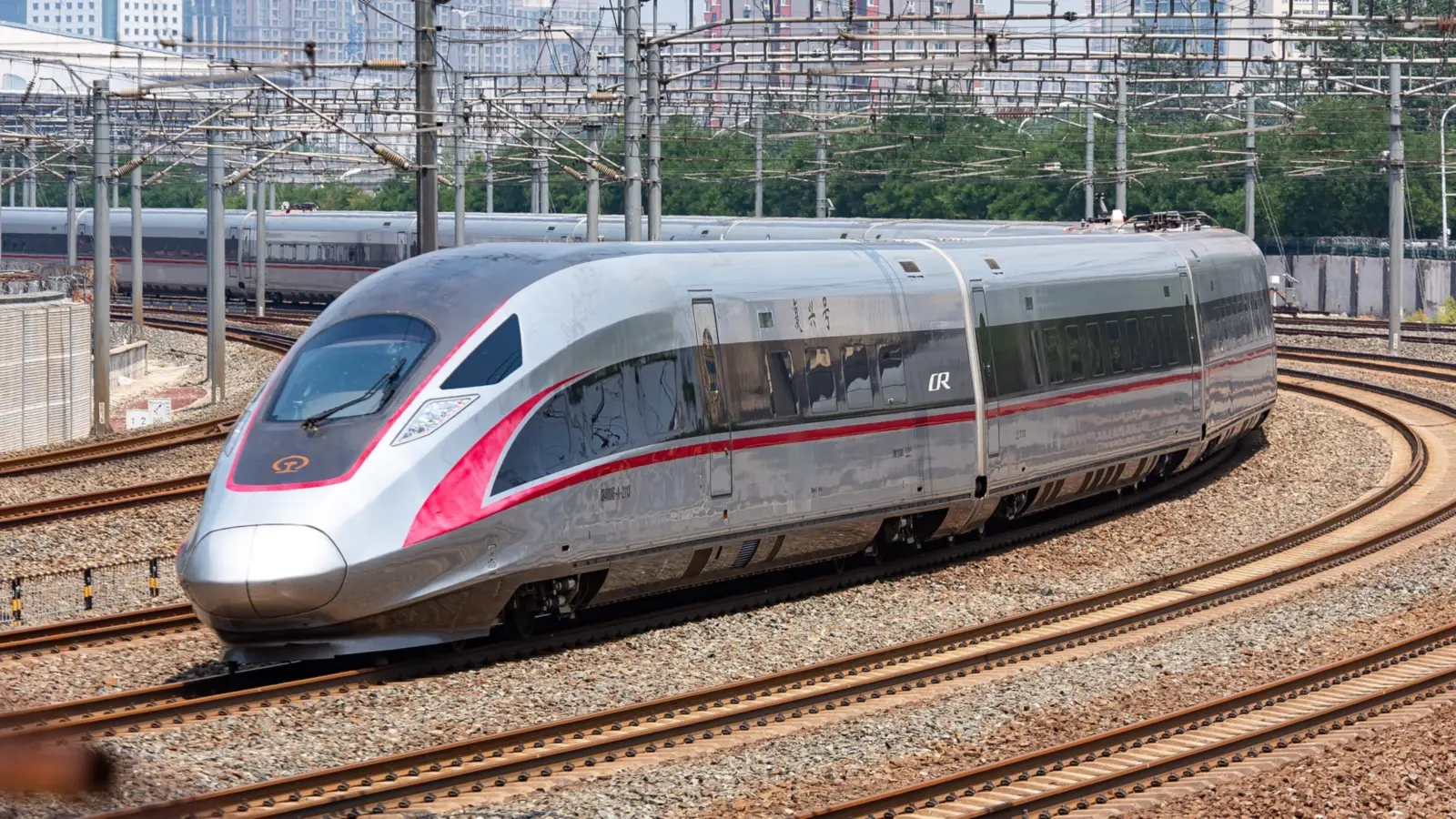
Train tickets in China go on sale 15 days before departure, on every website, and since 20 July 2026 there’s one exception: the railway’s 12306 app takes advance requests for more than 200 trains on the Beijing-Shanghai lines and fills them 16 to 20 days out, before open sale begins, though China Railway hasn’t said whether a foreign passport can use it. No agent can match that, since China Railway calls 12306 its only official online sales channel, and it’s one more reason to know how 12306 works before you book.
For most first trips, 12306, China Railway’s own website and app, is the better place to book, provided you can get through its passport check: it sells every seat at the railway’s fare, applies the railway’s rules directly and gives you one free refund within 30 minutes of buying, as long as the train is at least 4 hours away. Use Trip.com when you’d rather pay in your own currency with PayPal or Apple Pay and deal with an English-speaking agent. The railway’s rules below are quoted from 12306, China Railway and Chinese government guidance; Trip.com’s features are described from its terms.
Side by side on 3 October 2026
| 12306 (China Railway) | Trip.com | |
|---|---|---|
| Who you deal with | the railway itself | an agent that books for you |
| Sign-up | account plus passport check, online or at a station | account, passport details at booking |
| Paying | Chinese or foreign bank cards, mobile wallets | cards, PayPal, Apple Pay, Google Pay, in most major currencies |
| Booking fee | none, railway fare only | ”No booking fee”, in its terms |
| When tickets go on sale | 15 days ahead; on Beijing-Shanghai trains, app pre-booking requests 30 to 17 days ahead from 27 October 2026 (until then, for trains up to 24 November) | the same 15 days; earlier requests wait in a queue |
| Refunds and changes | railway fees, plus one free refund within 30 minutes if the train is 4+ hours away | railway fees, plus ¥15 a person when Trip.com staff issued the ticket |
| If something goes wrong | the railway, on +86 12306 | Trip.com; the railway doesn’t handle problems from other sites |
The last row is the one people skip. 12306’s help pages say the railway “will not handle ticketing problems that occurred on other websites”, so an error in a Trip.com booking is Trip.com’s to fix.
What 12306 asks of a foreign passport
The English site at 12306.cn sells, changes and refunds tickets, and it only takes foreign passports as ID. Before you can buy, your identity has to be checked. A 2025 government guide for foreign business people, co-written by China State Railway Group, describes three ways: the system checks your name, nationality and passport number automatically; you upload a photo of your passport’s photo page for a manual check; or you take your passport to a ticket window at a station. Once that’s done, you can pay online with a Chinese or foreign bank card, or with a mobile wallet; the wallet side is covered in setting up payments.
A few house rules shape how you book:
- Tickets are sold from 5:00 to 1:00 the next morning, and only until 23:30 on Tuesdays.
- One passport can hold only one ticket for the same train on the same date.
- Travelling companions go into your “My Passengers” list, and you can book for them once their passports are verified.
- The ticket is electronic and tied to the passport you booked with. The printed itinerary isn’t a ticket.
12306 also has an app, Railway 12306, in English and Chinese, and an official mini programme inside Alipay; all three count as official 12306 platforms. It’s one of the six in our rundown of China travel apps.
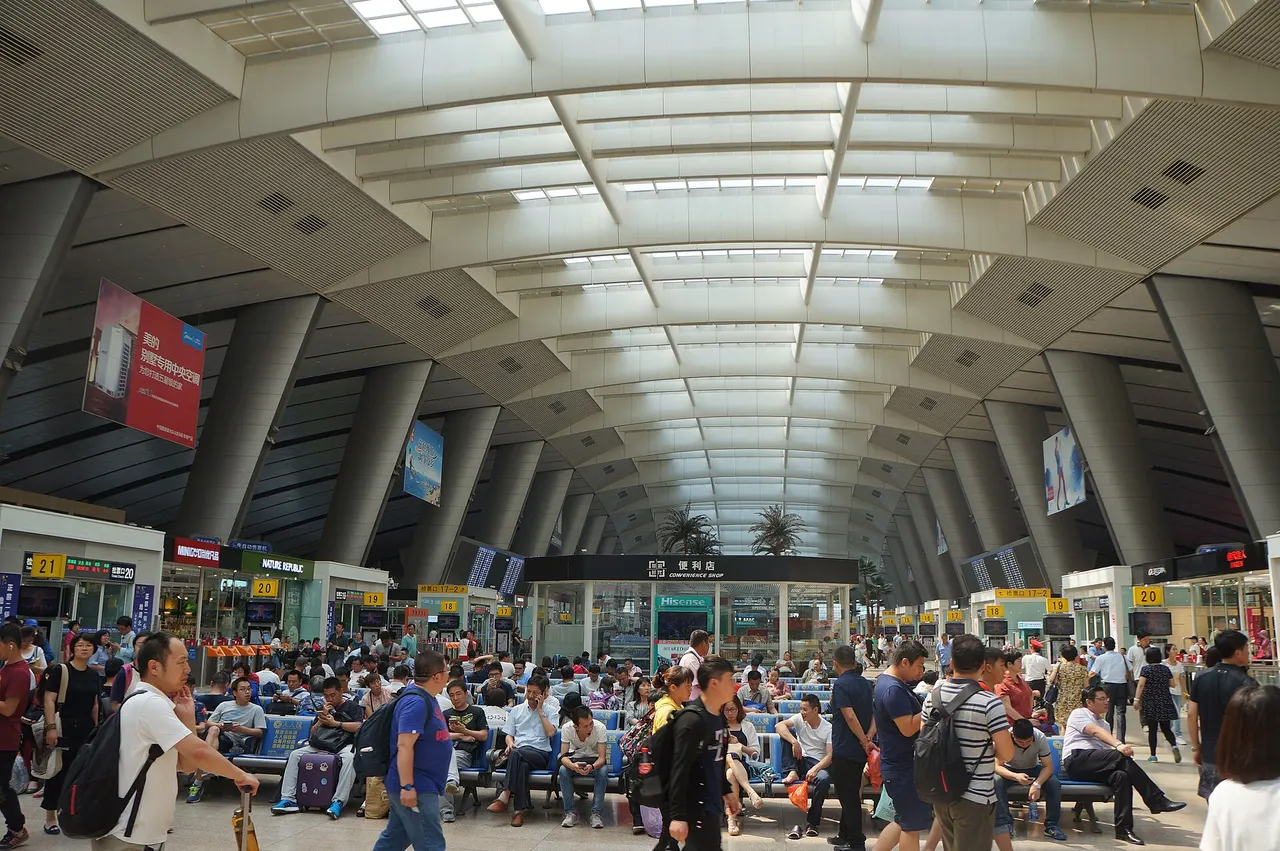
What Trip.com adds
Trip.com’s case is convenience at the front door. Its China trains page advertises no booking fee and takes credit or debit cards, PayPal, Apple Pay and Google Pay, in most major currencies, so you see the cost in pounds or dollars. You book, change and cancel in its “My Bookings” section, in English; Trip.com takes online cancellations from 8:00 to 20:00 and changes until 22:00 Beijing time.
How the ticket gets issued matters for the fees. Trip.com can book through a 12306 account signed in on its platform, or have its staff issue the ticket. On a ticket its staff issued, it charges ¥15 a person (about $2.20 or £1.70) for a refund and the same for a change, on top of the railway’s fees; on one issued directly through 12306, it adds nothing.
Its seat choice and its Advance Reservation are requests, not guarantees. You can ask for a window or aisle seat, but Trip.com itself calls these requests: China Railway’s central system allocates the seats. And its “Advance Reservation” lets you place an order weeks ahead, which its system then tries to buy the moment the 15-day sales window opens. That’s a request in a queue, not a ticket, as the next section explains.
The 15-day window and the Beijing-Shanghai exception
China’s railways put tickets on sale 15 days before departure, including the day of travel, and have done since 2021. In February 2026, China Railway said publicly that every platform has to follow that same 15-day rule: claims of booking 30 or even 90 days ahead are marketing, and paid “accelerator packages” from ticket-grabbing apps don’t move anyone up the queue at 12306, where all the seats are held.
Since then the railway has opened a door of its own on one corridor. From 20 July 2026, the 12306 mobile app has taken pre-booking requests for more than 200 trains on the Beijing-Shanghai high-speed and conventional lines. You file a request in the app’s pre-booking section; the system tries to fill it 20 to 16 days before departure, ahead of open sale, and if it succeeds you pay by 23:00 that day. Requests first opened 60 days out; from 26 September 2026 the limit is being cut back to 30 days, the normal rule from 27 October. A request isn’t a ticket until it’s filled, and the railway checks requests with face recognition and SMS codes. China Railway’s announcements don’t say whether a foreign passport can use the service, so look for it in the app, but don’t build a plan around it.
What it changes for everyone else: on Beijing-Shanghai trains, some seats are already taken by pre-booking before open sale starts. Outside that pilot, a site that promises tickets 30 or 90 days ahead is selling a place in a queue for the 15-day sale; on the Beijing-Shanghai corridor, the railway’s pre-booking requests are filled before that queue moves.
So for a busy route on a busy date, the practical move is the same on either site: be ready at the hour your departure station releases tickets. For Spring Festival, our Chinese New Year 2027 guide works out which days the 15-day window opens. 12306 publishes those times, station by station, between 8:00 and 18:00. On a trip with several legs that means several sittings, and our China itinerary by train gives the release hours at Beijing West, Xi’an North, Pingyao Gucheng and Hangzhou East. It also runs a waitlist for sold-out trains, but on its Chinese-language site and app; the English website lists purchase, changes, refunds and change of destination, and no waitlist. China Railway expected more than 70% of waitlist requests to succeed over the 2026 Spring Festival rush.
Refund and change fees
Refund fees are set by China Railway, and Trip.com lists the same scale on its page:
- 8 days or more before departure: free;
- more than 48 hours before: 5% of the fare;
- 24 to 48 hours before: 10%;
- less than 24 hours before: 20%.
The smallest fee the railway charges is ¥2 (about $0.30 or £0.22). A ticket from the Beijing-Shanghai pre-booking pilot follows a separate rule until a week out: refunding it 20 to 8 days before departure costs 5%, and inside 8 days the scale above applies.
12306 has one extra that only its platforms offer: for travel dates from 2 February 2026, a registered user can make one free refund a day on one order, as long as it’s within 30 minutes of buying and at least 4 hours before the train leaves. It doesn’t cover changed, pre-booked, waitlisted or group tickets. It’s a useful safety net when you’ve picked the wrong day in a hurry.
Changing a ticket, which 12306 calls endorsement, is allowed once per ticket. The fee depends on timing and on whether the new train leaves on a later day:
- more than 48 hours before departure: free;
- 24 to 48 hours before: free to a train leaving by midnight on the original date, 5% of the lower fare to a train on a later date;
- less than 24 hours before, to a train on a later date: 15% of the lower fare;
- after your train has left: free to another train the same day, 40% of the lower fare to a train on a later day.
Even changing your seat on the same train means an endorsement, on 12306 and on third-party platforms alike, according to China Railway.
Seats on a Fuxing train
On Fuxing high-speed trains, China Railway describes the usual layouts like this:
- Second class: five seats across, 3+2, lettered A, B, C, D and F. A and F are by the windows, C and D on the aisle.
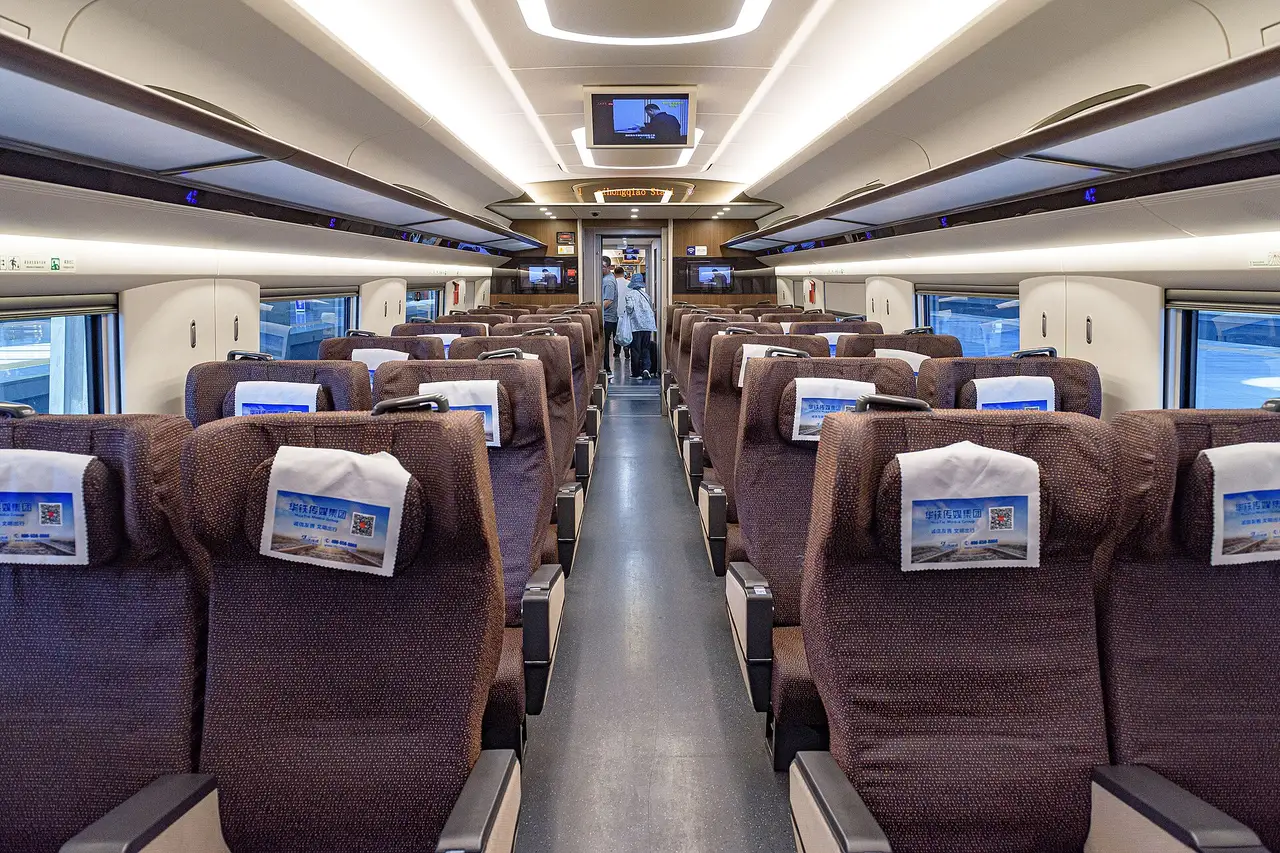
- First class: four across, 2+2, lettered A, C, D and F.
- Business class: three or two across, A, C and F, or A and F.
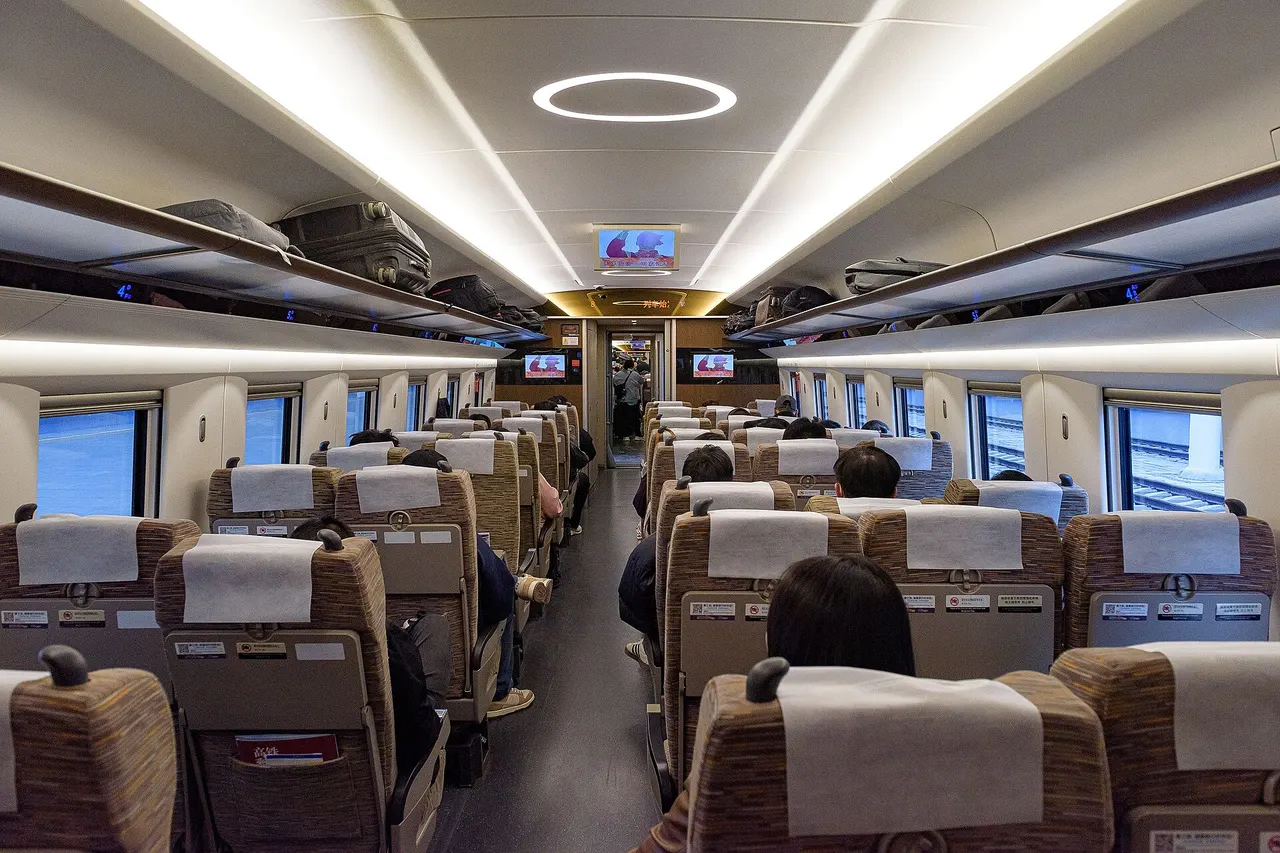
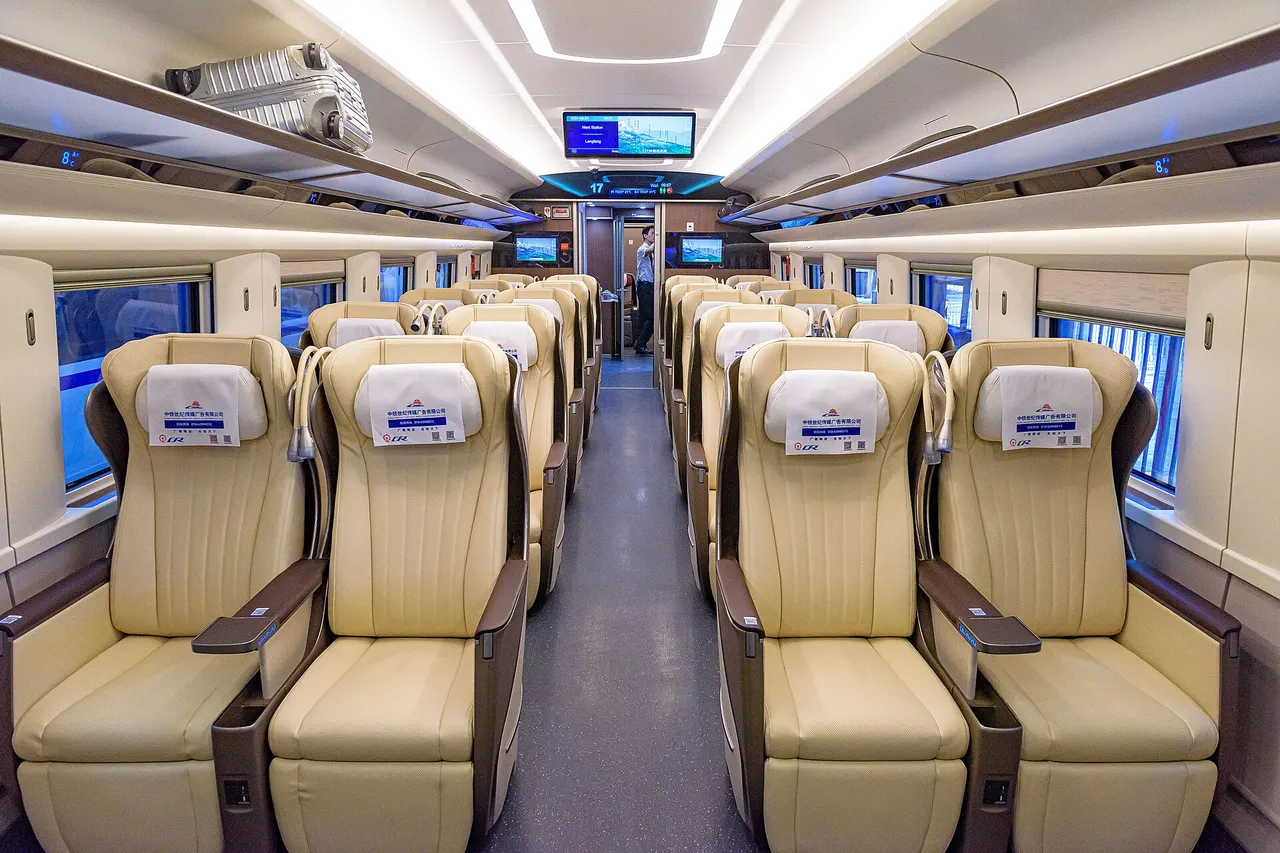
For a couple, a D and F pair in second class gives you a window and no stranger beside you. First class buys a wider seat, two either side of the aisle, which matters more on a long run than on a short hop. For a short hop, such as the high-speed train out to the Great Wall at Badaling in our Mutianyu vs Badaling comparison, second class is plenty. On upgraded 17-car trains on the Beijing-Shanghai line, car 17 has a premium first class: 24 electric shell seats that turn 180 degrees, with a separate waiting area at the station.
One small detail you’ll notice in second class: lights above the seats show red for a seat sold from this stop, green for one unsold here and at the next stop, and yellow for one free now but sold from the next station.
At the station with your passport
Whichever site you book on, the passport you booked with is your ticket. The 2025 government guide for foreign business people says you enter and leave the station with that original document, through the automatic gates or a staffed lane. If a gate doesn’t read your passport, go to the staffed lane.
Security checks are compulsory, and ticket checks close before departure, so 12306 asks passengers to leave enough time for queues at security, ID checks and the gate. Luggage is limited to 20 kg per adult, and on high-speed trains each item can measure up to 130 cm when you add its length, width and height together.
If you’re entering China on the 240-hour visa-free transit, train trips between Beijing, Xi’an and Shanghai stay inside the permitted areas; the transit rules set out the conditions. The Beijing, Xi’an and Shanghai guides cover what to do at each end. From Xi’an North, the museum’s own route to the Terracotta Warriors is three metro lines and a local bus.
Further out, check the station as closely as the train: the fast trains from Beijing to Harbin arrive at Harbin West rather than the main station by the old town (our Beijing to Harbin train guide lists them), and the quickest trains from Kunming to Lijiang leave from Kunming station in the city, not Kunming South. In winter, the park for Harbin’s ice sculptures sells its own tickets, and our Harbin ice festival guide covers how to buy them from abroad.
So which one should you use?
Trip.com is an affiliate partner of our network; that doesn’t change the verdict below.
Start with 12306. It sells the tickets at the railway’s fare with nothing in between, and the free 30-minute refund only exists on its platforms. Do the passport check a few days before the 15-day window opens on your first train, so that verification isn’t what slows you down at the hour your departure station releases tickets.
Switch to Trip.com if 12306 won’t verify your passport in time, if your card fails at payment, or if you’d simply rather pay in your home currency with PayPal or Apple Pay and handle everything through one English-speaking company. The fares and the refund scale are the railway’s either way, with Trip.com’s ¥15 handling fee on top when its staff issue the ticket. What changes is who you call when it goes wrong: with Trip.com, that’s Trip.com.
Read also

Transport · 9 min read
Beijing to Harbin by Train 2026: 4.5 Hours, Fares, Stations
Verified · 13 October 2026The fastest G trains take 4h33 from Beijing Chaoyang to Harbin West, ¥605 in second class midweek; sleepers run ¥261.5 and up. Stations and fares.

Before you go · 9 min read
China in Winter: Weather, Crowds and What Stays Open
Verified · 13 October 2026January lows run from -22.9°C in Harbin to 19.5°C in Sanya. Which cities have heating, when winter hours start, and which week is crowded.

Before you go · 8 min read
Chinese New Year 2027 in China: What Closes and When
Verified · 10 October 2026New Year's Day is 6 February 2027; the State Council hadn't set the break by mid-October 2026. What closed in 2026, the rail window, dates to watch.

Things to do · 10 min read
Harbin Ice Festival 2026-27: Dates, Tickets, Getting There
Verified · 10 October 2026The 28th Ice and Snow World had no date on 10 October 2026. In 2025-26 it ran 17 Dec to 21 Feb, ¥328 a ticket. How to buy from abroad and get there.