
Beijing Travel Guide 2026: How Many Days, Where to Stay
Three days is enough for a first visit: which district to stay in, the Monday closures that break plans, metro fares from ¥3 and what the big sights cost.
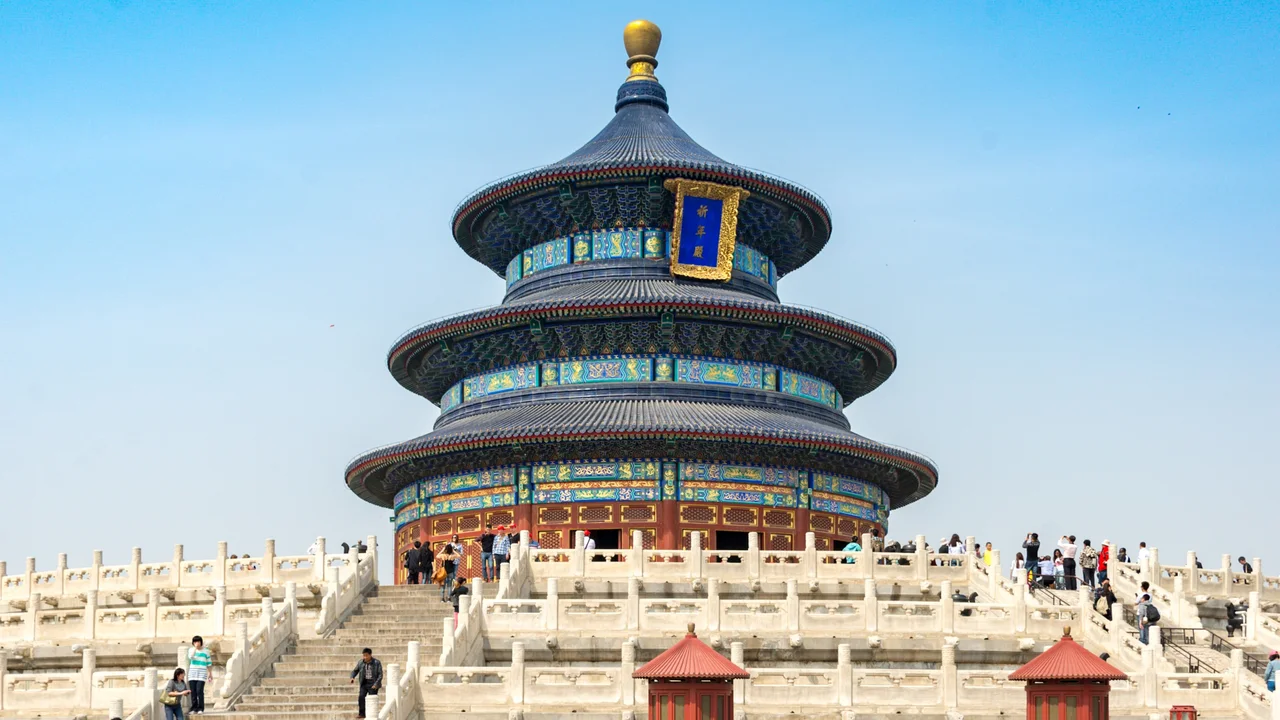
Give Beijing three full days on a first visit: two for the old imperial centre and one for the Great Wall. A fourth adds the Summer Palace and an afternoon in the hutongs; with only two, you’re better off saving the Wall for another trip than rushing the Palace Museum. Stay in Dongcheng, the district that holds the Forbidden City, the Temple of Heaven and many of the old lanes, and take the metro, where a journey starts at ¥3 (about $0.45 or £0.34).
Four of the big sights close every Monday outside national holidays: the Palace Museum (the Forbidden City), the National Museum of China, the halls and altars inside the Temple of Heaven and the separately ticketed sights of the Summer Palace, including the Tower of Buddhist Incense. Put the imperial sights on Tuesday to Sunday and keep Monday for the hutongs or the Lama Temple, which has no weekly closing day.
The Central Axis: Beijing’s old centre in one straight line
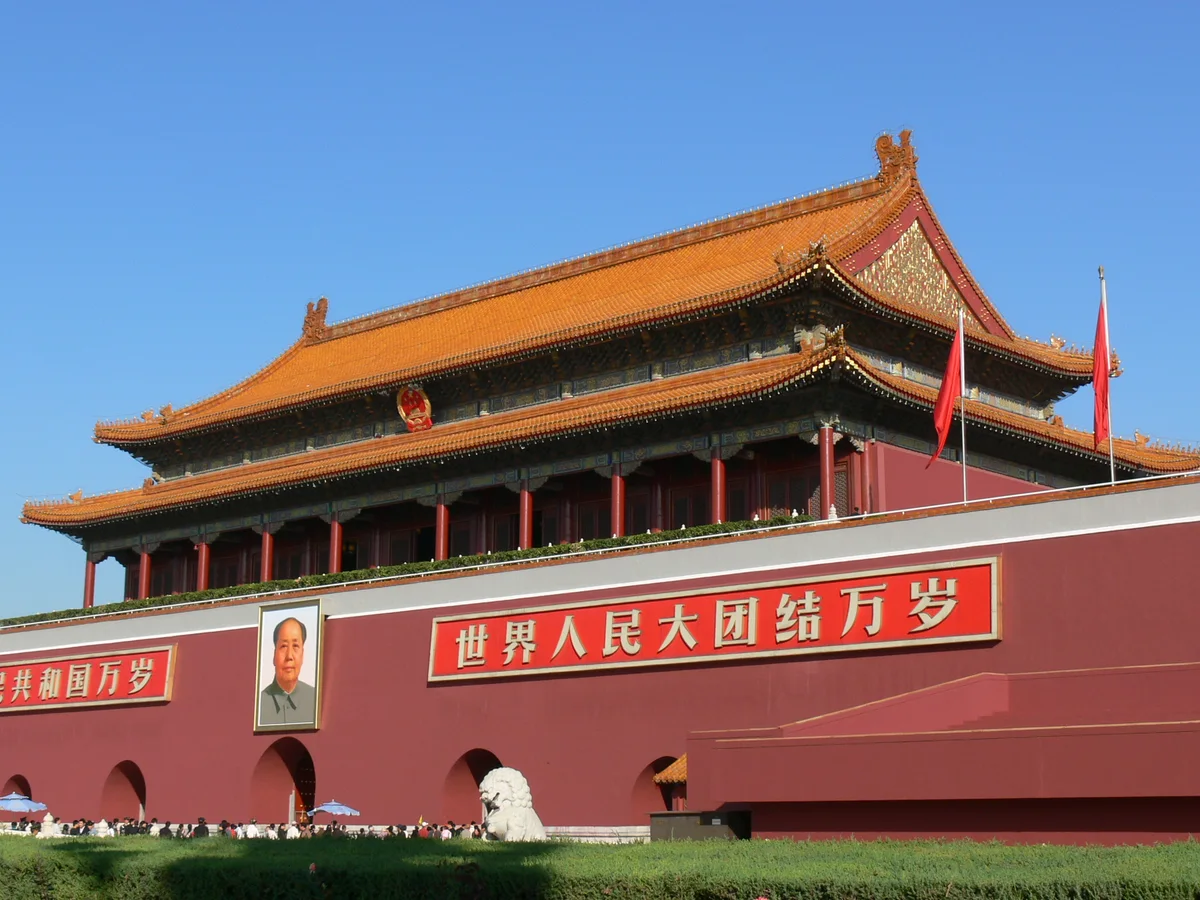
Most of what first-timers come to see stands on a single north-south line. The Central Axis runs 7.8 km from Yongdingmen Gate in the south to the Drum and Bell Towers in the north, was laid out under the Yuan dynasty and joined UNESCO’s World Heritage List in July 2024. Walk it from the south and you pass the Temple of Heaven on its eastern flank, the two Qianmen gate towers, Tiananmen Square, the Gate of Heavenly Peace, the Forbidden City, Jingshan hill and finally the two towers.
That shape is the most useful planning fact in the city. The line is too long for one comfortable day once you add the palace and a museum, so split it: the southern half one day, the northern half the next, and use the metro for any stretch you’ve already seen.
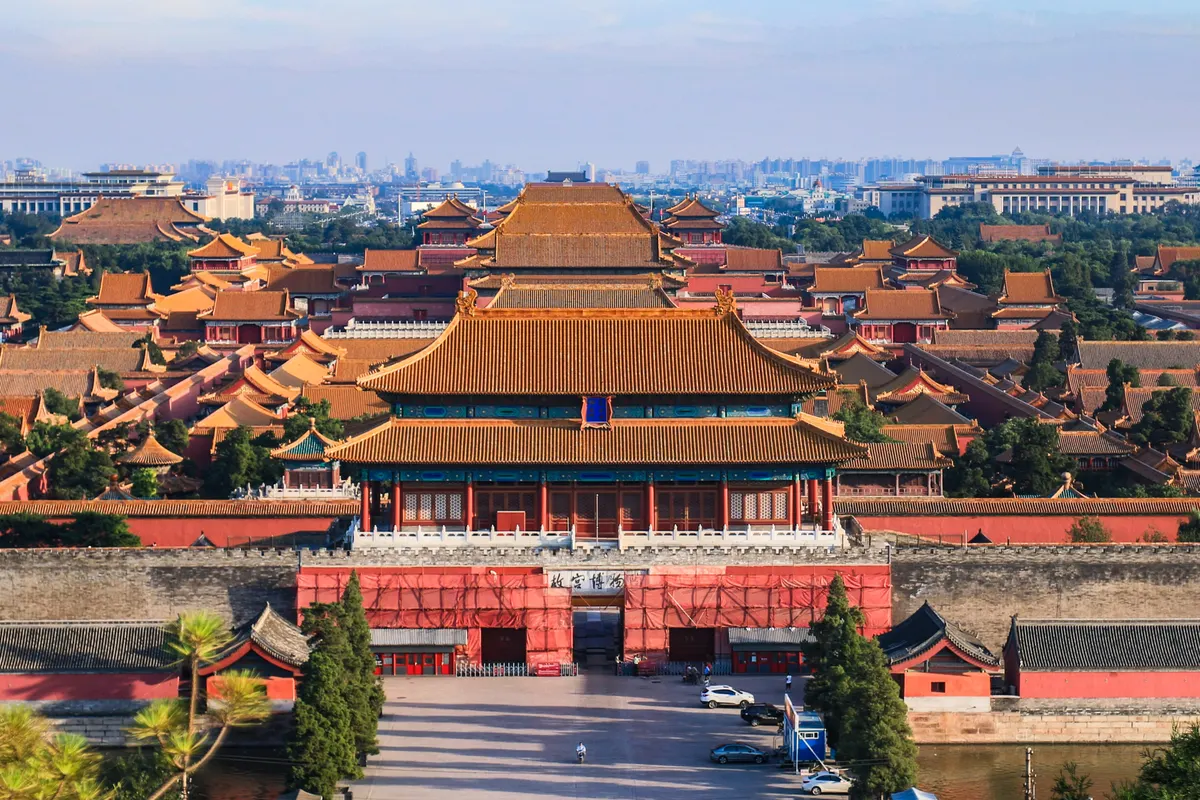
The best single view of the line comes from Jingshan, the hill directly behind the palace. It was once the highest point in central Beijing, entry costs ¥2 (¥10 during its spring peony festival), and from the pavilion on the summit the palace roofs run away south in one long sheet of yellow tile.
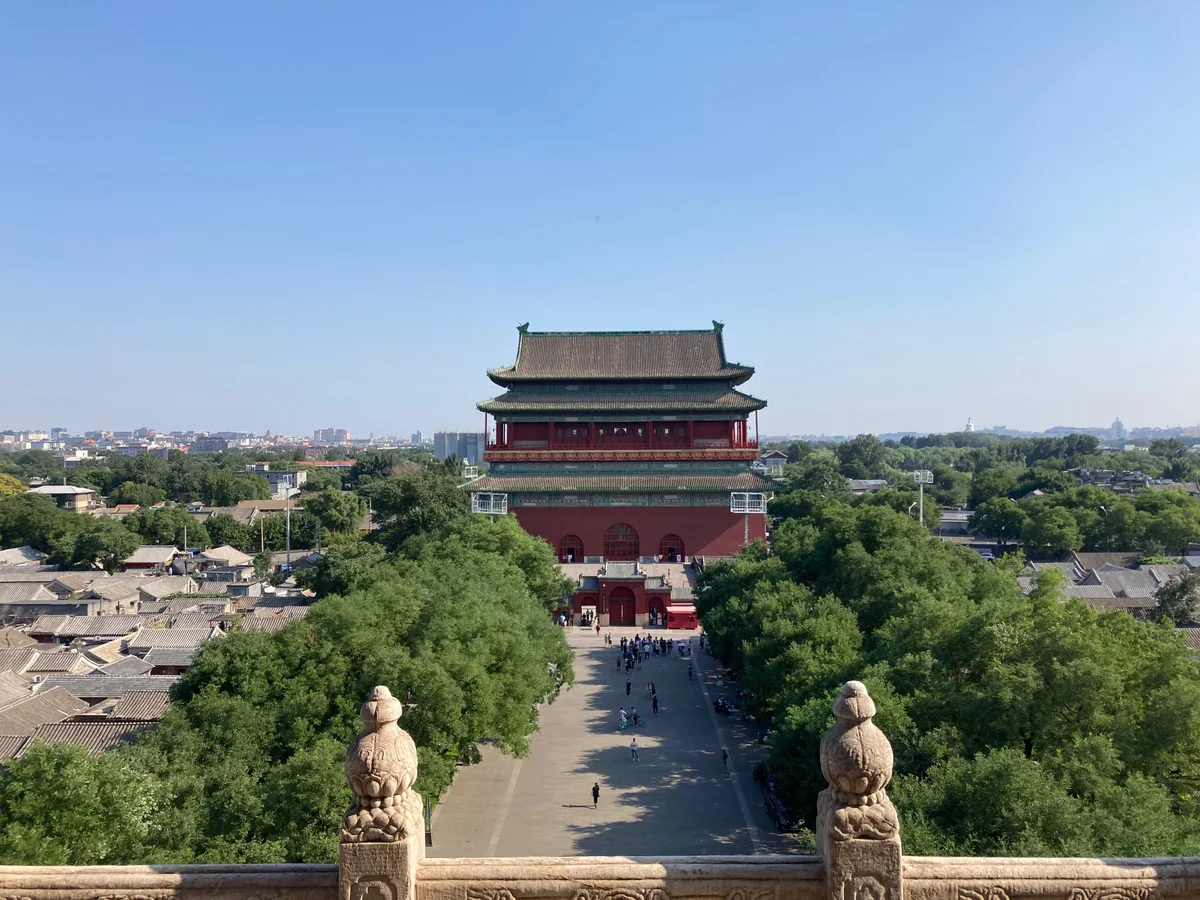
At the northern end, the Drum Tower and the Bell Tower face each other across a small square with hutongs on every side, and Houhai, the largest of the three Shichahai lakes, is a short walk to the west.
Day by day, around the Monday closures
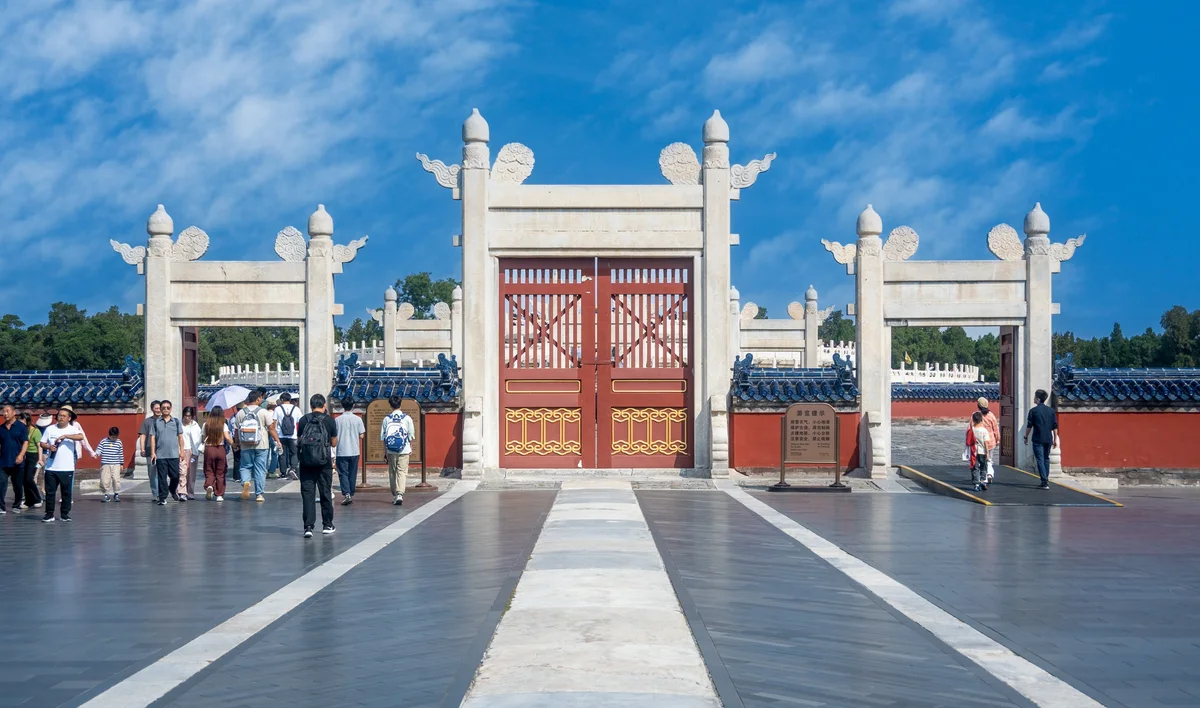
- Day 1, the southern half (Tuesday to Sunday). Start at the Temple of Heaven, with Line 5 at the east gate and Line 8 at the west. The park opens at 6:00 from April to October and at 6:30 in winter, well before its halls at 8:00, so an early start buys a walk under the old cypresses first. The ¥34 through ticket (April to October) covers the park, the Hall of Prayer for Good Harvests, the Echo Wall and the Circular Mound Altar. Then take the metro to Qianmen and walk north into Tiananmen Square, which needs a real-name reservation one to seven days ahead on the square’s official WeChat mini programme; your ID is checked again on site, so keep your passport on you. The free National Museum of China on the square’s east side takes timed bookings on its website up to seven days ahead, and new dates open at 17:00 each day; you go in by the North Gate, from exit C or D of Tian’anmen East on Line 1.
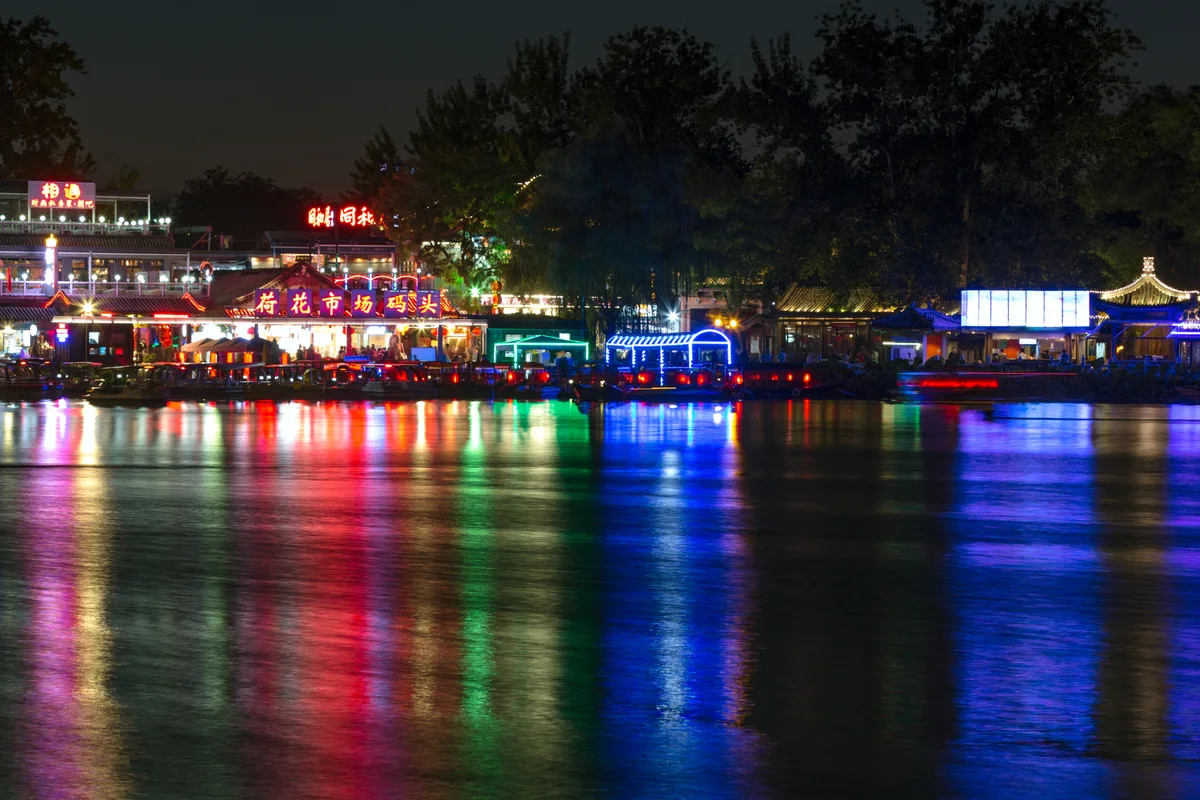
- Day 2, the northern half (Tuesday to Sunday). The Palace Museum doesn’t sell tickets on the day, so book in advance on its own booking site with your passport number and bring that passport. Tickets for any date go on sale a week before, at 20:00, and a foreign bank card is accepted; entry is capped at 40,000 visitors a day, so book that first evening if you can. If that evening’s release sells out, our Forbidden City tickets guide walks through what still works. You leave by the north gate, straight across from Jingshan, so climb the hill for the view before walking west to Beihai Park (¥10 from April to October) or north to the Drum and Bell Towers. Finish at Houhai as the lakeside bars light up.
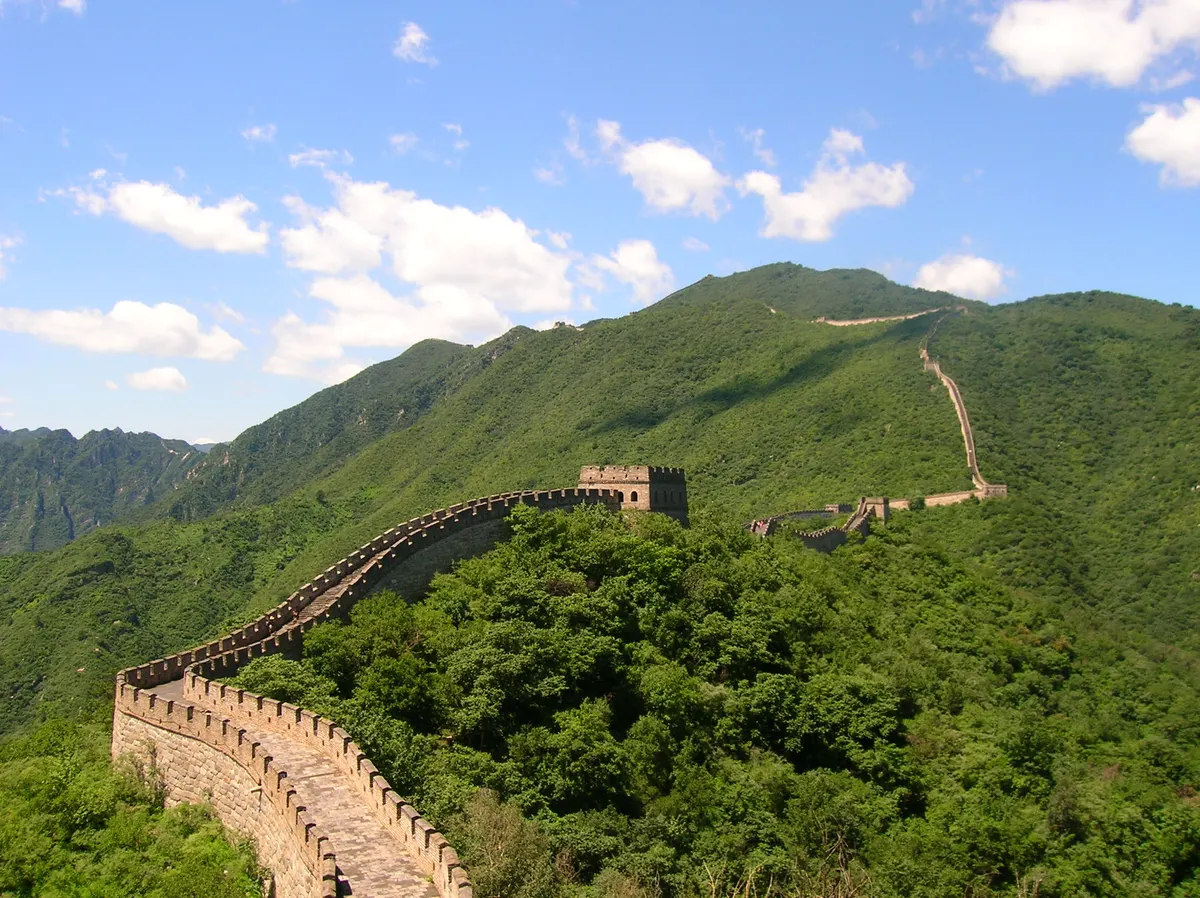
- Day 3, the Great Wall (any day, Monday included). Mutianyu, in Huairou district north of the city, is open seven days a week, and its tickets can be booked up to 30 days ahead in the name on your passport. If you’d rather take the train, Badaling has its own high-speed station; our Mutianyu vs Badaling comparison weighs the two.
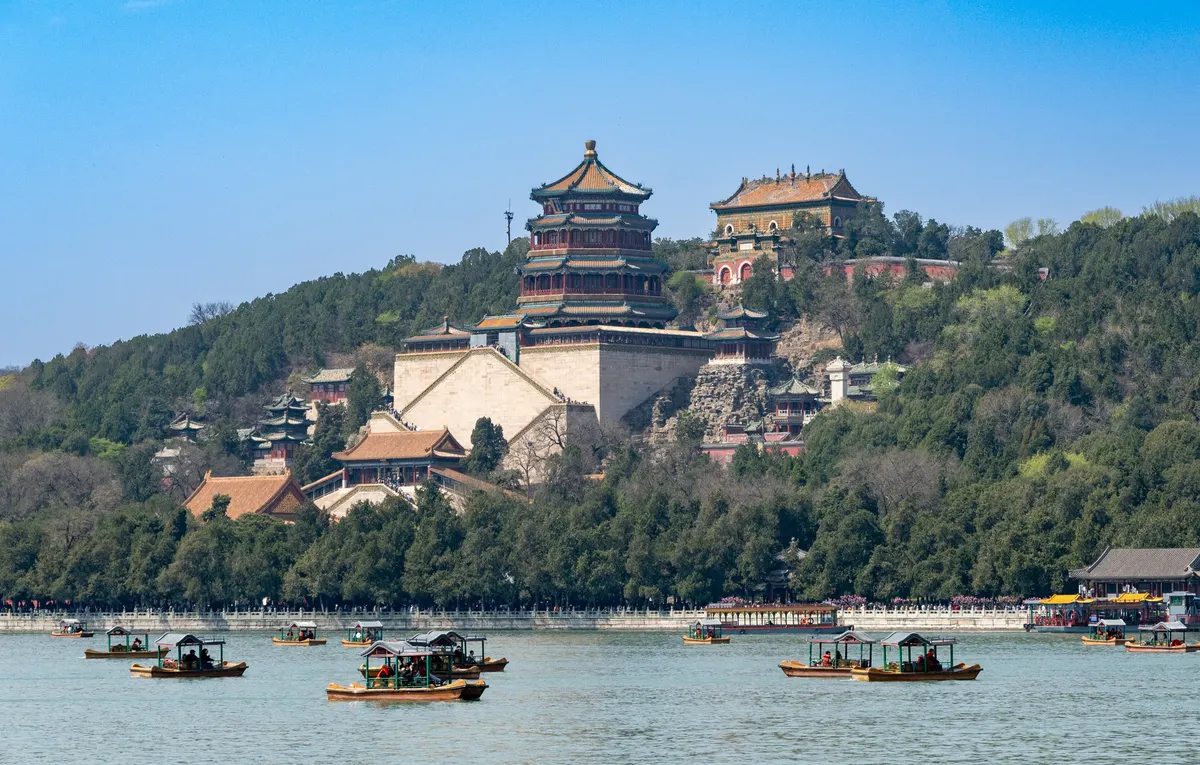
- Day 4, the north-west (Tuesday to Sunday). Take Line 4 to Beigongmen, or Line 4 or 16 to Xiyuan, for the Summer Palace. The through ticket is ¥60 from April to October (¥50 in winter) and covers the Tower of Buddhist Incense and the other separately ticketed sights, while a single ferry ticket across Kunming Lake costs ¥30-40 from mid-March to mid-November. It’s a big park, so give it the whole morning, then head back to the old city for an afternoon in the hutongs.
If your first full day is a Monday
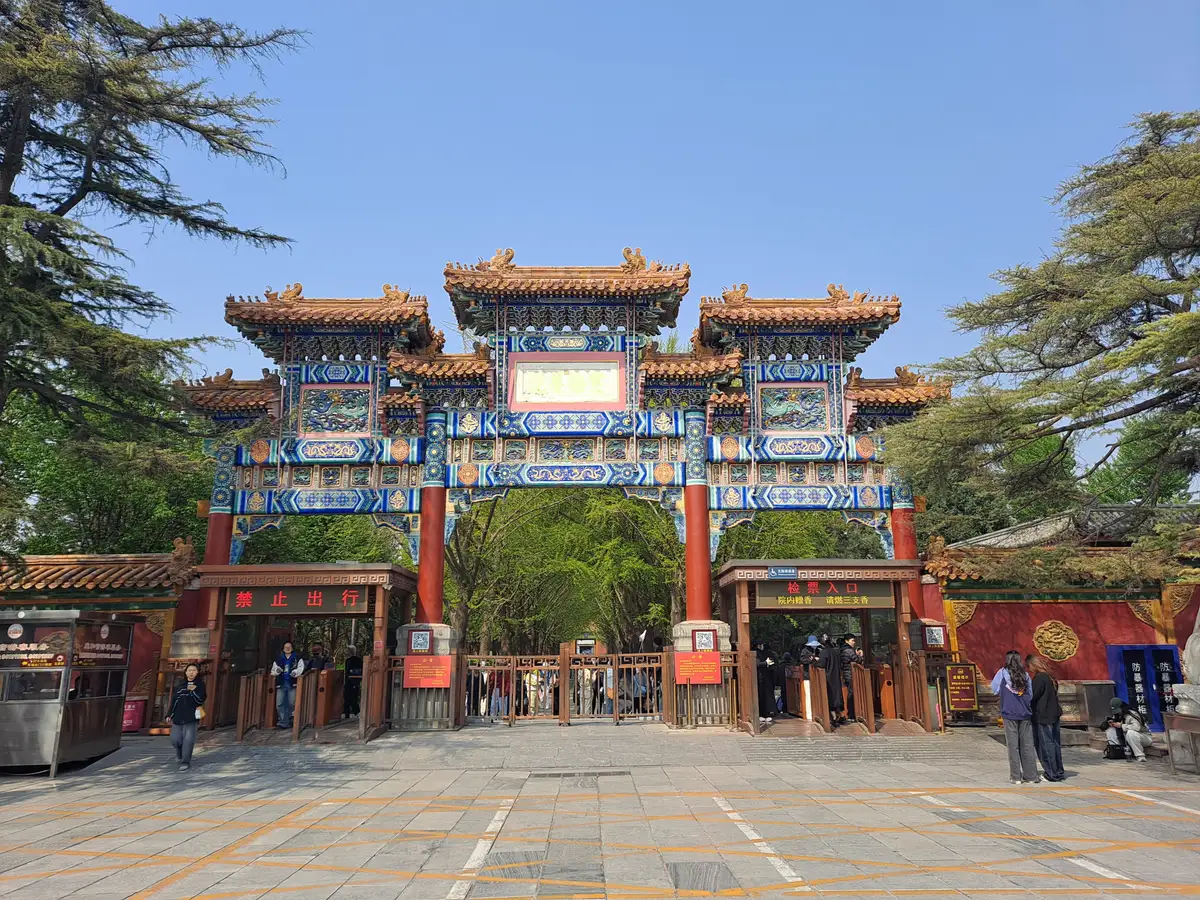
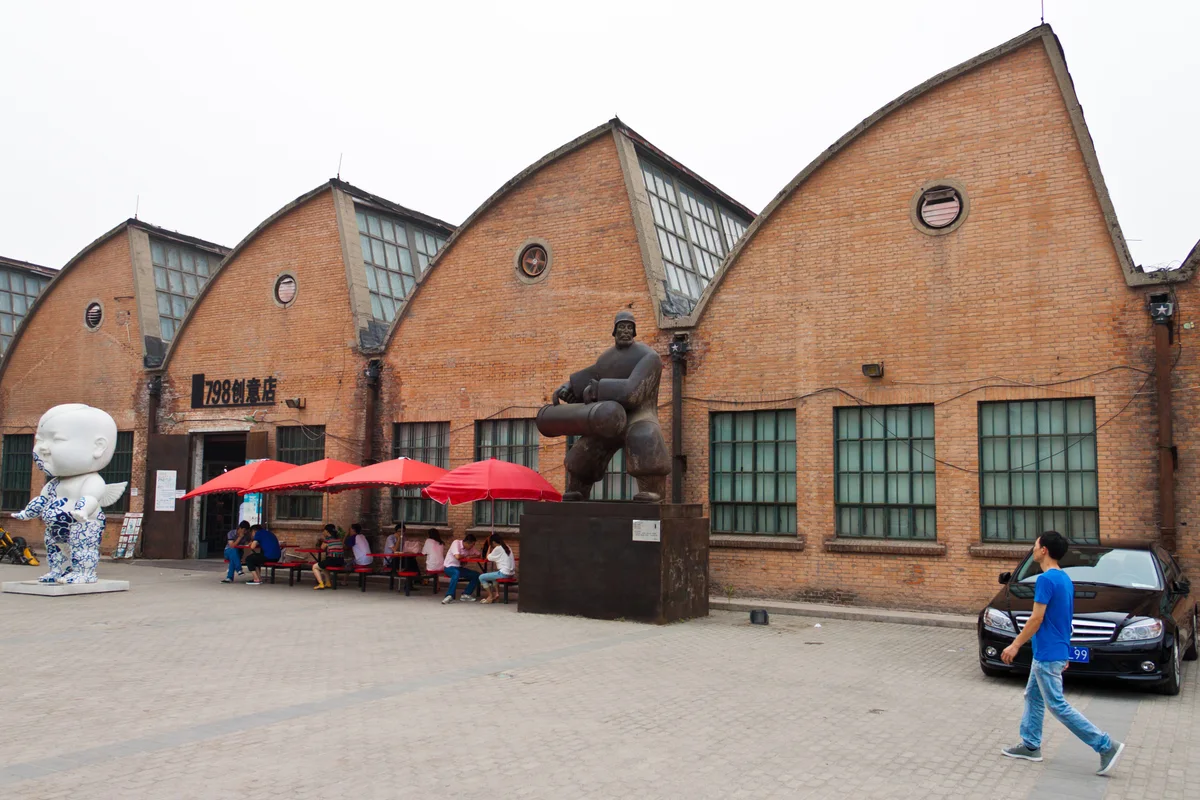
Spend it in the north of the old city, where the Lama Temple and the hutongs keep their usual hours. The temple, an active place of worship, charges ¥25 and opens 9:00-17:00 from April to October; Lines 2 and 5 stop at Lama Temple station, and the hutongs between the temple and the Drum Tower make an easy afternoon. Leave the 798 Art Zone, across town, for another day: its lanes and brick factory halls stay open and free on Mondays, but UCCA Center for Contemporary Art and Galleria Continua, two of its galleries, are shut.
Where to stay: Dongcheng, Qianmen, Sanlitun or Haidian
Dongcheng and Qianmen put you inside the Second Ring Road, which runs close to where the old city walls once stood, with the axis a walk or a short metro journey away. Sanlitun and Haidian lie outside it.
Dongcheng: the palace on foot, hutongs outside the door
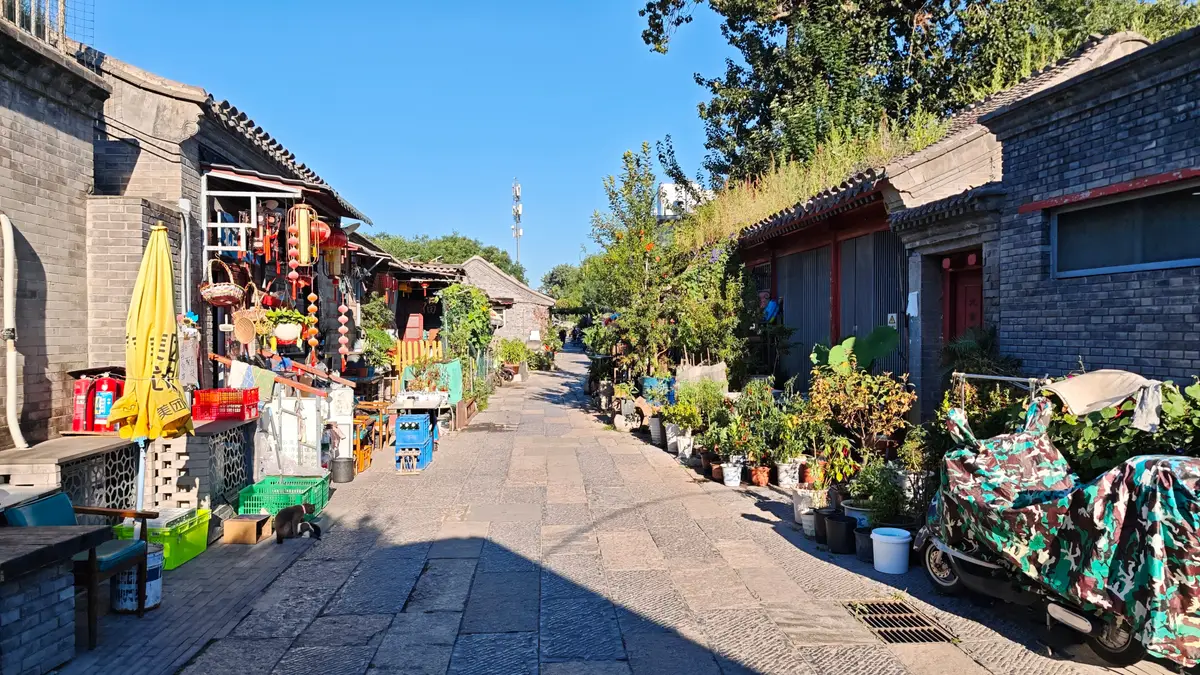
Wangfujing, the shopping street just east of the palace, puts the Forbidden City within walking distance and sits on Line 1, the east-west line past Tiananmen. Further north, around the Drum Tower, Nanluoguxiang and the Lama Temple, small hotels in converted courtyard houses let you sleep in the hutongs themselves. They’re rare as well as small, so they’re the first rooms to book.
Qianmen: closest to the square and the Temple of Heaven
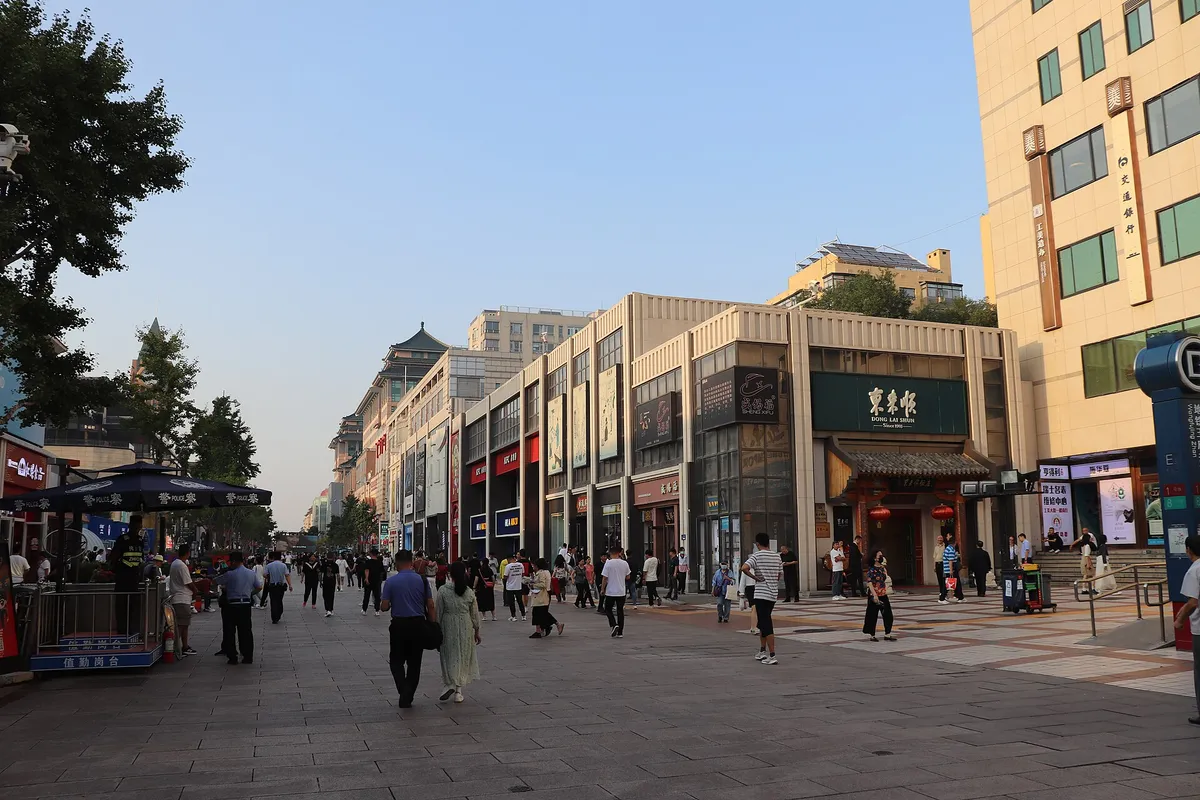
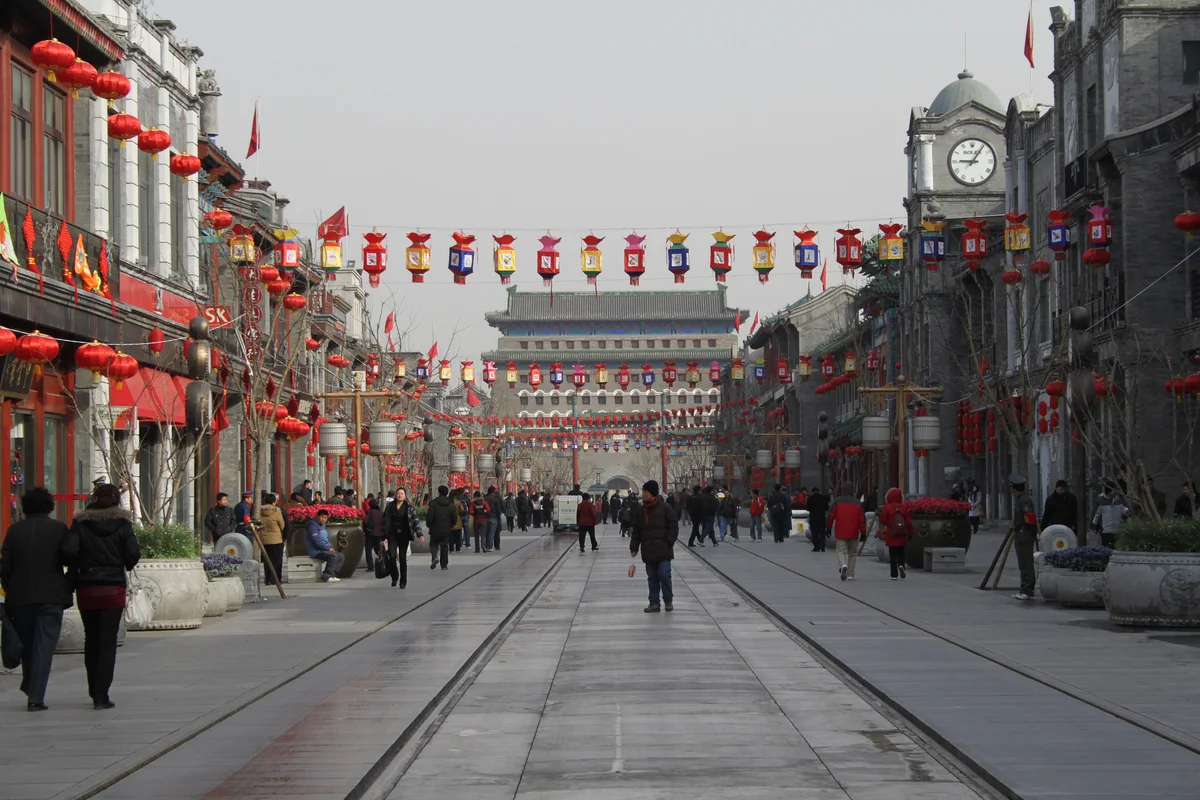
Just south of Tiananmen Square, Qianmen puts you between the two halves of day 1, with the square north of the gate and the Temple of Heaven to the south-east. Evenings mean a stroll down Qianmen Dajie, the pedestrianised street that runs south from the gate. The drawback is the north: the Drum Tower, Houhai and the hutongs around them are a metro journey away.
Sanlitun: restaurants and bars, a ride from the sights
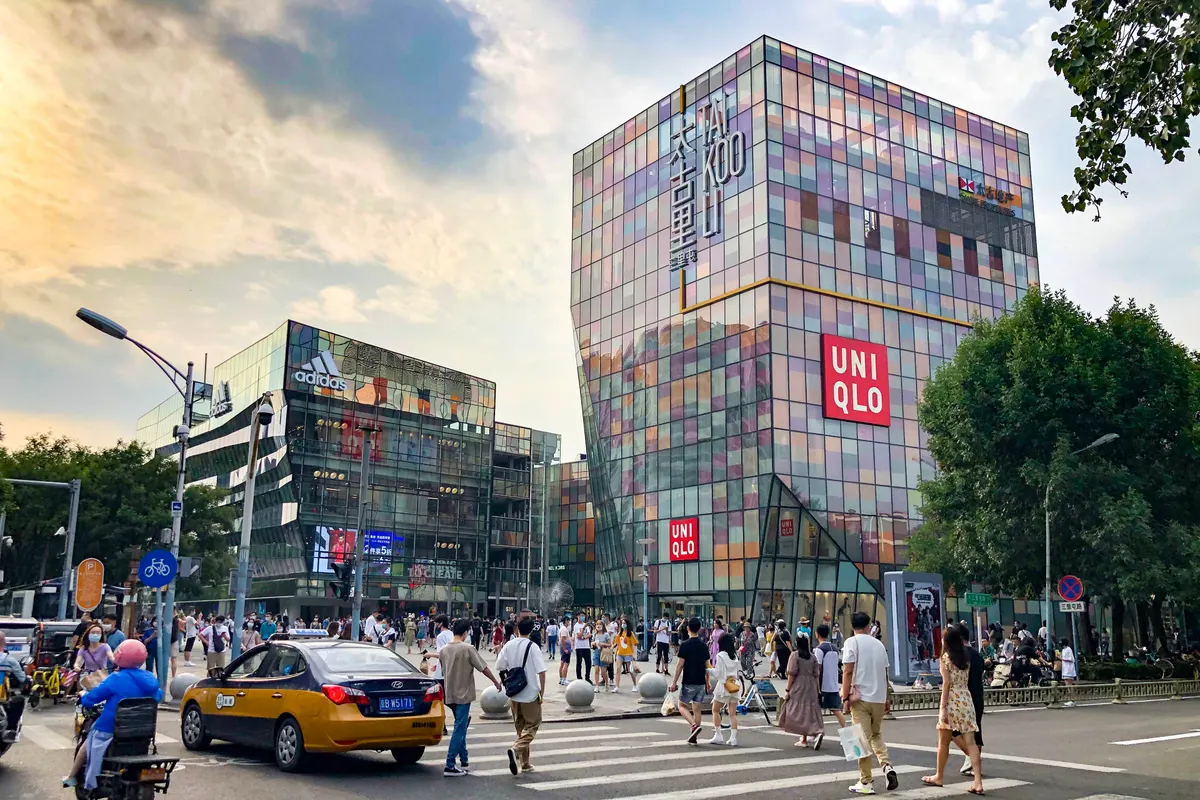
East of the old city in Chaoyang district, Sanlitun is an embassy quarter whose restaurants and bars stay open late, and it’s home to the Taikoo Li shopping streets. Those evenings are the reason to sleep here; the cost is a metro journey or a Didi to the axis every morning.
Haidian: only when a campus is the reason
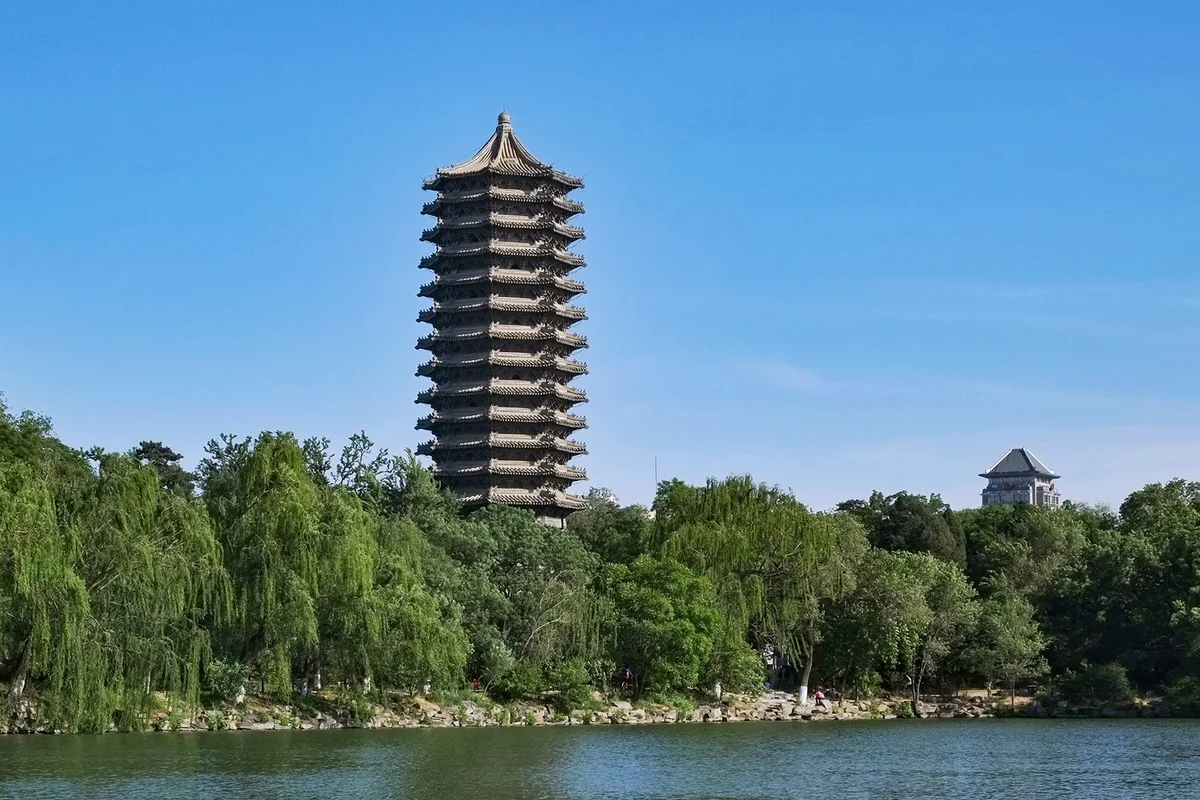
The north-west is Beijing’s university and technology district, home to Peking and Tsinghua universities and the closest base to the Summer Palace. It’s far from the axis, so pick it only when a campus visit or a conference brings you there.
Getting around: the metro, your bank card and the airport lines
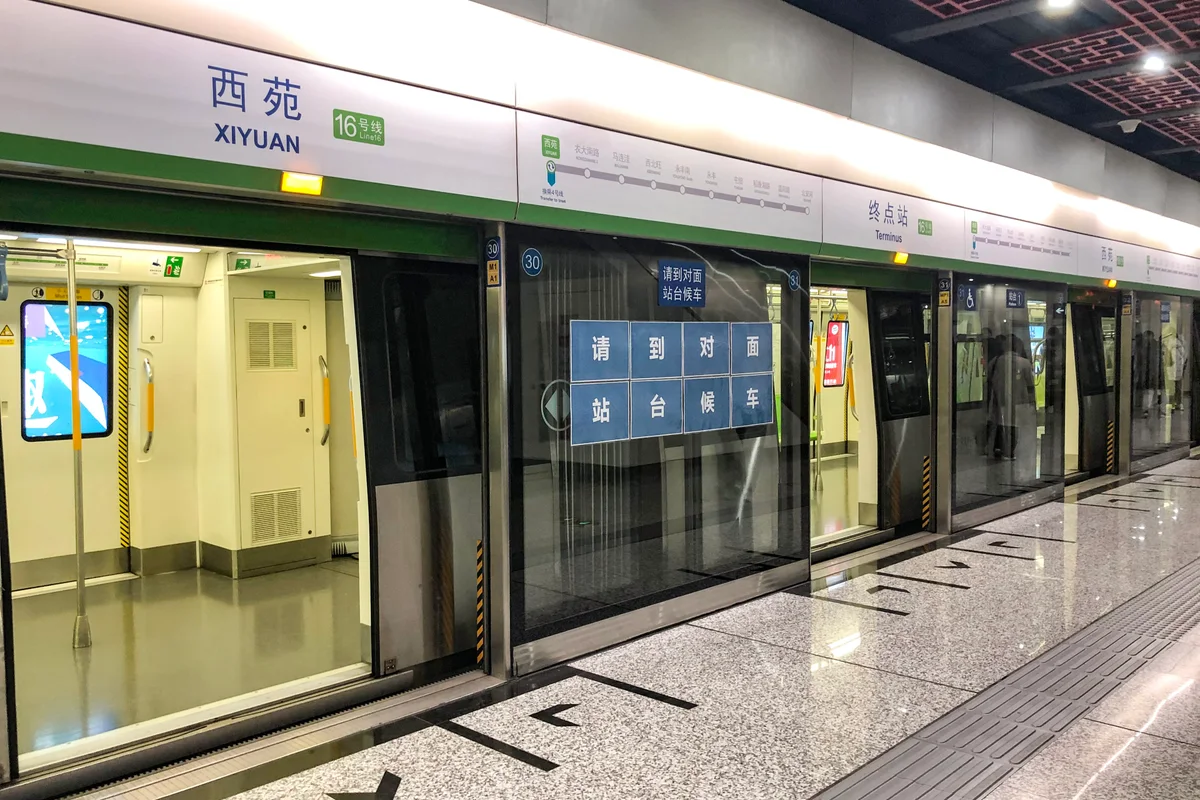
The metro reaches nearly every sight on the axis and beyond, and it’s cheap. Fares go by distance: ¥3 for up to 6 km, ¥4 up to 12 km, ¥5 up to 22 km and ¥6 up to 32 km, then ¥1 more for every further 20 km, with no upper limit on a single fare. Journeys between sights on the 7.8 km axis sit at the cheap end of that scale.
It’s easier to pay than many visitors expect. Since June 2025 every gate at every station has taken contactless Visa, Mastercard, American Express, JCB and UnionPay cards, so the card you’ve brought from home works as your ticket; Visa and Mastercard came first, in September 2024. Alipay’s metro QR code is the other option. Bags go through a security check at every station entrance, so allow a few extra minutes at busy stops.
Beijing has two international airports, Capital in the north-east and Daxing to the south, and each has its own express line into the metro; the Capital Airport Express is a flat ¥25. For door-to-door trips, Didi, China’s ride-hailing app, has an English version, accepts a foreign phone number and takes international cards.
Weather and the two holiday weeks to avoid
Summers are hot and wet, winters cold and very dry. On the China Meteorological Administration’s 1981-2010 averages for the Beijing station, July peaks at 32.1°C with 160 mm of rain, and July and August together bring 299 mm of the year’s 532 mm. January averages 1.8°C by day and -7.3°C at night, so you’ll need a proper coat, though there’s barely any rain or snow. Our China in winter guide sets that January against nine other cities.
The city’s tourism office names May, September and October as the best months, and the averages agree: highs of 27°C, 26.6°C and 19.4°C, with little rain. Spring is windy and dry and can bring dust storms; autumn usually brings the better air.
National holidays send domestic travellers to the big sights in huge numbers, and the two to avoid are the May Day break (1-5 May in 2026) and the National Day holiday (1-7 October in 2026). The dates shift each year, so look up the State Council’s schedule for yours.
What the sights and the metro cost
The dollar and pound columns use the European Central Bank’s rate for 24 September 2026; prices were current on 26 September 2026, and winter in the table means November to March.
| What you pay for | Price | About, in US dollars | About, in pounds |
|---|---|---|---|
| Metro journey up to 12 km | ¥3-4 | about $0.45-0.60 | about £0.34-0.45 |
| Capital Airport Express, single | ¥25 | about $3.70 | about £2.80 |
| Palace Museum, April-October (¥40 in winter) | ¥60 | about $8.95 | about £6.75 |
| Temple of Heaven through ticket, April-October (¥28 in winter) | ¥34 | about $5.05 | about £3.85 |
| Summer Palace through ticket, April-October (¥50 in winter) | ¥60 | about $8.95 | about £6.75 |
| Lama Temple | ¥25 | about $3.70 | about £2.80 |
| Beihai Park, April-October | ¥10 | about $1.50 | about £1.15 |
| Jingshan Park (¥10 during the spring peony festival) | ¥2 | about $0.30 | about £0.23 |
| National Museum of China; 798 Art Zone (some exhibitions charge) | free | - | - |
Across days 1 and 2 on the axis, the April-to-October tickets for the Temple of Heaven and the Palace Museum come to ¥94 (¥34 plus ¥60). Add Jingshan and four metro journeys and you’re at a little over a hundred yuan for the two days, under twenty US dollars.
Rooms and meals are the variable part: hotel rates move with the date and climb around national holidays, so price your nights for your actual dates.
What to eat, and how you’ll pay for it
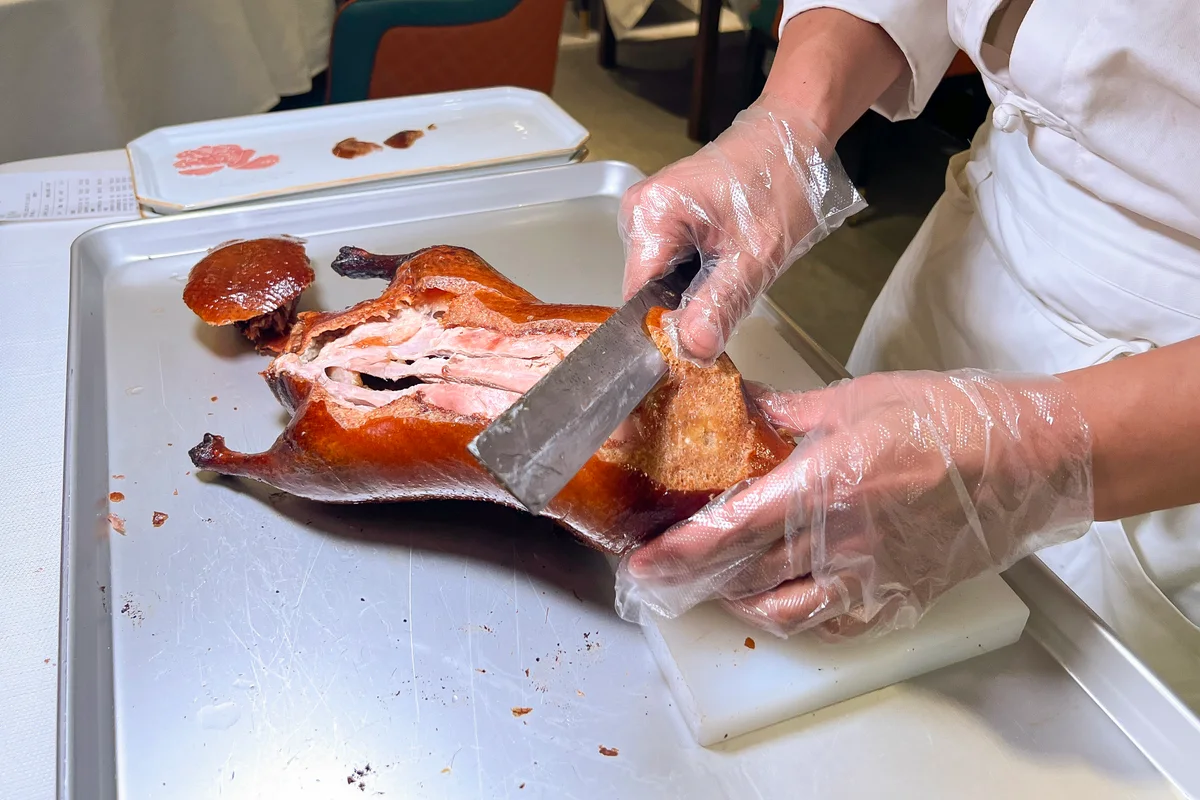
Roast duck is carved at the table and served in stages: the crisp skin comes first, with sugar to dip it in, then the meat, rolled in thin pancakes with spring onion and sweet bean sauce. For everyday eating there’s zhajiangmian, noodles with a fried soybean-paste sauce, and at breakfast jianbing, a street crêpe wrapped round a crisp fried-dough centre.
Paying is the part to sort out at home. Most places take Alipay or WeChat Pay, and both accept foreign bank cards, so set one up before you fly and keep some cash as a back-up.
Before you book, and where to go after Beijing
Entry rules depend on your passport. As of September 2026, ordinary UK, Canadian, Australian, New Zealand, Irish and most EU passports get up to 30 days in mainland China visa-free, under a scheme set to run until 31 December 2026. US citizens need a visa unless they use the 240-hour visa-free transit, which allows up to 10 days with an onward ticket to a third country or region; both Beijing airports are on its list of entry points. Check the rules for your own passport before you pay for flights.
Google, Facebook, YouTube and X are blocked on Chinese networks, so download offline maps and set up your messaging before you leave home.
The classic first trip carries on from Beijing by high-speed train, to Xi’an for the Terracotta Army and the city wall, and to Shanghai for the Bund. Our 10-day or two-week route by train times each leg, with a night train to Xi’an. With more time, the same network reaches Chengdu for the pandas and Sichuan cooking, and Guilin for the Li River, each a day’s ride on the quickest trains. Further afield, Harbin is a high-speed train ride to the north-east, with its fast trains leaving from Beijing Chaoyang, and Lijiang, below the Jade Dragon Snow Mountain in Yunnan, is a flight to the south-west. Beijing has several big railway stations, so read the station name on your ticket as carefully as the departure time.
On the map
The map loads on click, to keep the page light.
The map didn’t load. Check your connection and refresh the page.
Tickets and opening hours
- Ticket price
- Palace Museum ¥60 from April to October and ¥40 from November to March, booked in advance with your passport number. Temple of Heaven through ticket ¥34 and Summer Palace through ticket ¥60 (April to October). Lama Temple ¥25. National Museum of China free with a reservation. Metro journeys from ¥3.
- Opening hours
- Palace Museum 8:30-17:00 from April to October, closed on Mondays outside national holidays. Temple of Heaven park 6:00-22:00 from April to October, its halls closed on Mondays outside national holidays. Lama Temple 9:00-17:00 from April to October, with no weekly closing day.
Prices and hours from the operators' own websites and the Beijing municipal government. They change, so check before you go.
Details checked: 26 September 2026
Read also

Cities · 14 min read
Chengdu Guide 2026: Pandas, Teahouses and How Long to Stay
Verified · 6 October 2026Chengdu for a first trip: the panda base at opening time, Wuhou Shrine on a passport, tea in People's Park, trains from Xi'an and a museum shut until 2027.

Cities · 11 min read
Chongqing in Two Days, Plus a Yangtze Cruise (2026)
Verified · 6 October 2026Hongyadong lit up from the river, a monorail through a block of flats, the Yangtze cableway, hotpot, and which way to take a Three Gorges cruise.

Cities · 10 min read
Guilin and Yangshuo: the Li River Cruise and 3-4 Days (2026)
Verified · 6 October 2026Why the Li River cruise means a night in Yangshuo, booking it by passport, when the river closes, the 20-yuan view and trains from Hong Kong.

Cities · 12 min read
Harbin Travel Guide 2026: Russian Architecture and Winter
Verified · 6 October 2026Two days for Harbin: Central Street and St Sophia, Daowai, booking the Unit 731 site, where to sleep, the metro, and January nights at -22.9°C.