
Chongqing in Two Days, Plus a Yangtze Cruise (2026)
Hongyadong lit up from the river, a monorail through a block of flats, the Yangtze cableway, hotpot, and which way to take a Three Gorges cruise.
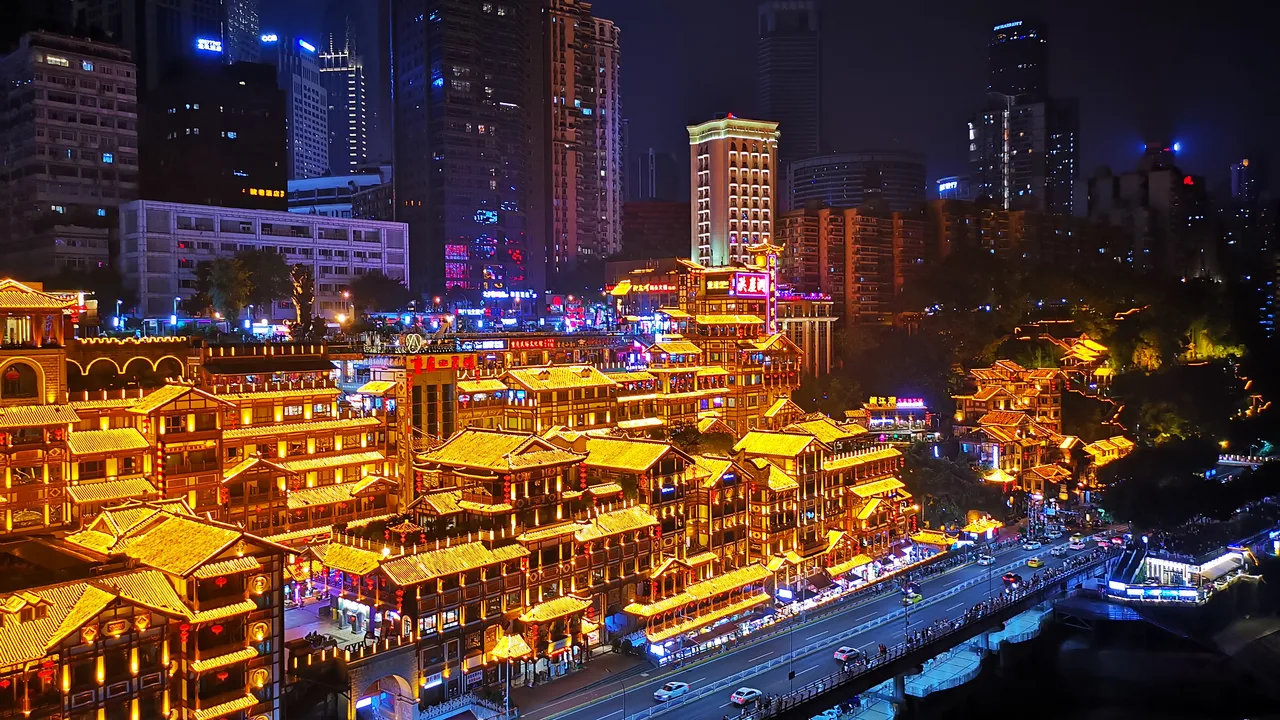
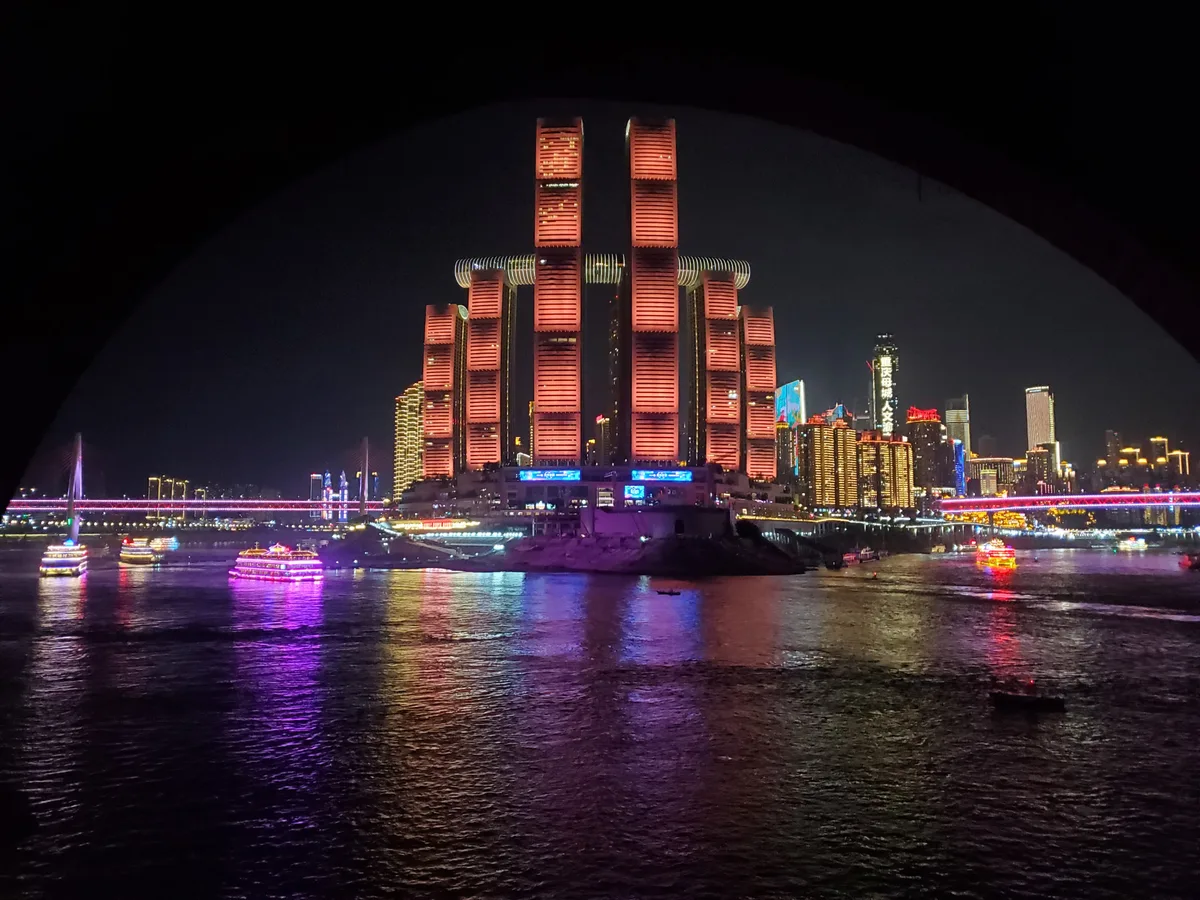
Chongqing is a city to keep your evenings free for. It’s stacked on hills where the Jialing runs into the Yangtze, and after dark the cliffside stilt houses of Hongyadong and the towers over the meeting of the rivers light up, best seen from a boat or from the far bank. A two-day stay leaves the daylight for the monorail that runs through a block of flats at Liziba and the cable car over the Yangtze; add three or four nights if you’re taking a Three Gorges cruise, since the boats to Yichang start here.
If a cruise is in the plan, look at the direction before the ship. Going downstream to Yichang takes three nights and coming back up takes four, for the same stretch of river. Century Cruises’ own fare list, read on 6 October 2026, put its 3-night downstream trip at $1,049 per person in a shared deluxe stateroom on June-August and November 2027 sailings and $1,349 in April-May and September-October 2027, confirmed by quote rather than sold online; the cruise section below has its late-2026 fares and how the upstream trip compares.
Hongyadong, and the view from across the Jialing
Hongyadong is a stack of stilt houses built into the cliff along the Jialing River on the site of an old city gate, eleven floors of shops and restaurants following the slope. It’s lit after dark, and the classic view is from the river or the far bank, where the whole cliff glows gold above the road.
At the tip of the Yuzhong peninsula, Chaotianmen looks out over the meeting of the two rivers, with the Raffles City towers rising above it. It’s one of the sights the evening Two Rivers cruises are built around. The Two Rivers boats carried 974,000 passengers in the first three months of 2026, more than four in five of them after dark, according to the Chongqing Cruise Center, and the city has a saying to explain why: you haven’t seen Chongqing until you’ve seen it at night.
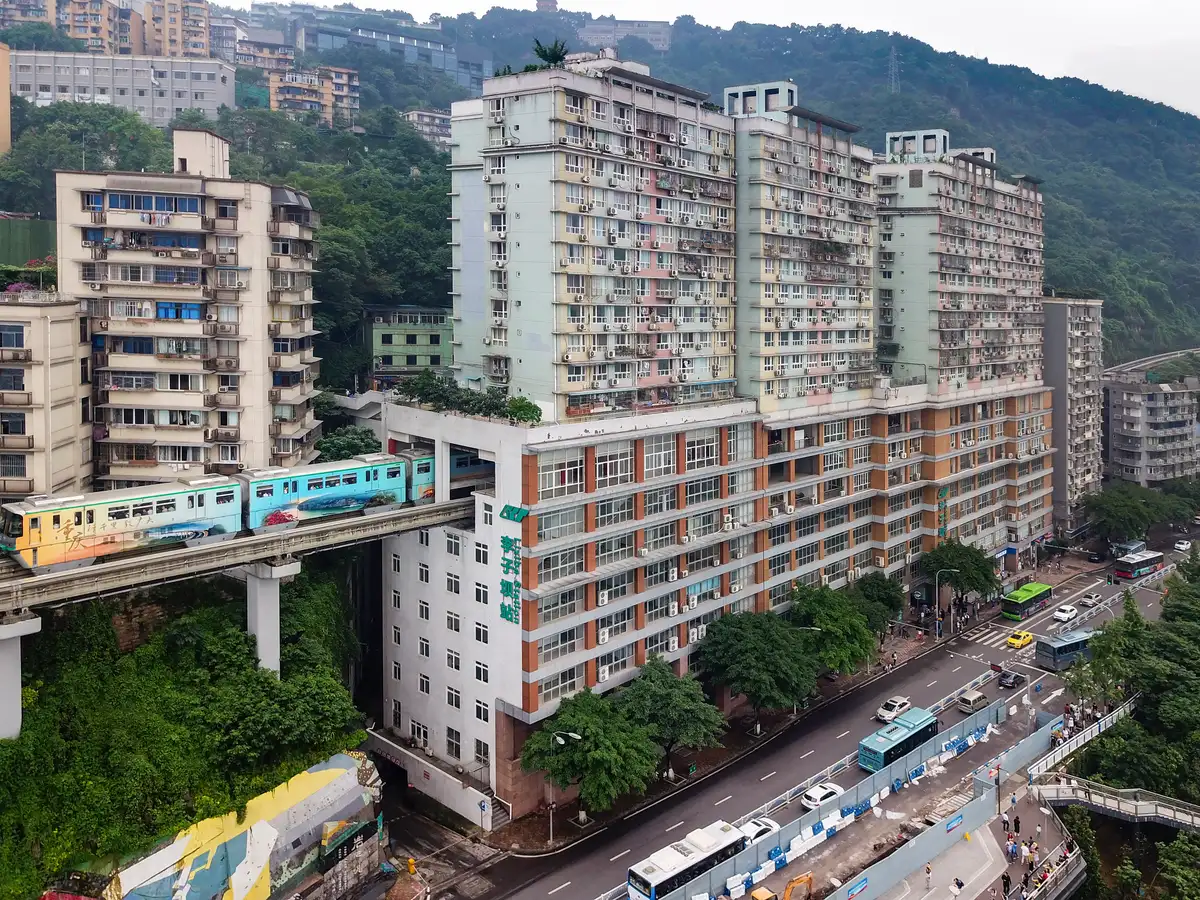
Line 2 through a block of flats at Liziba
Line 2 is a monorail, and at Liziba it runs straight through a 19-storey residential building: the station takes up the sixth to eighth floors, with flats above it. The viewing deck outside the station is where visitors stand to film a train sliding into the building, and in June 2026 China Daily found photographers there helping visitors line up the shot. Ride the line too, not just watch it.
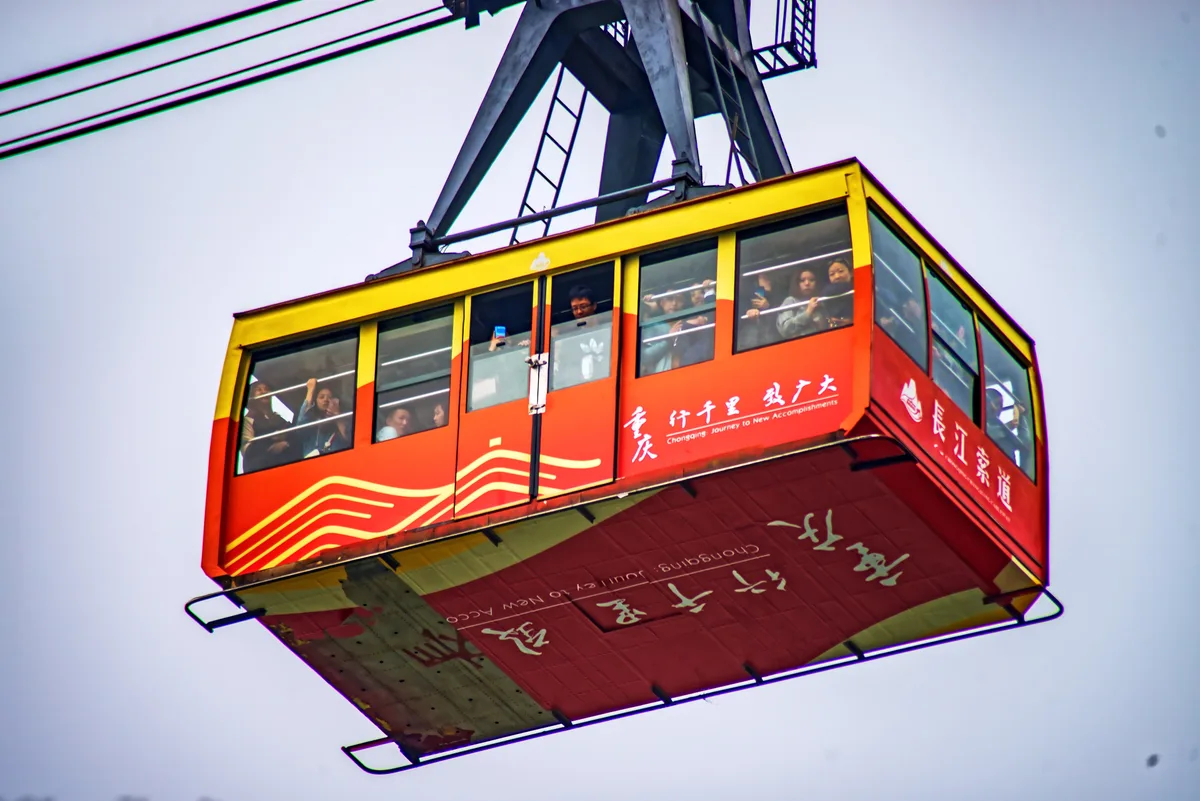
Across the Yangtze in a cable car
The Yangtze River Cableway has crossed from Xinhua Road in Jiefangbei to Shangxin Street on the south bank since October 1987. The span is 1,166 metres and a one-way ride takes four and a half minutes. The station is a two-minute walk from Xiaoshizi on Line 1. In February 2023, answering a visitor’s complaint about crowding, the operator explained that an upgrade with more glass had cut each cabin’s load from 80 passengers to 65, so you’ve a better chance of a window. The cableway charges its own fare, which we couldn’t confirm with the city, so check it at the station.
Jiefangbei, the Three Gorges Museum and Ciqikou
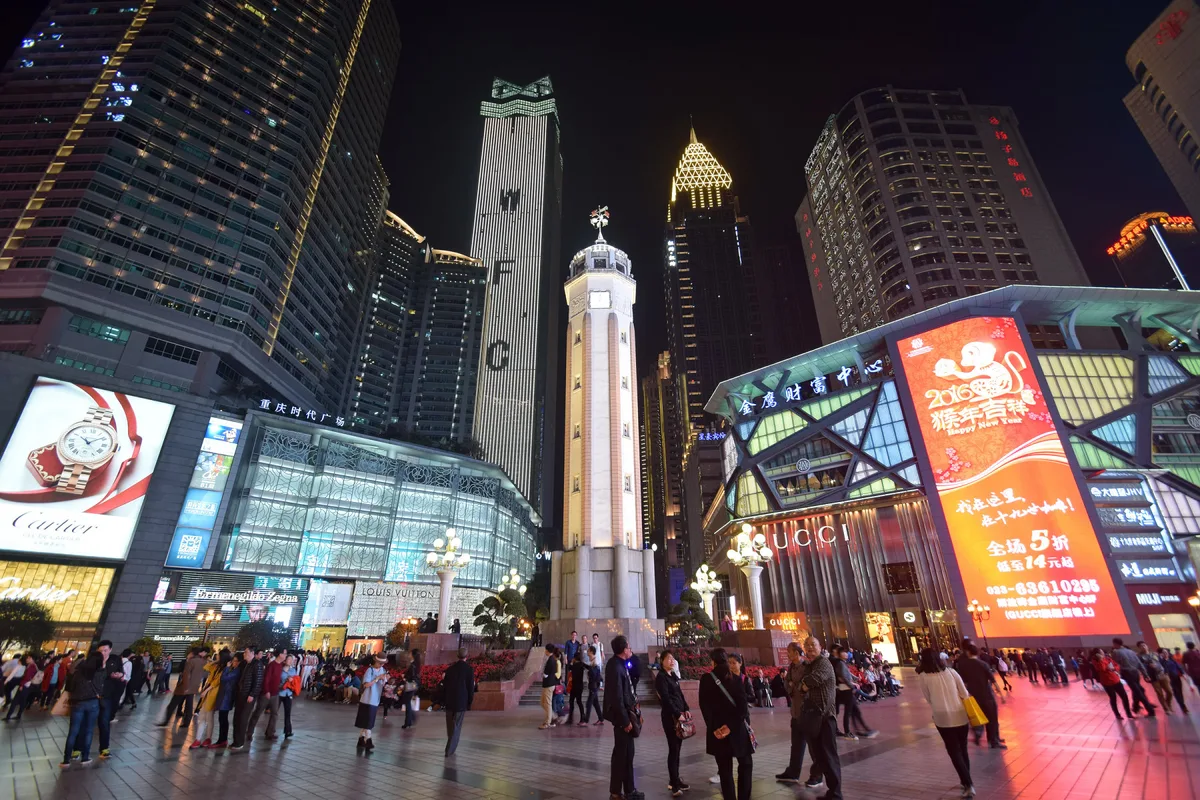
Jiefangbei, near the tip of the peninsula, is the city’s central pedestrian district, laid out from 1997 around the Liberation Monument, a clock tower about 28 metres tall, built in remembrance of victory in the war against Japan.
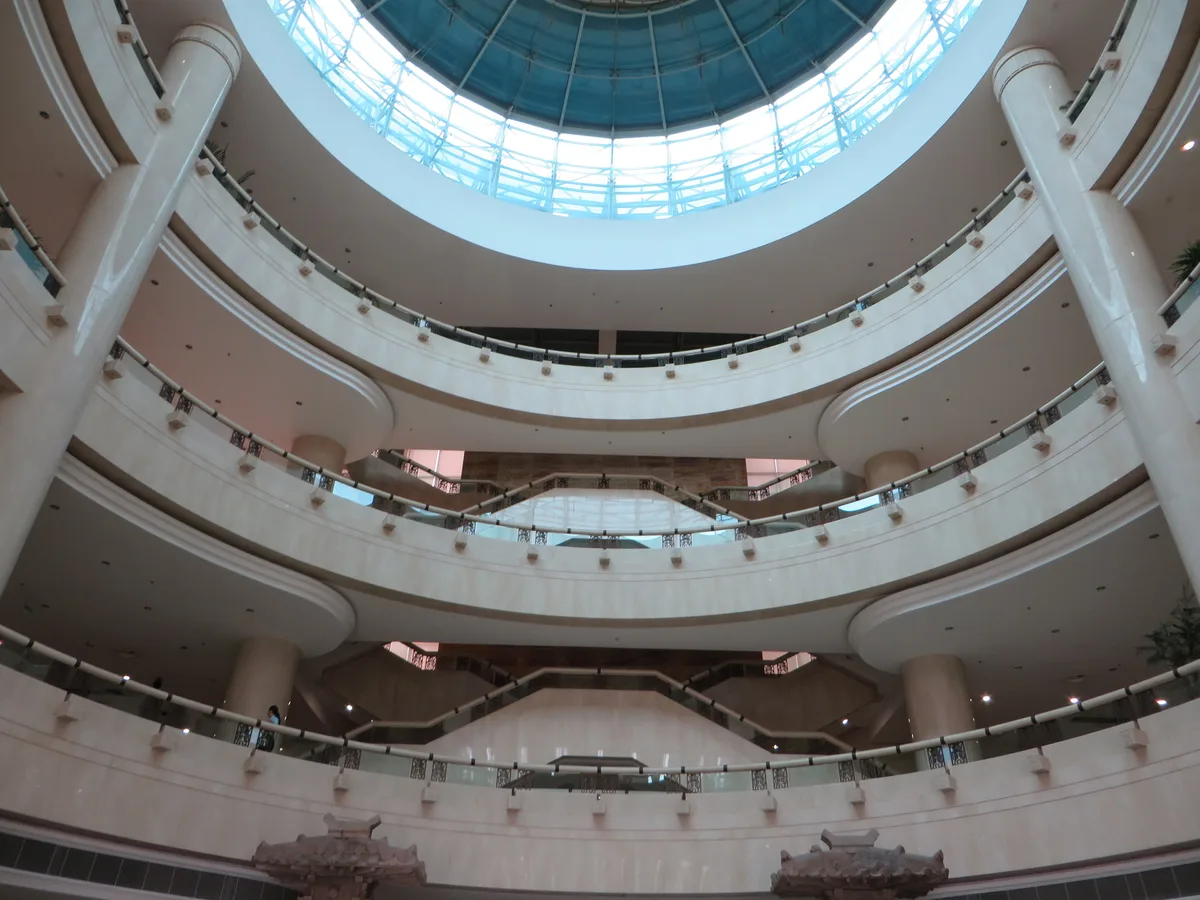
The China Three Gorges Museum, at 236 Renmin Road, opened in 2005, and it’s the place to go before a cruise. Its permanent galleries are free, and since 1 October 2025 you don’t need to book: you show a valid ID, which for a foreign visitor means your passport, at the door. It opens 9:00-17:00 from Tuesday to Sunday, with no entry after 16:00, and closes on Mondays except national holidays. The museum names Zengjiayan on Line 2 and Niujiaotuo on Line 3 as its metro stops.
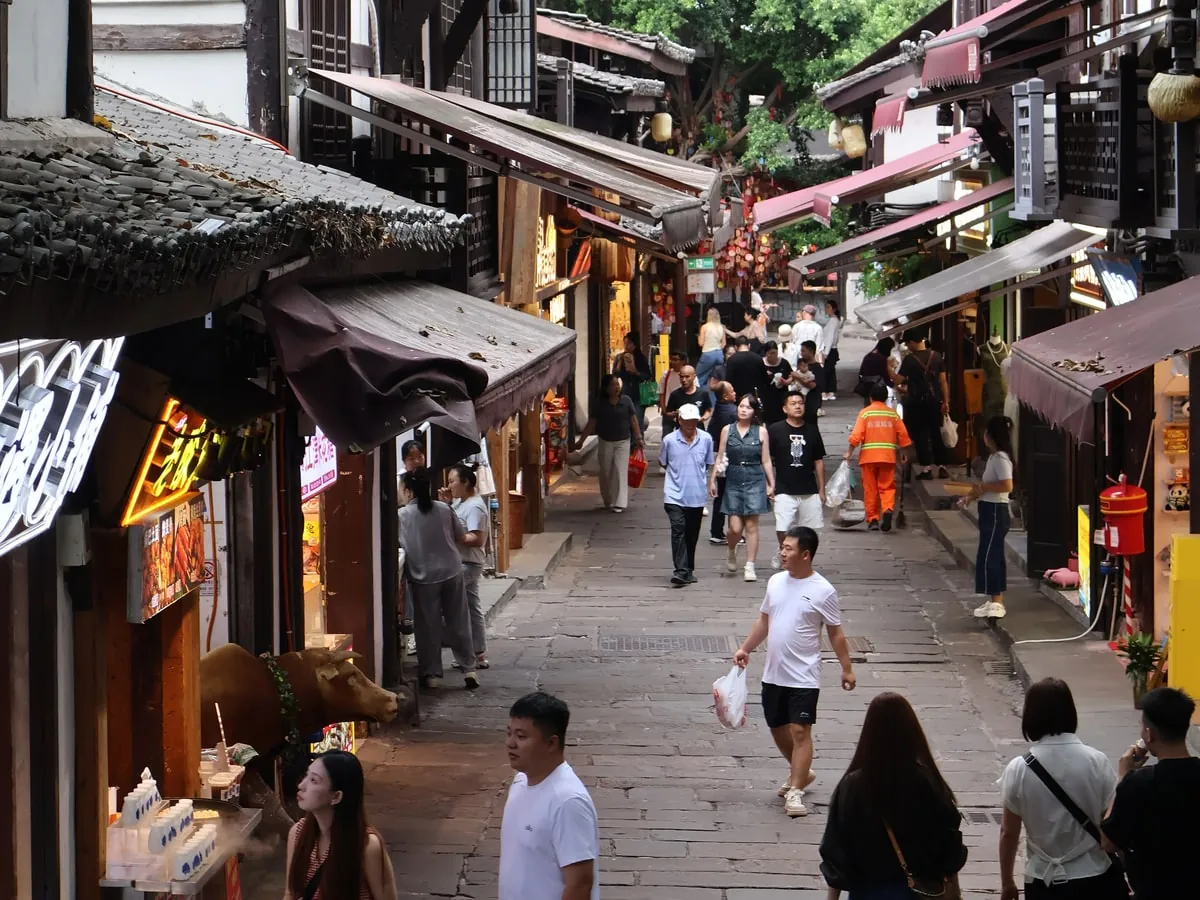
Ciqikou, upriver on the Jialing in Shapingba district, began as a trading town in the Song dynasty and took its name, porcelain harbour, from the kilns that made it rich under the Qing, when more than 70 porcelain workshops operated here. It has been a protected site since 1998, and its lanes are one long shopping street today.
Hotpot where it started
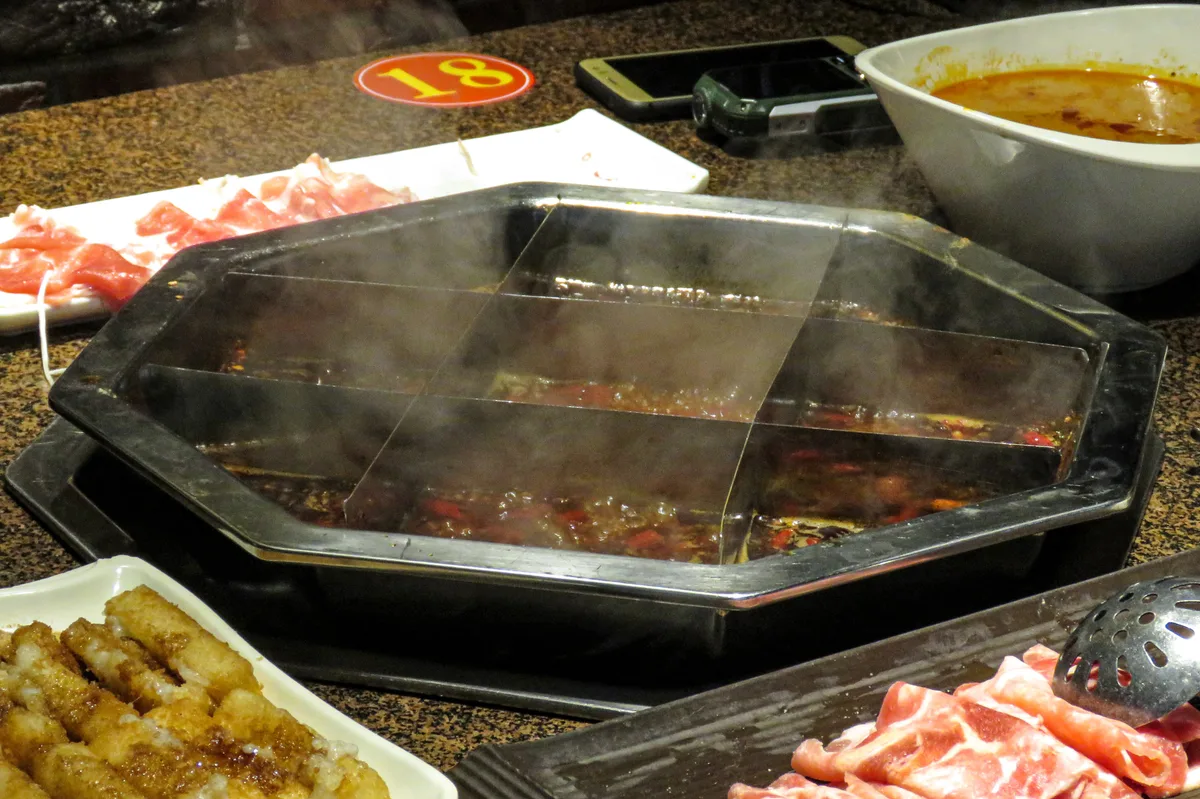
By the most widely accepted of several stories, Chongqing hotpot goes back to Chaotianmen wharf, where boatmen and porters boiled leftover meat in a broth of chillies and numbing Sichuan peppercorns, and the spice base is still cooked in beef tallow. If your group’s mixed, the split pot on our Chengdu page works here too. Some restaurants serve it in a pot divided into a grid of compartments; that’s the one in the photo below.
Three nights to Yichang: what a Yangtze cruise costs
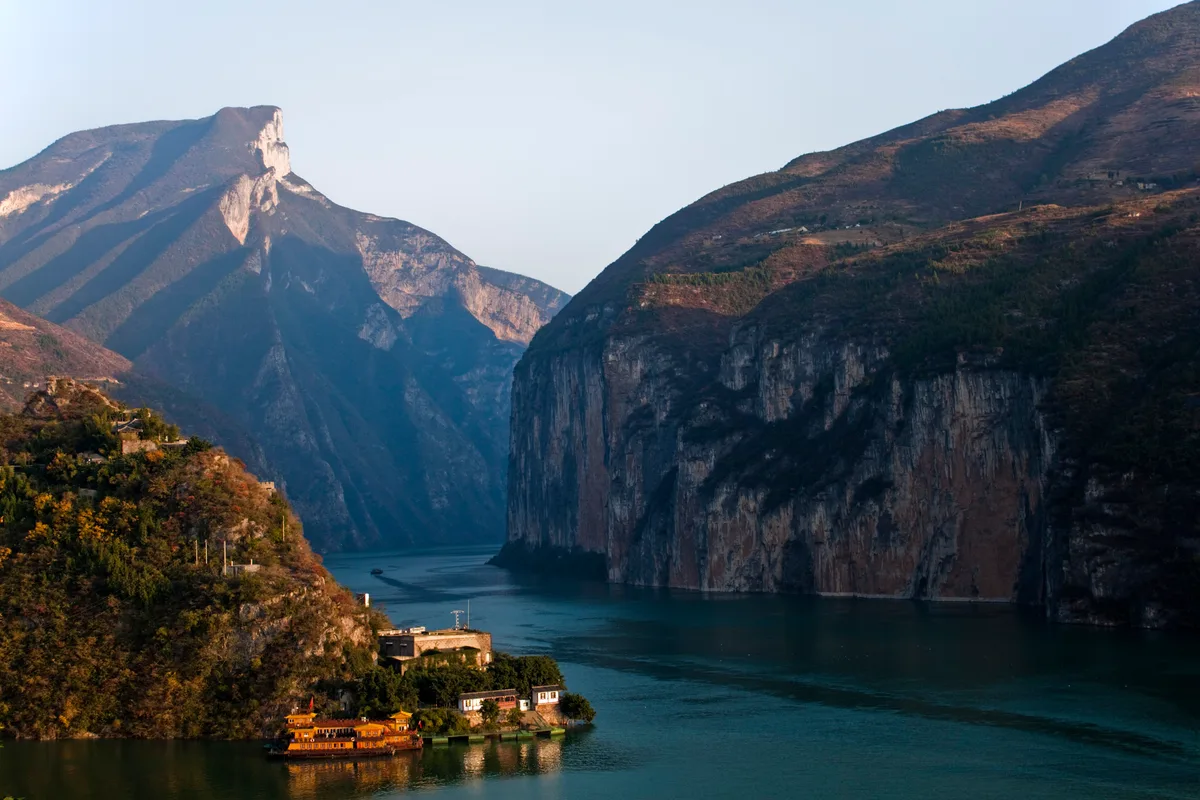
The classic cruise runs between Chongqing and Yichang, near the Three Gorges Dam. On Century Cruises’ own site, its 3-night downstream trip boards in Chongqing on the first evening, stops at Fengdu on day two, sails through the Qutang and Wu gorges with a side trip up the Goddess Stream on day three, and ends at Yichang with a visit to the dam on day four. The upstream trip covers the same river in four nights.
When we checked on 6 October 2026, Century’s downstream fares were $879 per person (about £665) in a deluxe stateroom shared by two on its sailings of 30 October and 20 November 2026, $1,049 on June-August and November 2027 dates and $1,349 in April-May and September-October 2027. Its 4-night upstream trip, Yichang to Chongqing, cost the same $879 on 18 October and 8 November 2026 and $799 on 29 November, so going upriver buys an extra night for the same fare or less. The fare covers the meals and entrance fees shown in the itinerary and an English-speaking guide. Century doesn’t sell online: you ask for a quote, and a specialist confirms the fare and the cancellation terms when you book. Victoria Cruise Lines runs the same three-night and four-night pattern and sells its optional excursions on board at $60 each.
A day out: Dazu’s carvings or the Wulong karst
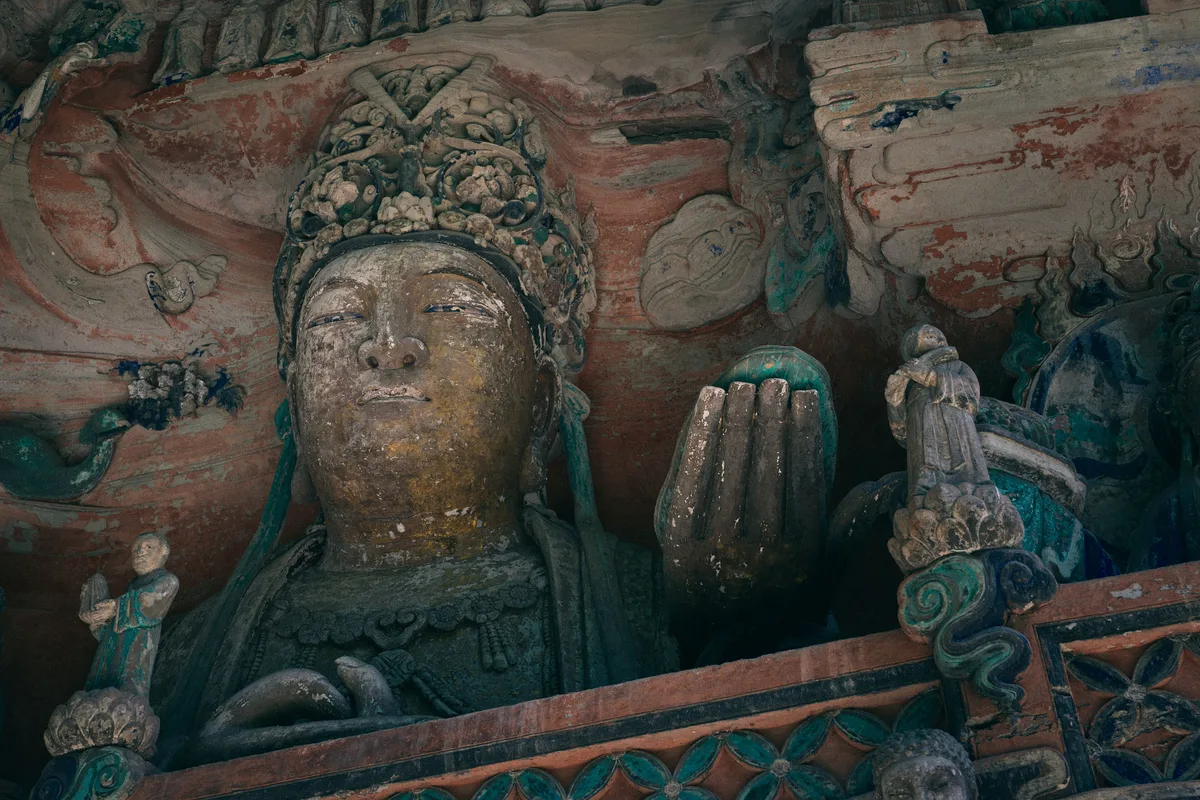
The Dazu Rock Carvings, a World Heritage Site since 1999, are cliff sculptures made between the 9th and the 13th centuries. On Tuesday 13 October 2026 the fastest train from Chongqing West to Dazu South took 31 minutes for ¥37 (about $5.50 or £4) in second class; check the last leg from the station to the carvings before you go.
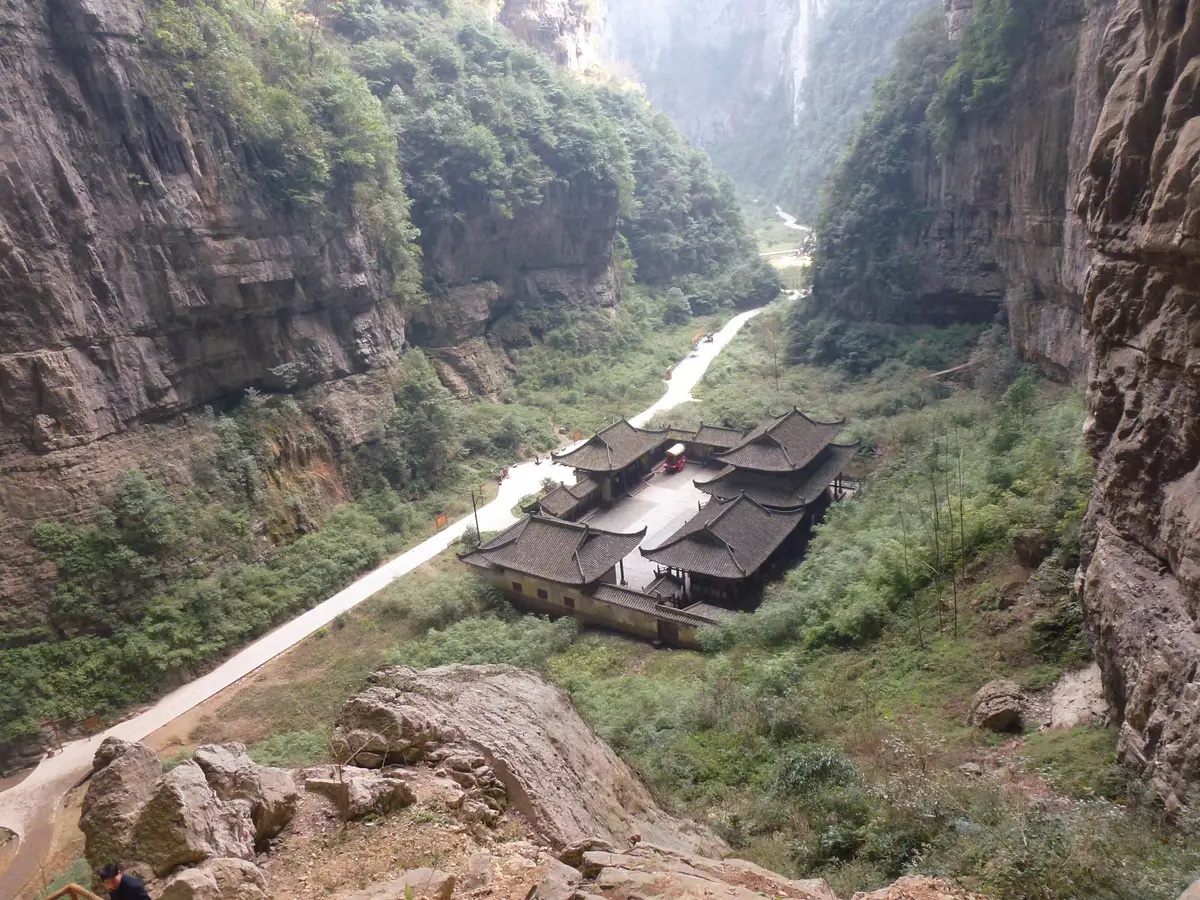
Wulong is part of UNESCO’s South China Karst for its giant sinkholes, natural bridges and caves. On the same day the quickest train from Chongqing East to Wulong South, G2427, took 35 minutes for ¥71 (about $10.50 or £8) in second class.
A base on the peninsula, or by the Chengdu trains
Most first-time stays belong on the Yuzhong peninsula. Jiefangbei, Chaotianmen, Hongyadong, the cableway station and the Three Gorges Museum are all there, so you’ll walk to most evenings out and save the metro for Liziba and Ciqikou. The exception is a short stop on the way to Chengdu: the quickest trains there leave from Shapingba station, and Ciqikou is in the same district, so a night in Shapingba puts both the old town and the station close by.
Outside the room and the meals, some of this costs little: the Three Gorges Museum’s permanent galleries are free, metro rides start at ¥2 and rise with distance, and a second-class return to Dazu on the fastest trains is about ¥75 (about $11, £8.50 or €10 on the European Central Bank’s rate for 2 October 2026). The cableway, an evening river cruise and the Dazu carvings aren’t in that sum, so price them before you go.
Trains, the airport and the metro
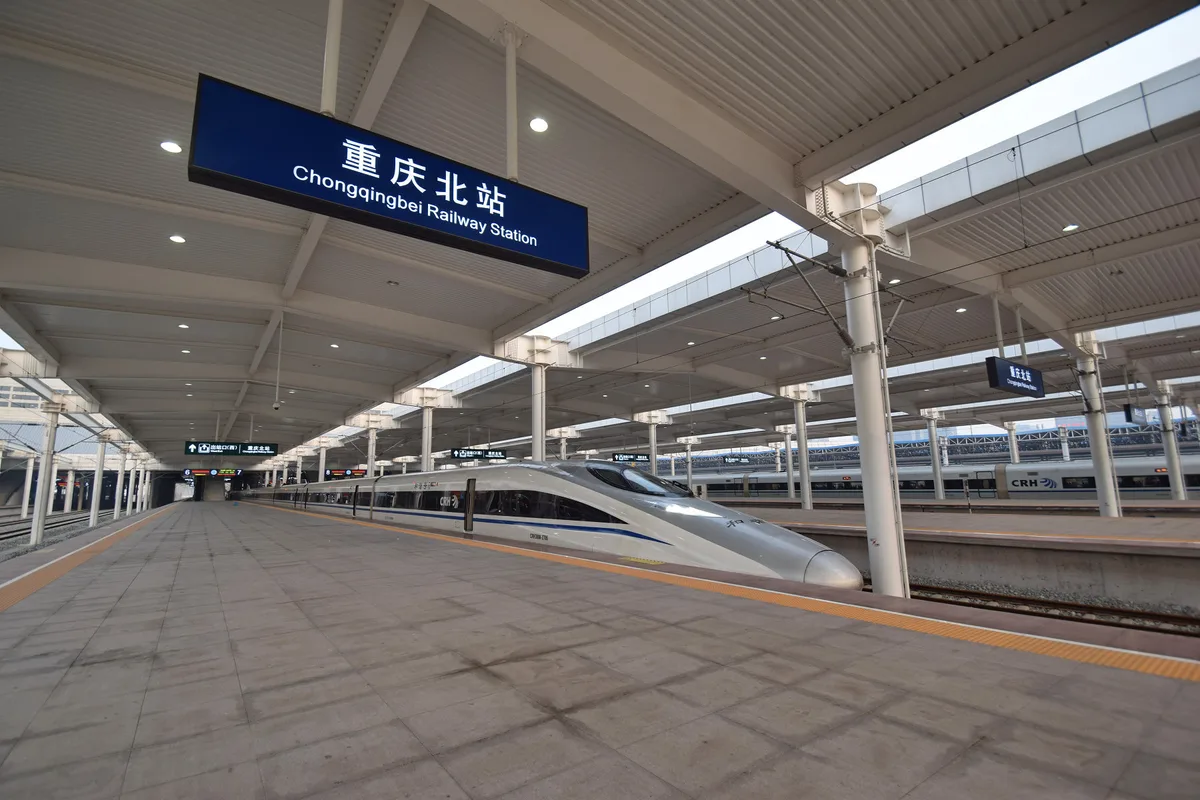
From Chengdu, the trip takes about an hour on the quickest trains, and the Chengdu page sets out the fares and stations. From further away, on Tuesday 13 October 2026, read on 12306 on 6 October:
- From Xi’an North: 23 G and D trains, taking 5 hours 4 minutes to 6 hours 10 minutes to the main Chongqing stations, ¥302-482 (about $45-72) in second class.
- From Beijing West: G329 left at 06:55 and reached Chongqing North at 13:55, ¥856 (about $128) in second class.
- From Shanghai Hongqiao: the fastest, G241, took 8 hours 59 minutes for ¥870 (about $130).
To buy seats with a foreign passport, see how 12306 and Trip.com compare.
Jiangbei International Airport is on metro Lines 3 and 10. It’s a port for the 240-hour visa-free transit, which matters on a US passport as long as you hold a confirmed onward ticket to a third country or region, and the whole municipality counts as its permitted area; our China visa page lists the passports it covers and the other conditions. Single metro fares start at ¥2 and rise with distance, and ticket machines have an English mode and take cash. Chongqing Rail Transit also lists ride QR codes in Alipay, WeChat and its own CRT app, but its notice doesn’t say whether they work with a foreign card, so try yours at the gate and keep cash as back-up; China’s travel apps covers setting up Alipay.
Hotter than Chengdu: picking your month
Summers here are hotter than in Chengdu: average highs reach 32.2°C in July and 32.8°C in August, against just under 30°C there. Spring and autumn are milder, with highs of 22.2°C in April and 21.3°C in October, but wet, with rain on 15 days in an average October. November’s average high is 15.7°C, and it’s a little drier. Winter is cool rather than cold, with January between 5.6°C and 9.5°C. For a first trip, aim for April or October, pack a light rain jacket, and keep the evenings free for the lights.
On the map
The map loads on click, to keep the page light.
The map didn’t load. Check your connection and refresh the page.
Tickets and opening hours
- Ticket price
- China Three Gorges Museum permanent galleries free, no booking, passport at the door. Metro single journeys from ¥2, rising with distance. Yangtze cruise from Chongqing to Yichang with Century Cruises, 3 nights: $879 per person in a deluxe stateroom on its late-October and November 2026 sailings, $1,049-1,349 on 2027 dates, based on double occupancy.
- Opening hours
- China Three Gorges Museum 9:00-17:00 Tuesday to Sunday, no entry after 16:00, closed on Mondays except national holidays.
Museum details from the museum's own notices, read on 10 October 2026; cruise fares from Century Cruises' own site, checked on 6 October 2026. Fares change by sailing, so check before you book.
Details checked: 6 October 2026
Read also

Cities · 14 min read
Chengdu Guide 2026: Pandas, Teahouses and How Long to Stay
Verified · 6 October 2026Chengdu for a first trip: the panda base at opening time, Wuhou Shrine on a passport, tea in People's Park, trains from Xi'an and a museum shut until 2027.

Cities · 10 min read
Guilin and Yangshuo: the Li River Cruise and 3-4 Days (2026)
Verified · 6 October 2026Why the Li River cruise means a night in Yangshuo, booking it by passport, when the river closes, the 20-yuan view and trains from Hong Kong.

Cities · 12 min read
Harbin Travel Guide 2026: Russian Architecture and Winter
Verified · 6 October 2026Two days for Harbin: Central Street and St Sophia, Daowai, booking the Unit 731 site, where to sleep, the metro, and January nights at -22.9°C.

Cities · 14 min read
Lijiang Travel Guide 2026: Old Town and Snow Mountain
Verified · 6 October 2026Three days in Lijiang: the Old Town at 2,400 m and its ¥50 fee, booking Jade Dragon Snow Mountain's cable car, Tiger Leaping Gorge, where to stay, trains.