
Shanghai in 2026: Neighbourhoods, Sights and How Long
Which side of the river to sleep on, where the Shanghai Museum collection went, the Bund's evening lights, ticket prices and how many days you need.
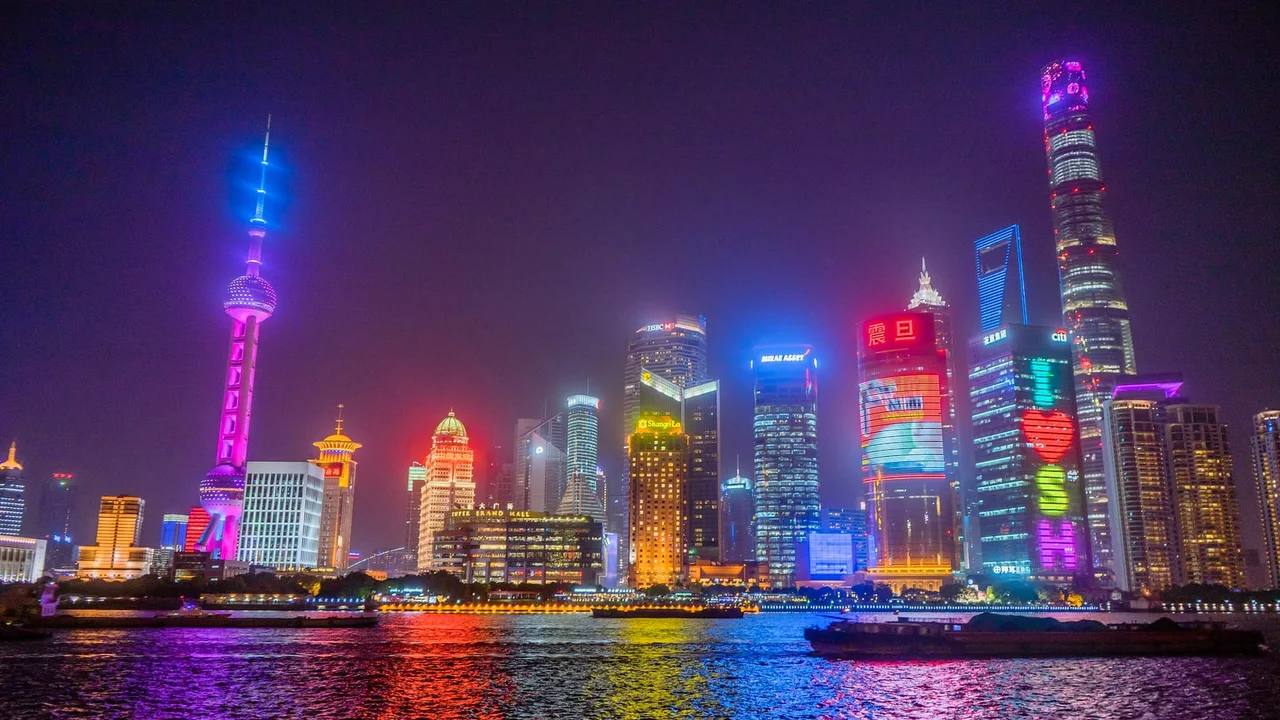
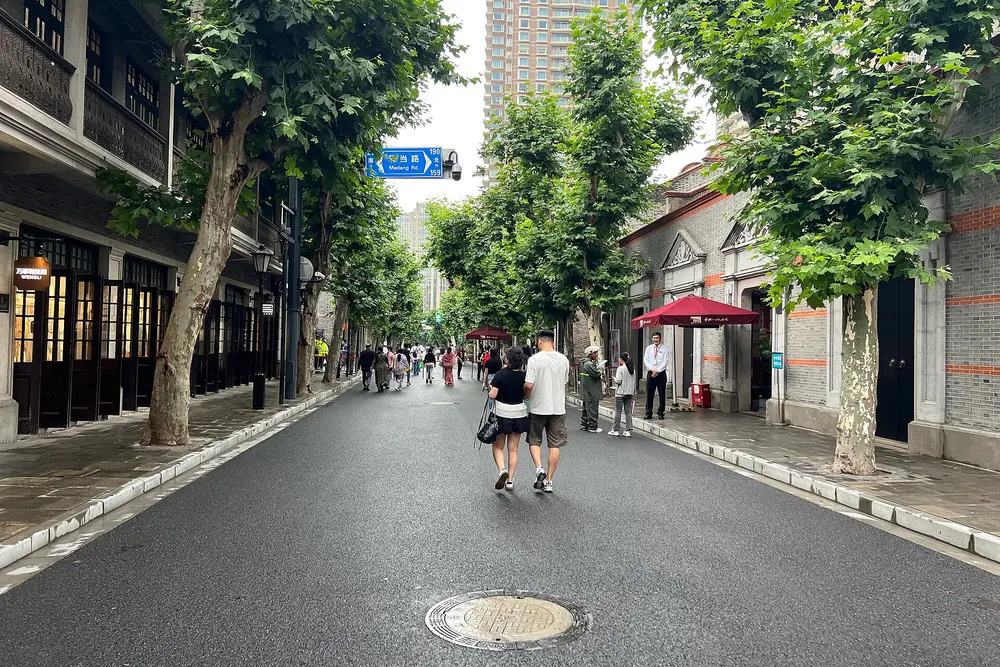
Most first-visit decisions in Shanghai follow the Huangpu River. Sleep on its west bank, in Puxi, between People’s Square and the Bund, within walking distance of the old waterfront and Yu Garden, and cross to Pudong on the east bank for the skyscrapers and the Shanghai Museum’s collection. Three days is the length to aim for; a shorter stay usually squeezes out the plane-tree streets of the former French Concession, the part of the city that’s best seen slowly and on foot.
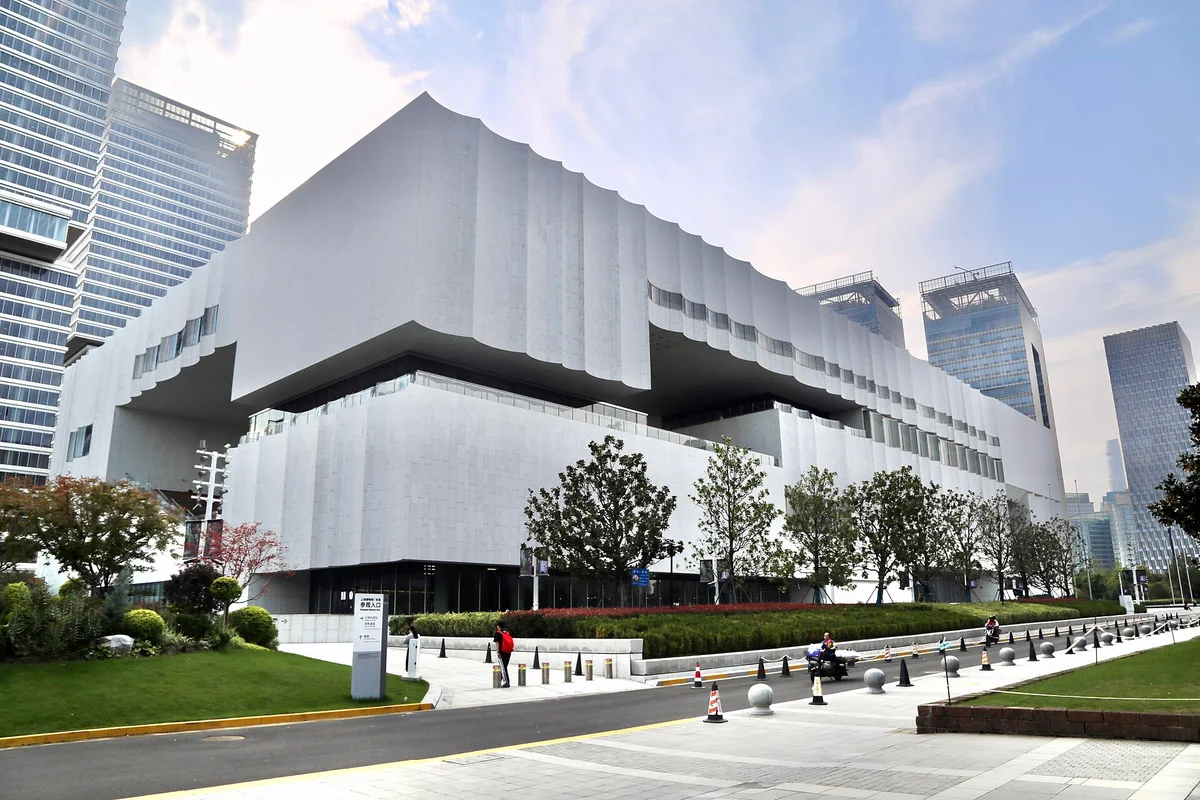
Until 14 November 2027 the Shanghai Museum’s Chinese bronzes, ceramics and paintings are on show only across the river, at Shanghai Museum East in Pudong, where for now you’ll walk in with a passport and no booking. The People’s Square building holds a single paid exhibition on the ancient Americas until then.
Which bank, which neighbourhood
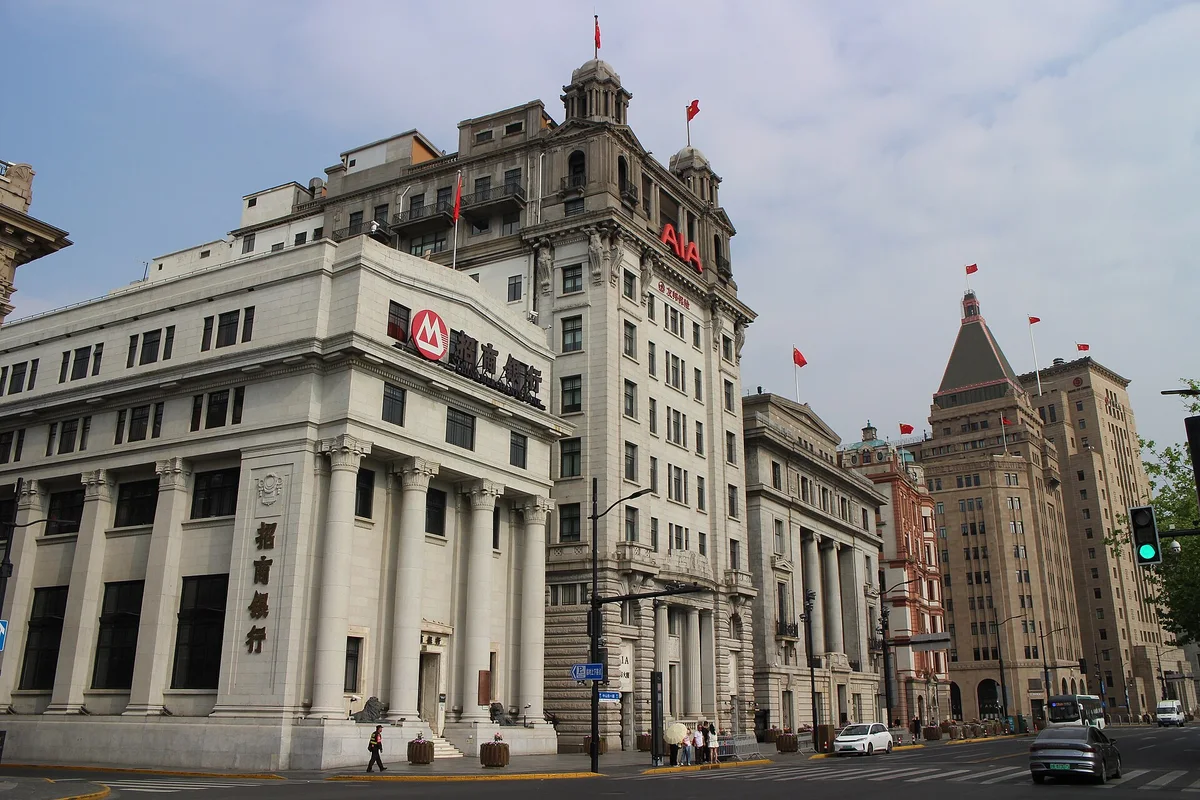
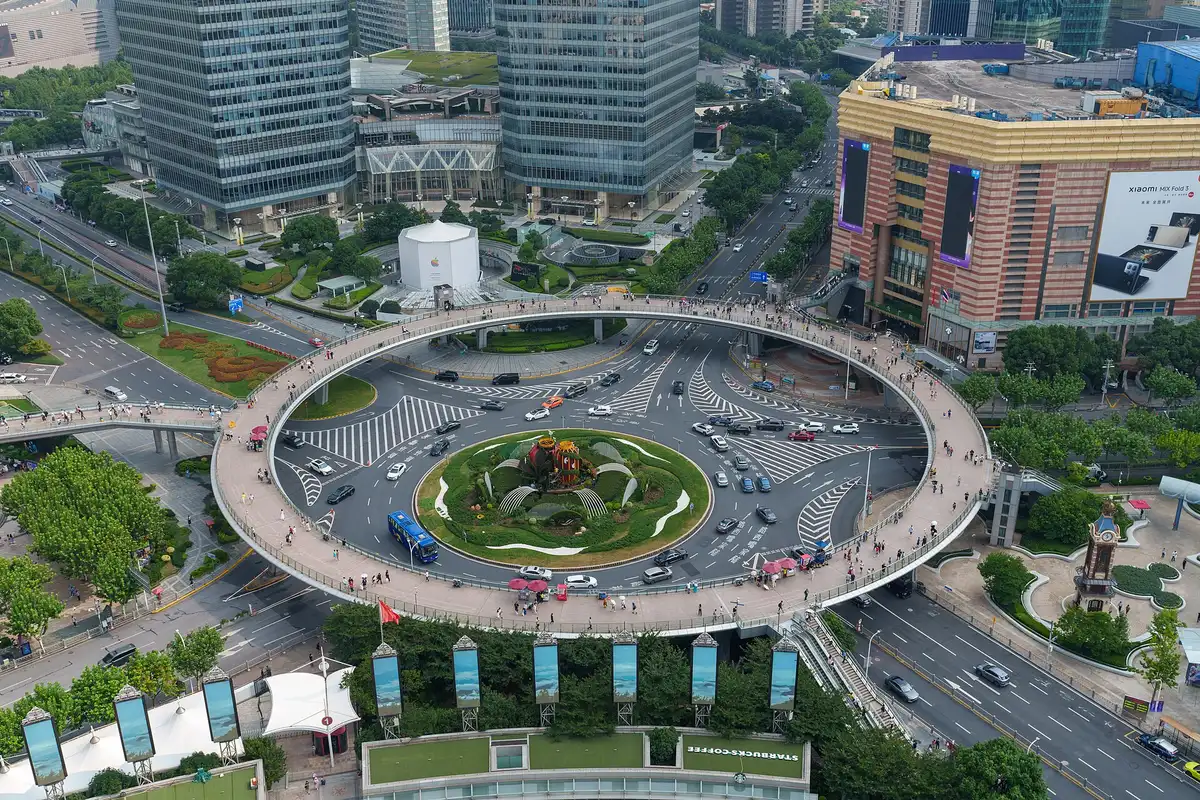
The Huangpu splits central Shanghai in two. Puxi, the west bank, is the older city: the Bund’s 1.5 km of former banks and trading houses, mostly early 20th-century, Nanjing Road, People’s Square, the old town around Yu Garden and, further west, the former French Concession and Jing’an. Pudong, the east bank, is the skyline of Lujiazui. Metro Line 2 links the two, and public ferries carry foot passengers across for ¥2 (about $0.30).
| Neighbourhood | On foot from the door | Good for | Less good if |
|---|---|---|---|
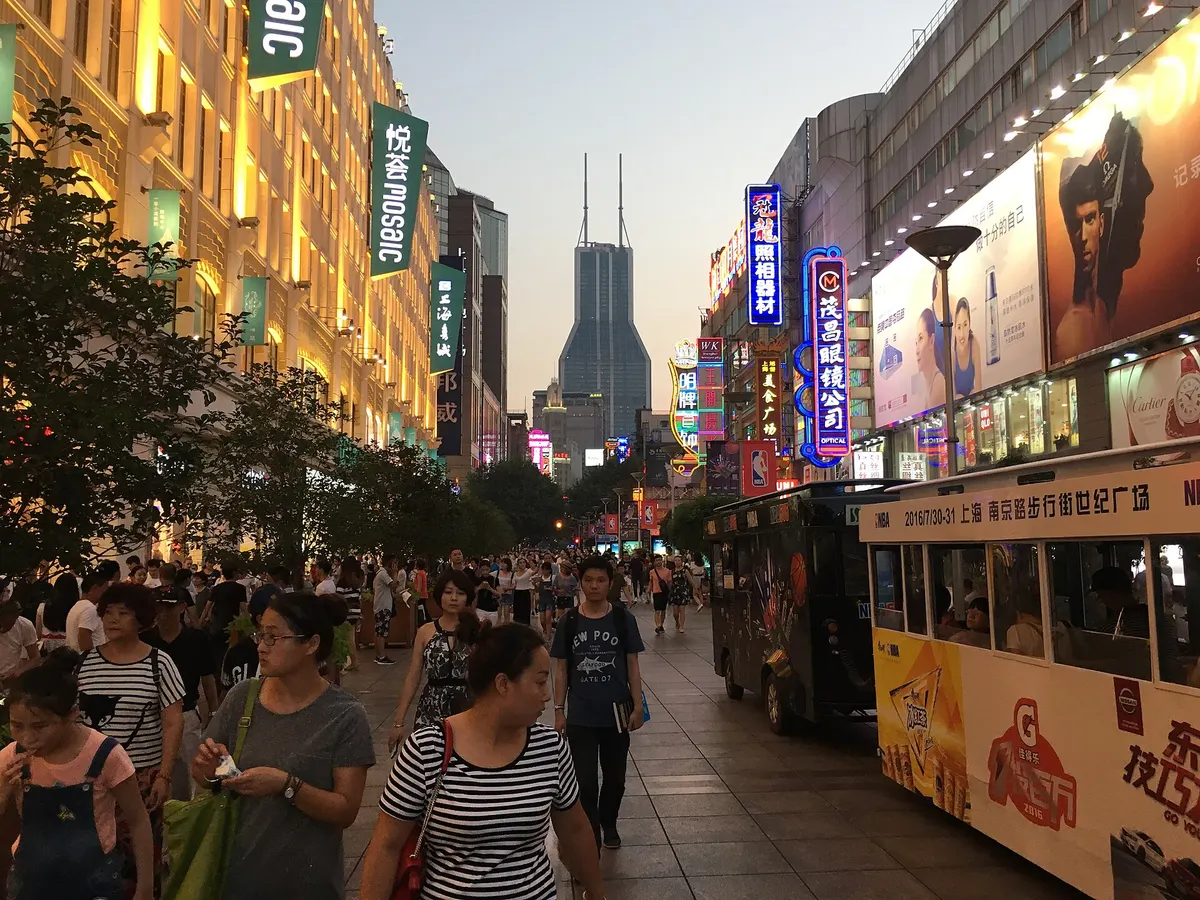
| The Bund and People’s Square | The Bund, Nanjing Road, Yu Garden | A first visit on foot | You want quiet streets after dark |
| Former French Concession | Wukang Road, Anfu Road, Hengshan Road | Plane trees, cafés, a slower pace | You’d like the Bund every evening |
| Jing’an | Jing’an Temple, West Nanjing Road | Shopping centres and flagship stores | You’re after old-town character |
| Lujiazui, Pudong | The towers, the riverside promenade | A skyline view from your window | Most of your days are in Puxi |
For a first trip, base yourself around the Bund and People’s Square: you can walk the waterfront before breakfast, when it belongs to locals doing their morning exercise, and be back for the evening light show without a taxi.
Wherever you stay, reception will scan your passport, because hotels must register foreign guests with the police within 24 hours. In May 2024 the authorities told hotels they may not turn foreigners away over that paperwork, a problem reported mostly at budget hotels and in smaller cities.
Evenings on the Huangpu: the Bund lights and the ¥2 ferry
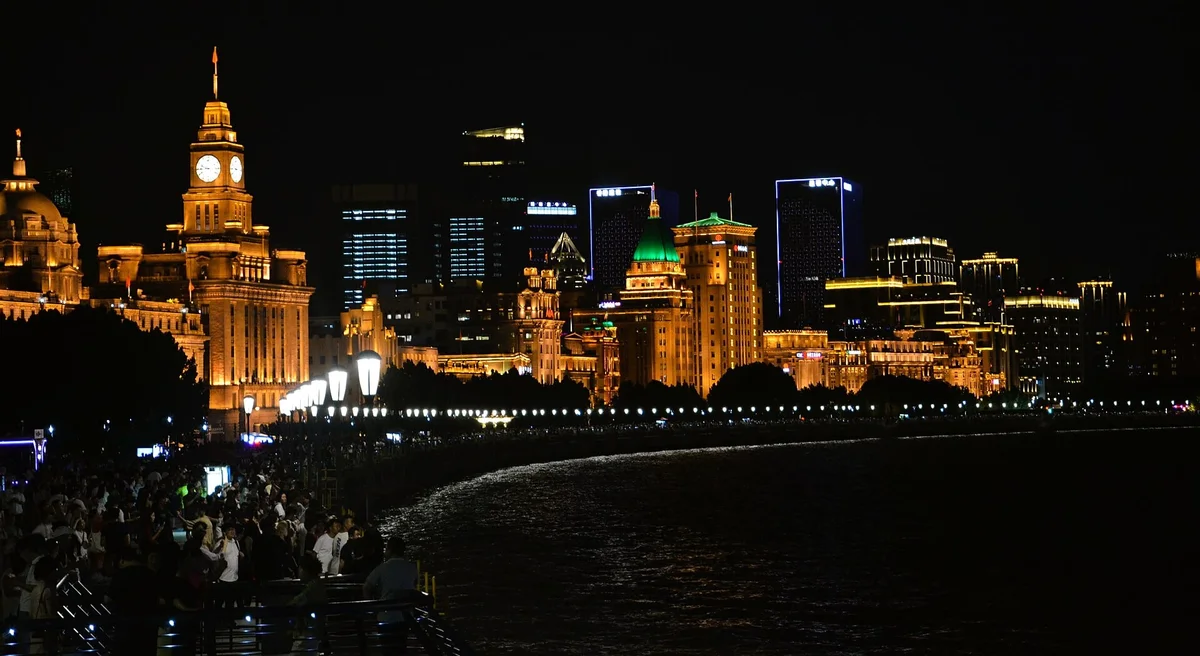
The waterfront lights come on at 7pm from May to September; in the cooler months and on public holidays the city switches them on at 6pm. On a summer evening the cue is the Customs House clock on the Bund: it chimes seven, and 38 landmark buildings along the waterfront light up one after another within ten seconds, while the Lujiazui towers opposite start their own displays. It’s free, and it draws a crowd: the Bund scenic area’s management counted more than 40,000 people on the waterfront at 7pm on 15 August 2026. Get to the railing half an hour before, or watch from the Pudong promenade, looking back at the lit bank buildings.
The cheapest way onto the water is a public ferry at ¥2 a crossing, and the Dongfu line, from Fuxing Road in Puxi to Dongchang Road in Pudong, runs until 9pm, late enough for the lit skyline. The piers have had no ticket windows since March 2022: you pay on the way in with the Shanghai public transport QR code in WeChat or Alipay, both of which take foreign cards. A sightseeing cruise gives you about an hour on the river: ¥120 (about $17.90) on a daytime sailing from Shiliupu between late February and late November, ¥100 in winter and ¥150 on public holidays; evening sailings cost more (¥150 in the main season). On a short trip, cross on the ferry after dark and save the cruise for a second visit.
The highest deck isn’t the dearest
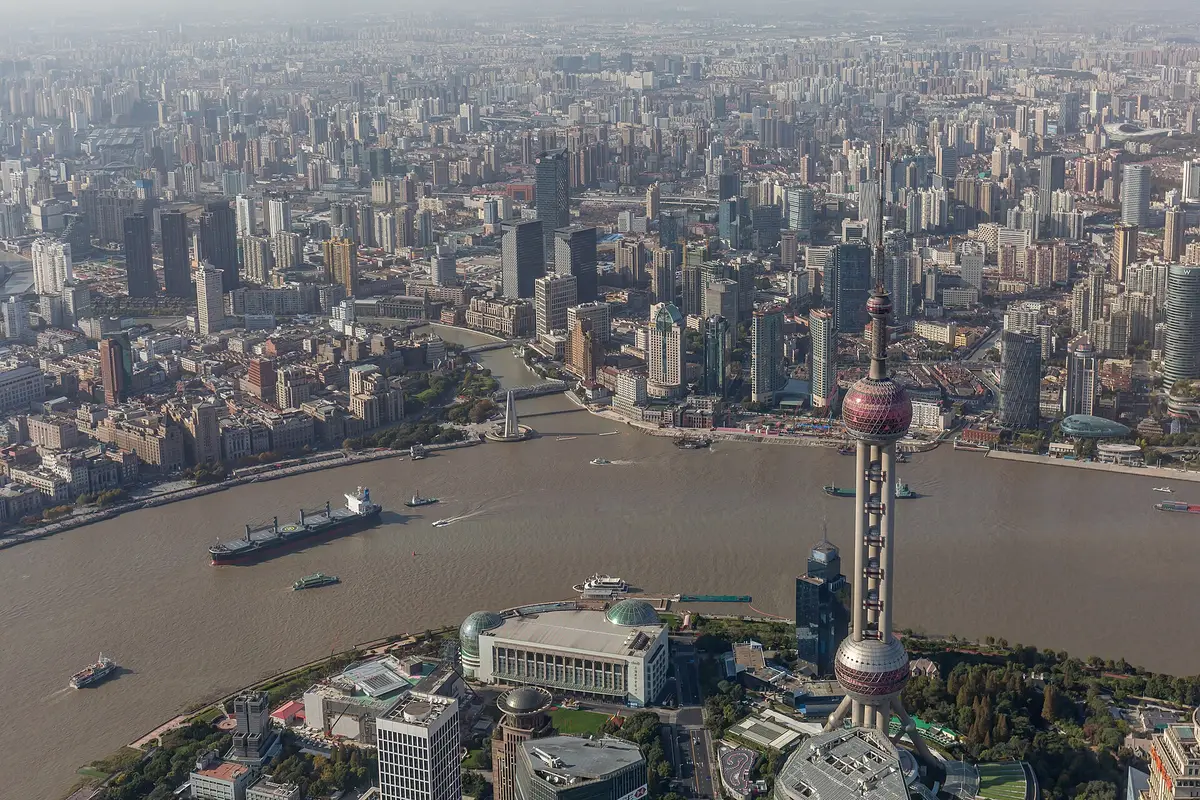
Three towers in Lujiazui sell tickets to a viewing deck, and the prices don’t follow the heights. The Top of Shanghai observatory, on the 118th floor of the 632-metre Shanghai Tower, puts you 546 metres up for ¥180 (about $26.80). The Oriental Pearl Tower’s standard two-sphere ticket costs more, ¥199 (about $29.65), for a sightseeing floor at 263 metres, and the Jin Mao Tower’s 88th-floor deck is the cheapest at ¥120 (about $17.90). All are regular adult fares from the city’s May 2026 list.
With one ticket to buy, take the Shanghai Tower. It’s sold under your real name through Ctrip and other Chinese booking platforms, so carry the passport you booked with. The Oriental Pearl is better looked at than climbed, since from inside it you can’t see it.
Where the Shanghai Museum’s collection is now
From 9 July 2026 to 14 November 2027 the Shanghai Museum’s People’s Square building holds only On Top of the World Tree: Ancient Civilizations of the Americas, with nearly 3,000 objects, among them an Olmec colossal head of about 4.5 tonnes. Tickets are ¥148 (about $22.05), ¥135 on weekdays outside July, August, January, February and national holidays, and ¥74 for over-60s, children aged 7 to 18 and full-time students up to undergraduate level, all with ID; book on the museum’s WeChat mini programme or on Trip.com, the channel it names for overseas visitors. It’s closed on Mondays outside national holidays, with last entry at 15:00.
The permanent collection, from bronze and jade to painting, coins and ceramics, fills 13 galleries at Shanghai Museum East, 1952 Century Avenue. For now, entry needs no booking or ticket, just your passport at the B1 East Gate. Some special exhibitions are ticketed, and two interactive spaces, the Curio-City for children aged 6 to 18 and their families and the Digital Gallery, still take advance bookings under ‘Special Reservation’ in the museum’s WeChat mini programme. It’s open 10:00-18:00 (last entry 17:00), closed on Tuesdays outside national holidays, and reached from Exit 8 of Shanghai Science and Technology Museum station on Line 2. More than 47% of visitors surveyed during its trial opening stayed three hours or longer, so expect it to fill a morning.
Yu Garden and two Buddhist temples
Yu Garden sits in the north-east of the old walled town. The Ming official Pan Yunduan began it in 1559 on vegetable plots beside the family house, so that his retired father could live out his years in peace, and the garden’s name means just that. Entry is ¥40 (about $5.95) from April to June and September to November and ¥30 in the other months, half price for children aged 7 to 18, full-time students and over-60s with ID (ask whether a passport counts). The last visitors go in at 16:00, and it’s shut on Mondays apart from national holidays.
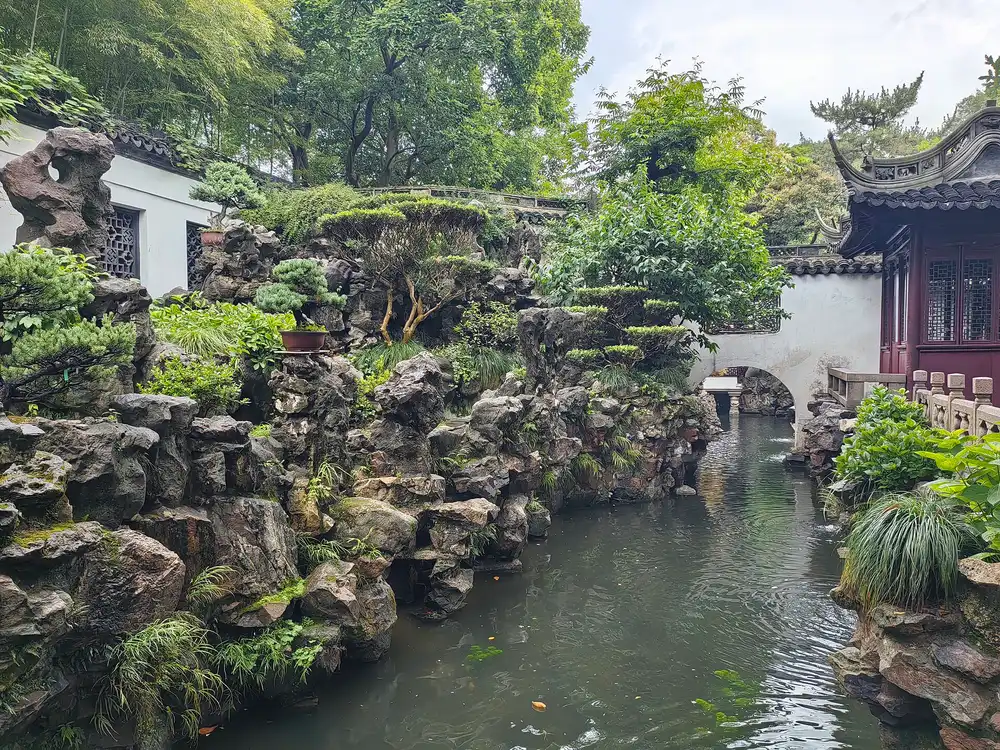
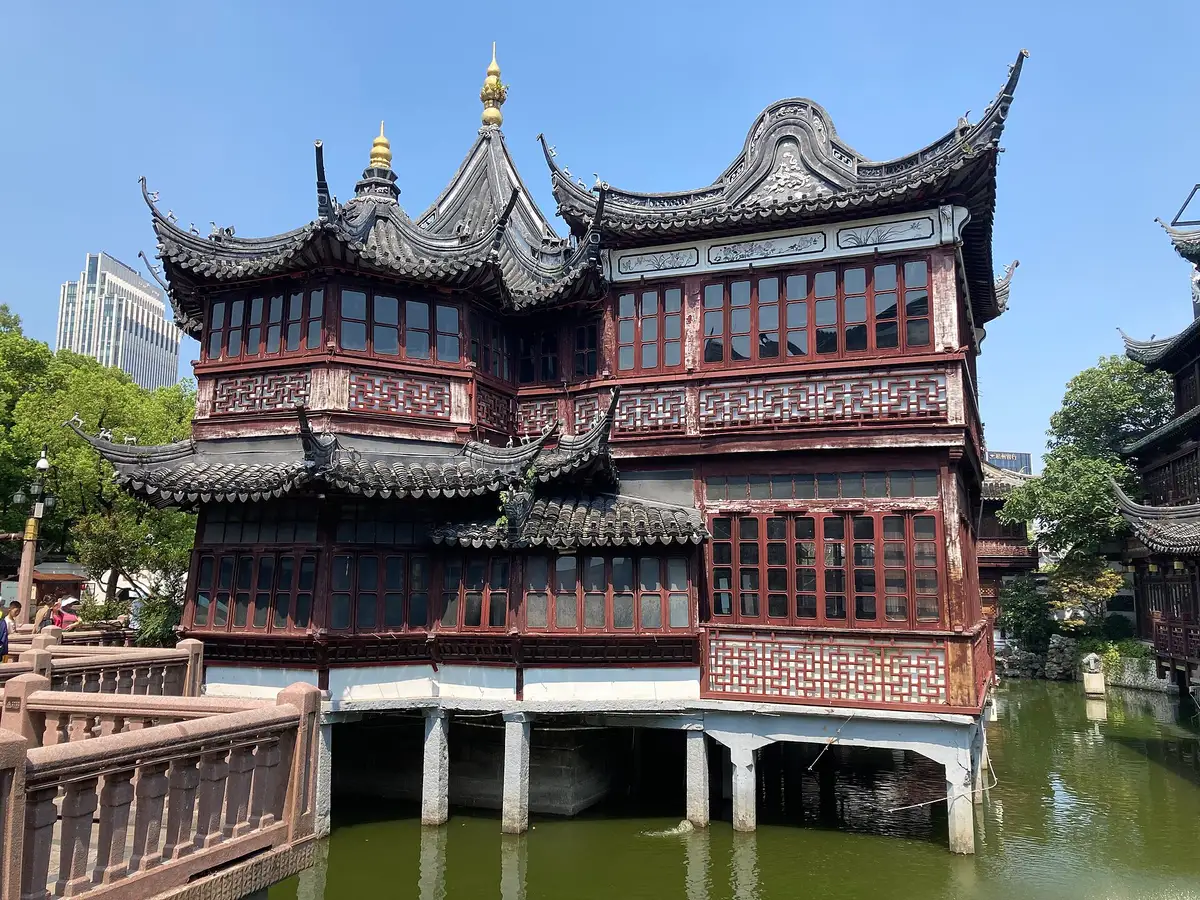
Much of what people photograph here is outside the ticket gates. The south gate stands at the foot of the Nine-Zigzag Bridge, so the bridge and the Huxinting teahouse on its stilts are free to walk around, though the tea inside isn’t. Metro Lines 10 and 14 stop at Yuyuan Garden.
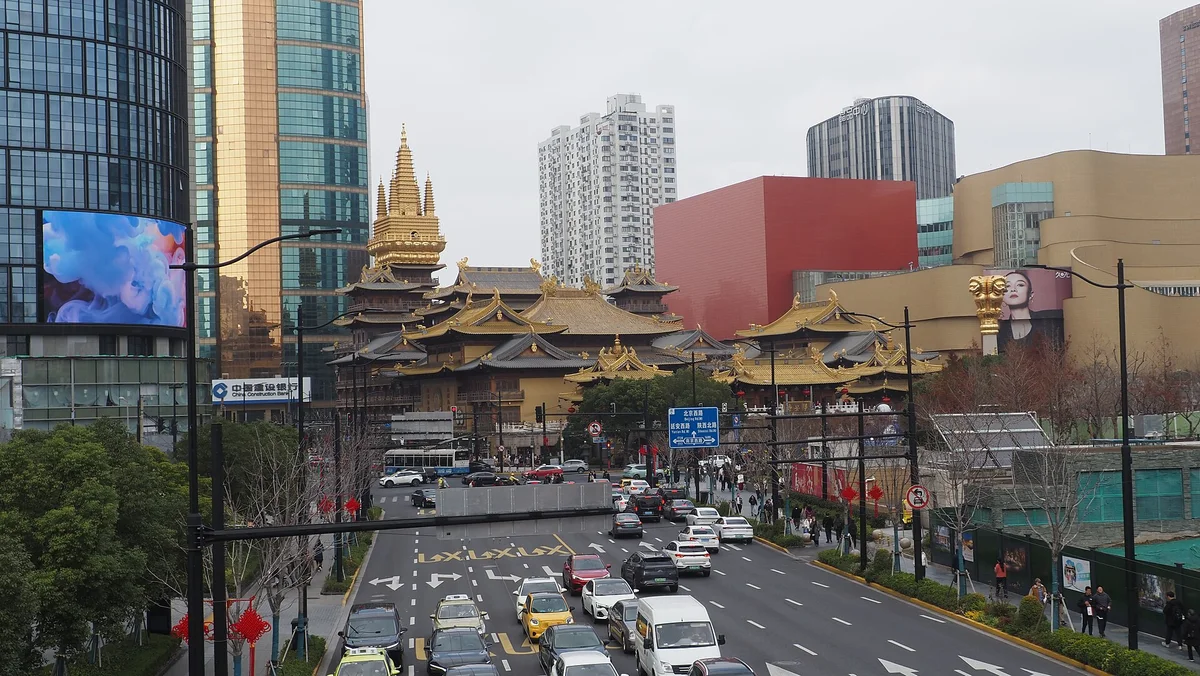
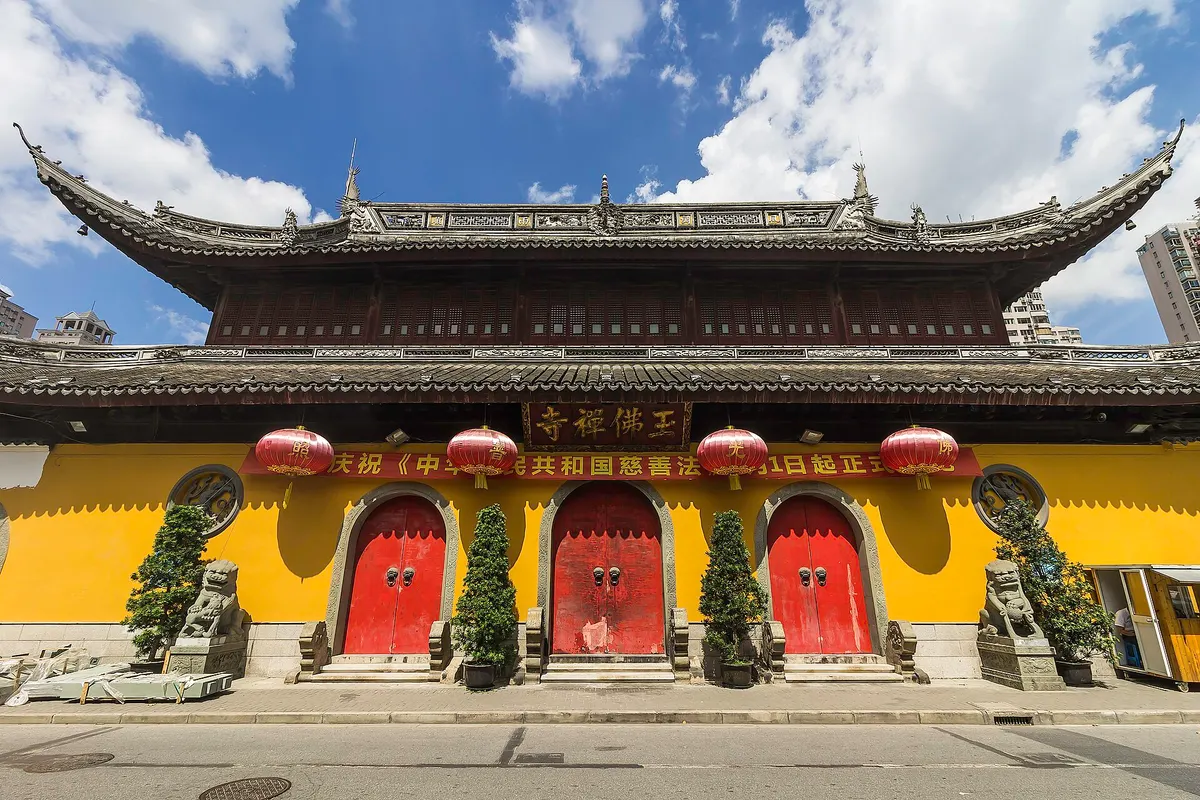
The Jade Buddha Temple has been free to enter since June 2023, apart from Chinese New Year’s Eve and the first fifteen days of the lunar new year, so an older guide’s ticket price is out of date. It’s open 8:00-16:30, five minutes on foot from Exit 3 of Jiangning Road station on Line 13. Jing’an Temple, first built in 247 AD and on its present site since 1216, charged ¥50 (about $7.45) according to the city’s official tourism website in 2023; the temple sells entry through its WeChat account rather than a website, so you’ll find the current price there or at the gate.
Plane trees and lane houses
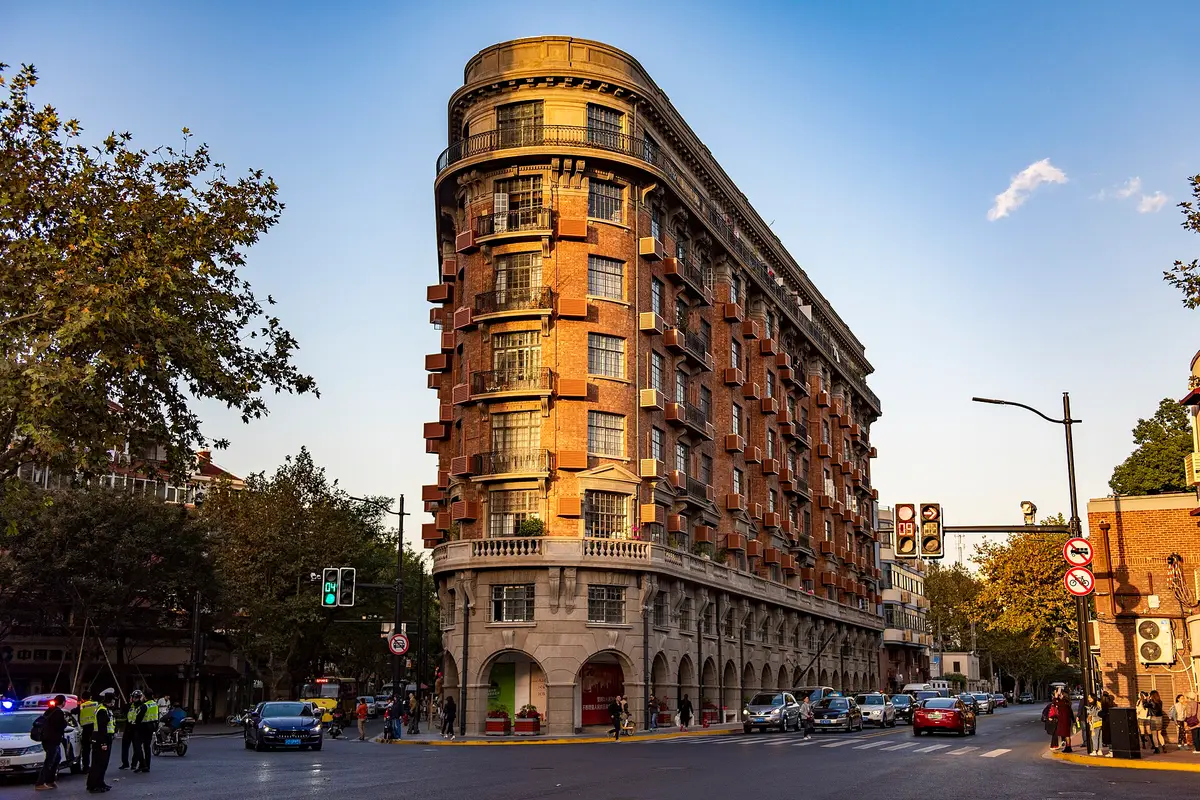
West of the centre, the former French Concession is Shanghai at walking pace. The city’s culture and tourism administration publishes a route called In the Shade of Plane Trees that starts at the Wukang Building, a red-brick wedge designed by Laszlo Hudec and finished in 1924, the oldest veranda-style apartment block in the city, and ends at Jialanting, 309 Yongjia Road. Go in November, when the plane trees turn yellow.
Nearer People’s Square are two blocks of shikumen, the lane houses that grew up from the mid-19th century by mixing Jiangnan courtyard plans with Western detail. Xintiandi, completed as a restored block in 2001, is the polished one, with restaurants in grey-brick terraces and, at 76 Xingye Road, Shude Li, where the Communist Party of China held its first national congress. Tianzifang, off Taikang Road, kept its narrow lanes and turned into a cultural and creative quarter of small shops, made for a slow browse.
Fitting Shanghai into a first China trip
| Days | What fits | What waits |
|---|---|---|
| Two | The Bund by day and after dark, Yu Garden, one tower, Museum East | The French Concession, the temples |
| Three | All that, plus the plane-tree walk, Xintiandi, Tianzifang and the Jade Buddha Temple | Day trips |
| Four or more | A high-speed train out to the gardens of Suzhou or West Lake in Hangzhou | - |
If you’re also seeing Beijing and Xi’an, start from the two-day row: it already takes in both banks of the river and the museum. On a longer trip, the karst country of Guilin and Yangshuo and Chongqing, where the Yangtze cruises start, are both a long day away by high-speed train.
Both Shanghai airports and its passenger port accept arrivals on the 240-hour visa-free transit, and the area it lets you travel in includes Jiangsu and Zhejiang, so a day trip to Suzhou or Hangzhou stays inside the rules. If your passport is one of the 57 it covers, the US included, you’re limited to ten days and your next leg has to go to a third country or region: a US passport on a return ticket home still needs a visa. UK, Canadian, Australian, New Zealand and Irish travellers don’t need any of this for now, since an ordinary passport gets them 30 days visa-free, an arrangement that currently runs to the end of 2026. Check the official rules before you book.
Metro fares, passes and Tap to Ride
Shanghai’s metro sets one condition for paying at the gates with a bank card: the card has to allow small payments without a PIN. With that in place, a contactless UnionPay, Visa, Mastercard, American Express or JCB card works at every station, as it has since 28 June 2025, and a ride of up to 6 km costs ¥3 (about $0.45), with ¥1 added for each further 10 km. If you’d rather scan a QR code, the operator’s Metro Daduhui app issues one through Alipay or WeChat.
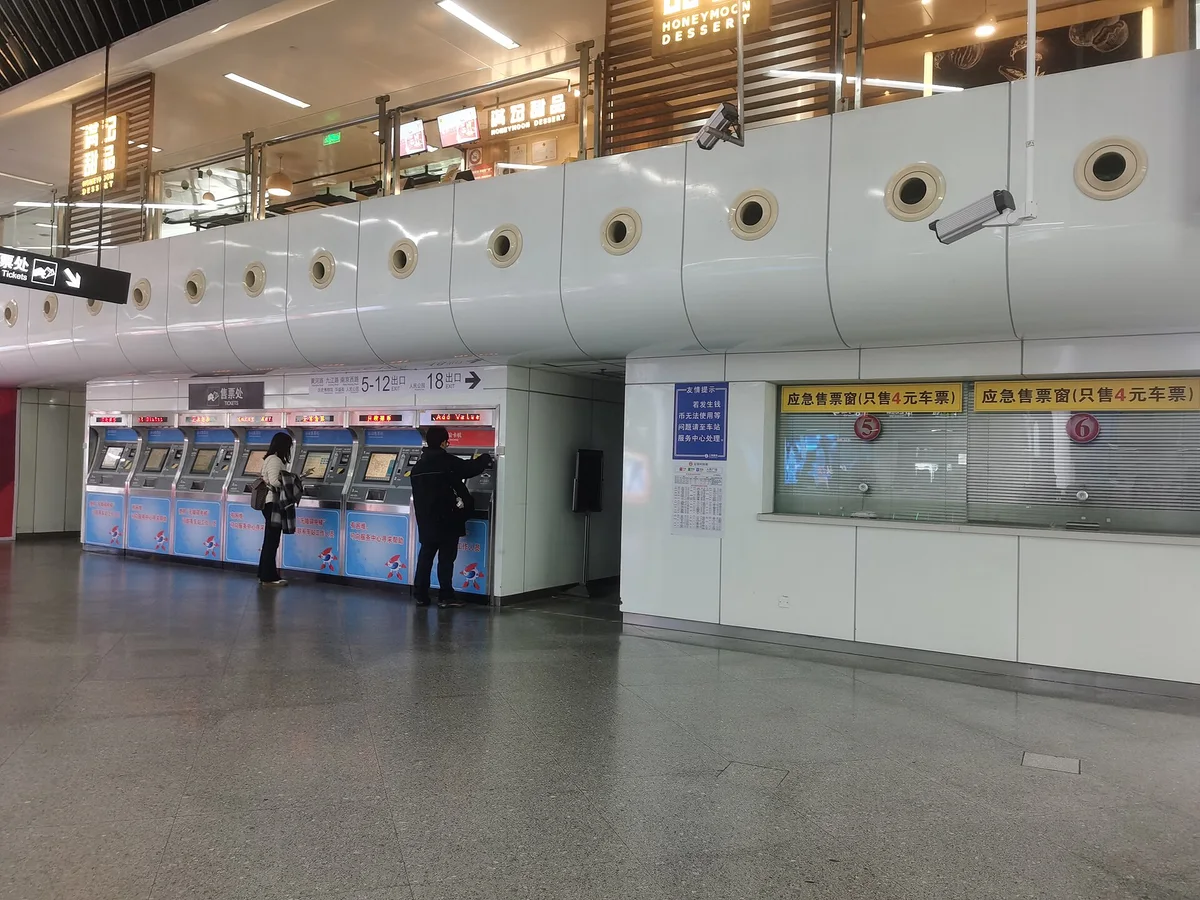
The One-Day Pass costs ¥18 (about $2.70) and the Three-Day Pass ¥45 (about $6.70), valid for 24 or 72 hours from your first entry but not on the Maglev or the suburban lines opened since 2024, including the Airport Link Line. At the ¥3 minimum fare the three-day pass needs 15 rides to pay for itself, about five a day, so it only saves money on days spent hopping between sights by metro; if you walk between most of them, paying per ride costs less. From Pudong Airport the Maglev covers 30 km towards the city in eight minutes.
For shops and cafés, add your card to WeChat Pay before you fly; it takes your passport and doesn’t need a Chinese phone number, only one that receives text codes. Save offline maps too, as the UK Foreign Office lists Google among the services permanently blocked in China.
Plum rain, typhoons and the months that work
Spring and autumn are the comfortable seasons. March to May averages about 11-21°C with frequent drizzle, and the city government’s seasonal guide calls spring the best time for tourism; autumn cools from around 25°C to 15°C. October is much drier than September, with 61 mm of rain against 156 mm in the 1961-1990 averages that China’s national weather service supplies to the WMO. Its first week, though, is the National Day holiday (1-7 October in 2026), when domestic travel peaks.
Summer brings the plum rains from mid-June to early July, highs averaging about 31-32°C in July and August (in 2024 they often passed 35°C) and peak typhoon season from late August to mid-September. Winter runs at 3-11°C and feels colder in the damp. Put together, that leaves April, May, October after the holiday week, and November as the months to aim for.
Three days of tickets and fares, added up
This counts only what one adult pays to get in and get around over three days between September and November; hotels and meals aren’t included, since they depend on your dates and taste. Prices are the regular ones as of 26 September 2026; dollars and pounds are converted at the euro reference rates the European Central Bank set on 24 September 2026.
| Ticket or fare | Yuan | Roughly, US$ | Roughly, £ |
|---|---|---|---|
| Metro for three days, capped at the Three-Day Pass price | ¥45 | about $6.70 | about £5.05 |
| Top of Shanghai observatory | ¥180 | about $26.80 | about £20.30 |
| Yu Garden, September to November | ¥40 | about $5.95 | about £4.50 |
| Public ferry across the Huangpu | ¥2 | about $0.30 | about £0.23 |
| Shanghai Museum East galleries, Jade Buddha Temple | no ticket | - | - |
| Total | ¥267 | about $39.80 | about £30.10 |
The two big optional extras, the Americas exhibition at ¥148 and a daytime cruise at ¥120, would roughly double that.
One evening on both banks
Be at the Bund railing half an hour before the lights: half past six from May to September, half past five in the cooler months and on public holidays. When the buildings have lit up, walk south along the river to the Fuxing Road pier and cross on the Dongfu ferry to Dongchang Road; the line stops at 9pm. From there, follow the Pudong riverside north towards Lujiazui, where the bank buildings you stood under an hour earlier become the view. There’s no need to hurry: the lights stay on until 11pm from May to September and until 10pm in the cooler months, or 11pm on a public holiday. Line 2 from Lujiazui runs back under the river to People’s Square.
On the map
The map loads on click, to keep the page light.
The map didn’t load. Check your connection and refresh the page.
Tickets and opening hours
- Ticket price
- Top of Shanghai observatory in the Shanghai Tower ¥180, Oriental Pearl Tower two-sphere ticket ¥199, Jin Mao Tower 88th-floor deck ¥120 (regular adult prices on the city tourism administration's May 2026 list). Yu Garden ¥40 from April to June and September to November, ¥30 in the other months. Americas exhibition at the Shanghai Museum on People's Square ¥148 until 14 November 2027. Shanghai Museum East permanent galleries: no ticket needed. Jade Buddha Temple free. Public ferry across the Huangpu ¥2. Metro from ¥3.
- Opening hours
- Yu Garden 9:00-16:30 (last entry 16:00), closed on Mondays outside national holidays. Shanghai Museum East 10:00-18:00 (last entry 17:00), closed on Tuesdays outside national holidays. Shanghai Museum on People's Square 9:00-17:00 (last entry 15:00), closed on Mondays outside national holidays. Jade Buddha Temple 8:00-16:30. The Bund lights come on at 7pm from May to September and at 6pm in the cooler months and on public holidays.
Prices and hours from the operators, the Shanghai Municipal Administration of Culture and Tourism and the city government, checked on 26 September 2026. Promotions come and go, so check before you book.
Details checked: 26 September 2026
Read also

Cities · 14 min read
Chengdu Guide 2026: Pandas, Teahouses and How Long to Stay
Verified · 6 October 2026Chengdu for a first trip: the panda base at opening time, Wuhou Shrine on a passport, tea in People's Park, trains from Xi'an and a museum shut until 2027.

Cities · 11 min read
Chongqing in Two Days, Plus a Yangtze Cruise (2026)
Verified · 6 October 2026Hongyadong lit up from the river, a monorail through a block of flats, the Yangtze cableway, hotpot, and which way to take a Three Gorges cruise.

Cities · 10 min read
Guilin and Yangshuo: the Li River Cruise and 3-4 Days (2026)
Verified · 6 October 2026Why the Li River cruise means a night in Yangshuo, booking it by passport, when the river closes, the 20-yuan view and trains from Hong Kong.

Cities · 12 min read
Harbin Travel Guide 2026: Russian Architecture and Winter
Verified · 6 October 2026Two days for Harbin: Central Street and St Sophia, Daowai, booking the Unit 731 site, where to sleep, the metro, and January nights at -22.9°C.