
Harbin Travel Guide 2026: Russian Architecture and Winter
Two days for Harbin: Central Street and St Sophia, Daowai, booking the Unit 731 site, where to sleep, the metro, and January nights at -22.9°C.
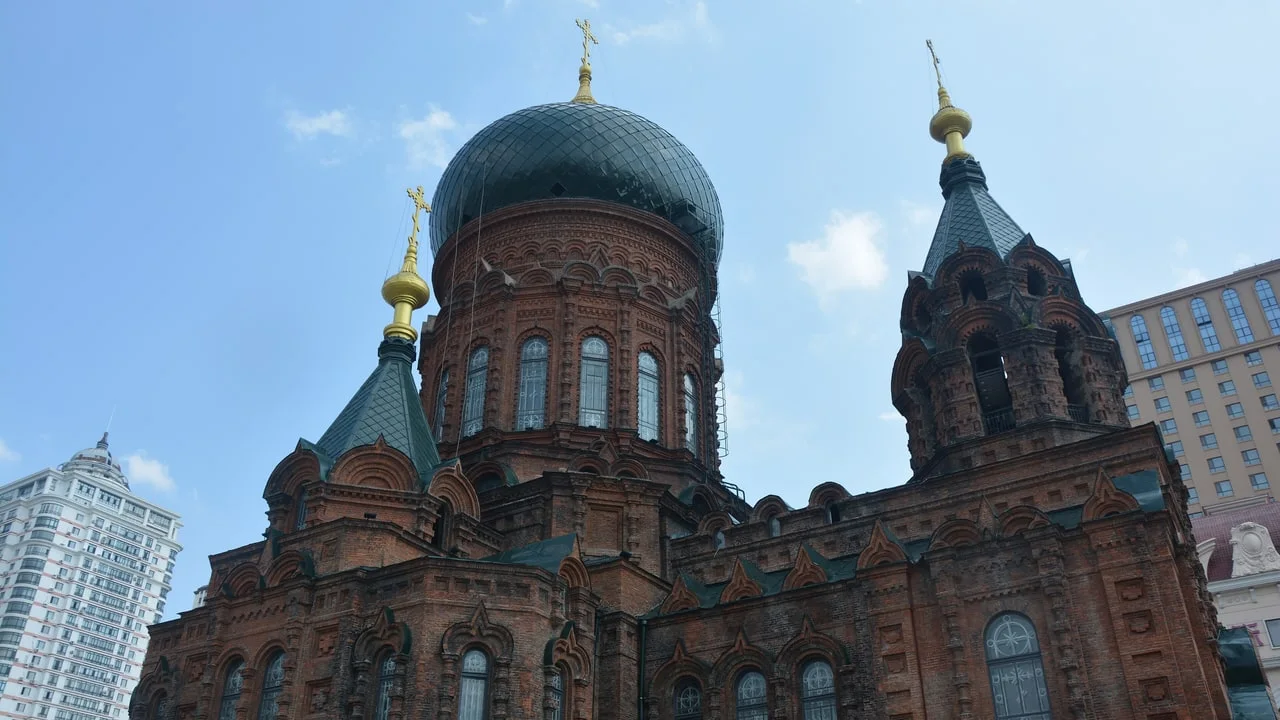
On an average January night Harbin drops to -22.9°C, and on an average July afternoon it reaches 27.8°C. The streets you’ll walk are the same in both seasons; what changes is the pace, with warm cafés and short walks in winter and long evenings by the river in summer. A first day in Daoli takes in St Sophia Cathedral and Central Street, where many of the city’s Russian émigrés once lived, and ends at the Songhua. A second covers the Chinese Baroque lanes of Daowai and the Unit 731 site out in Pingfang, a metro ride south. Neither day costs much: the Unit 731 museum is free if you book, and St Sophia’s ticket was set at ¥15 (about $2.25 or £1.70) in 2019, so check the current price at the door.
Central Street to the Songhua on foot
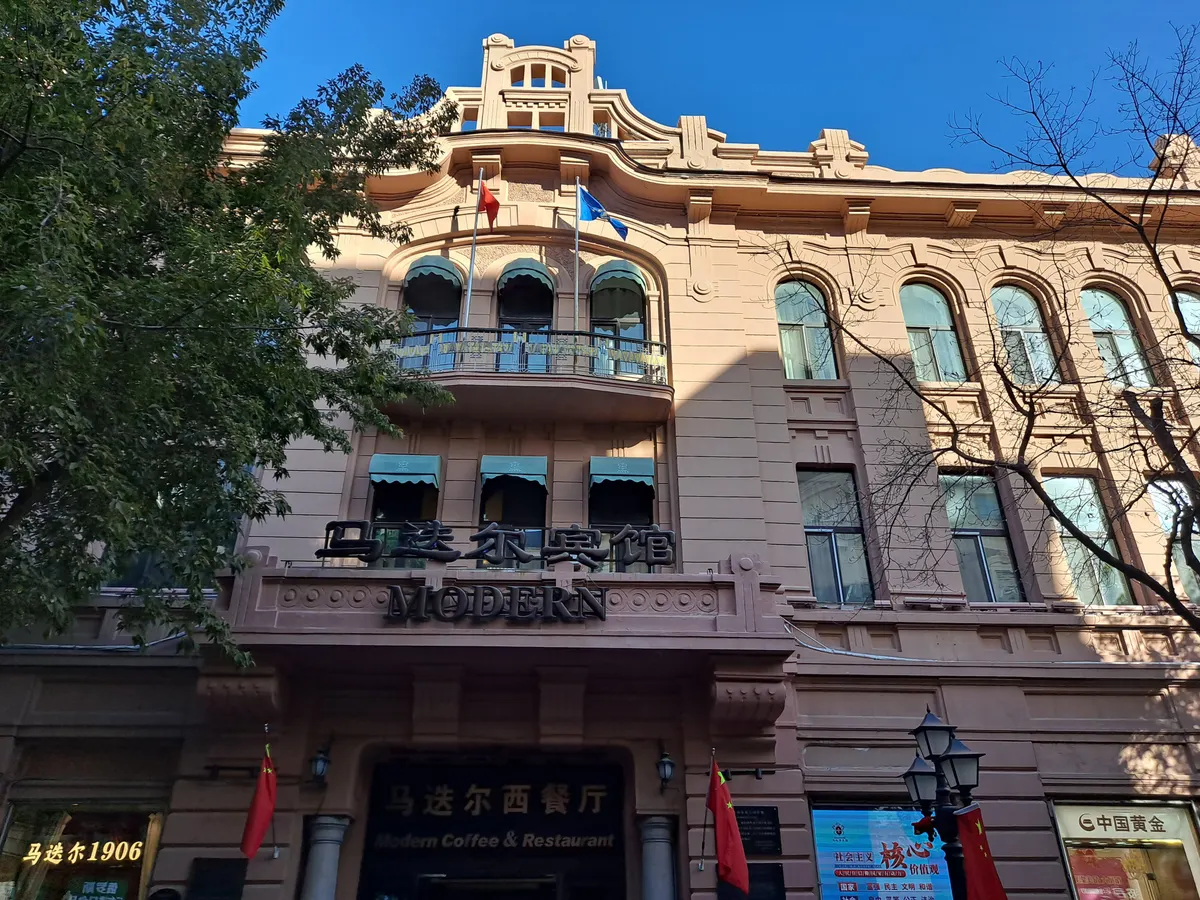
Harbin likes to say the railway came first and the city second. In 1898 the Chinese Eastern Railway reached the Songhua, and Central Street (Zhongyang Dajie) dates from the same year. It became a shopping street when Harbin opened as a trading port in 1907. Today its main stretch runs 1,450 metres, and with its 23 side streets it holds 75 European and European-style buildings, 36 of them listed for protection, in styles from Renaissance and Byzantine to Art Nouveau. Underfoot you’ll walk on the stone setts locals call bread stones, worn smooth by more than a century of feet. Several restaurants on the side streets now cook the food of the Russian émigrés inside the old buildings.
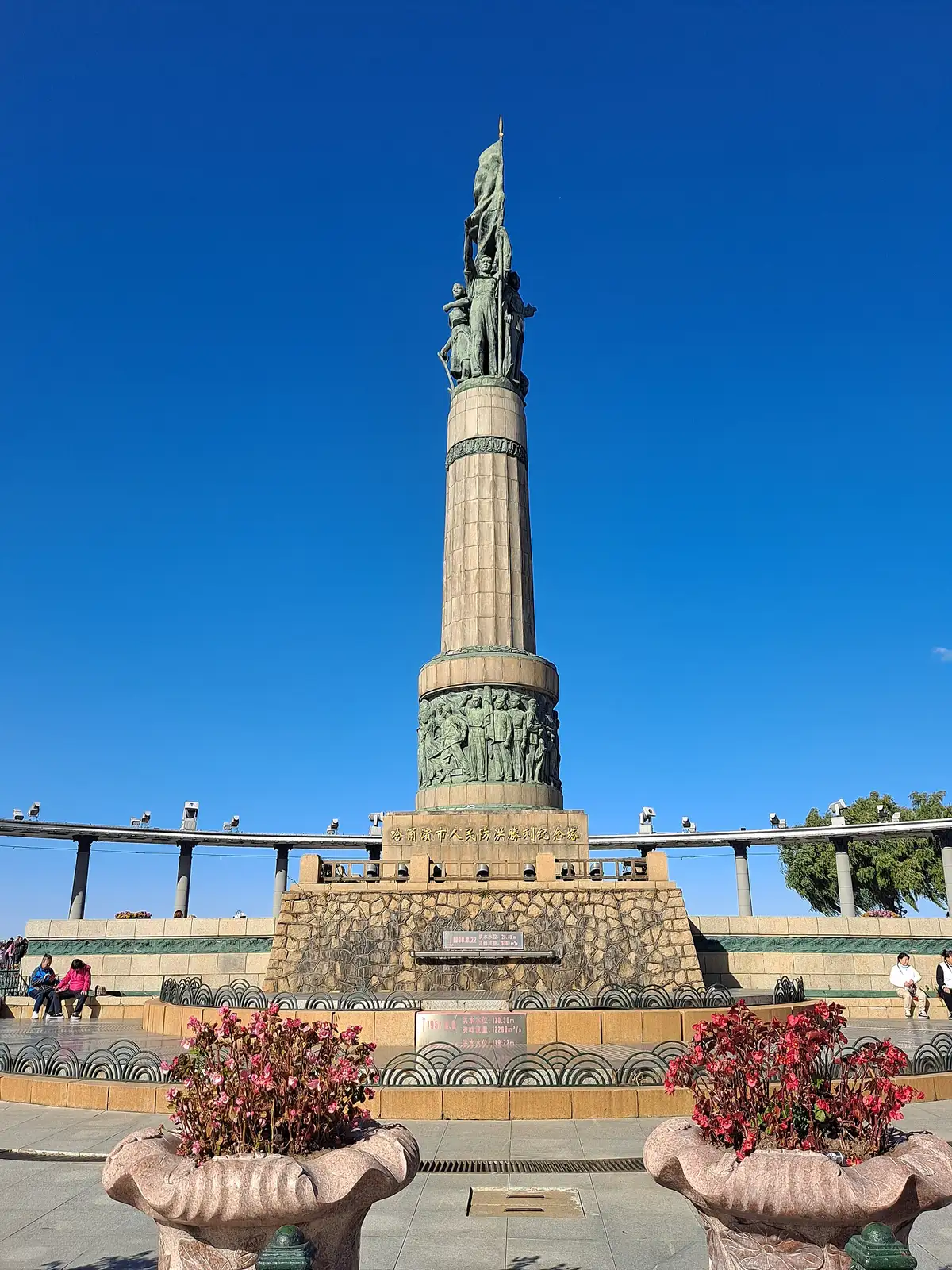
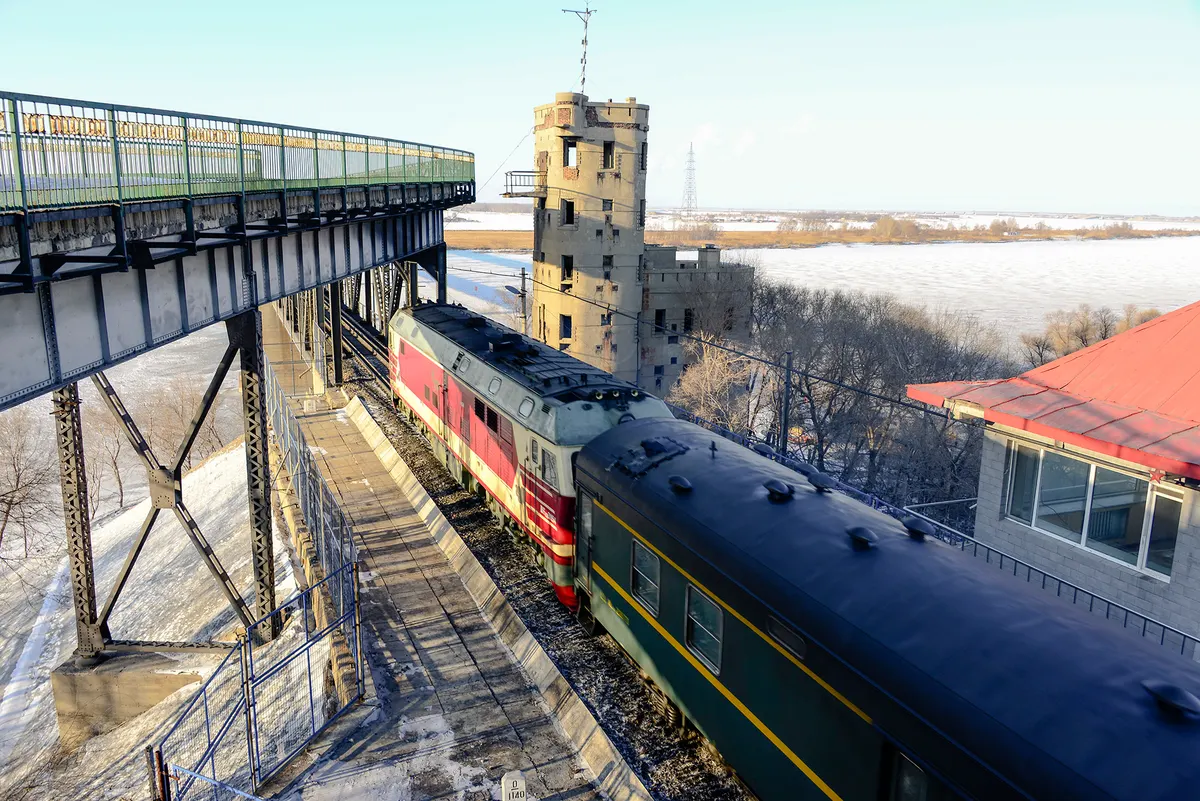
The street ends where it meets the river, at the Flood Control Monument, finished in October 1958 after the city held back the flood of 1957. It’s also a gauge of the city’s floods. The lower step of the pool in front marks 119.72 metres above sea level, the high water of 1932, when the river put Harbin under water; the upper step, 120.30 metres, is the 1957 flood; and a gold line on the column, 120.89 metres, is the 1998 one. Stalin Park runs west from it along the embankment, and to the east stands the old Binzhou railway bridge over the Songhua.
St Sophia and its square
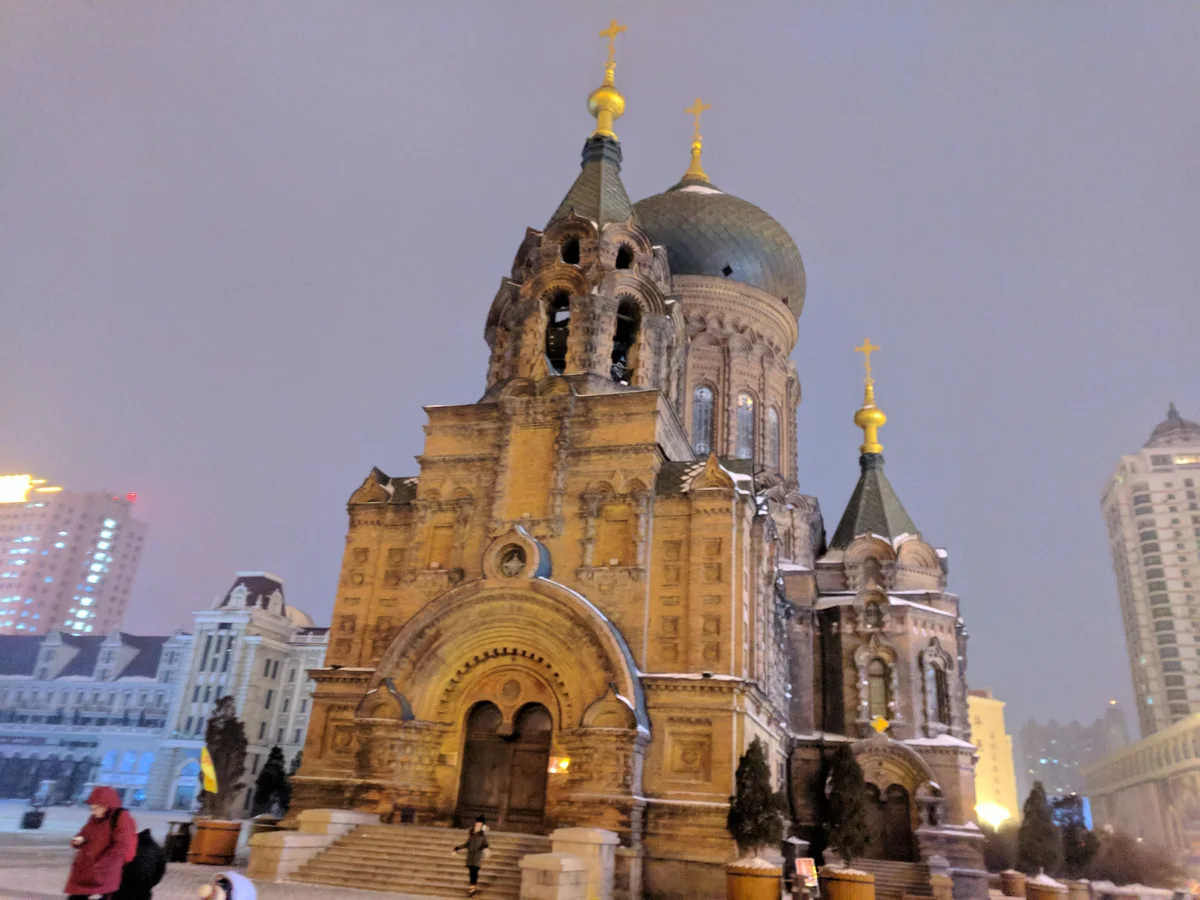
St Sophia Cathedral went up in 1907 and rises 53 metres to the cross on its green onion dome, with room inside for 2,000 people. It was restored in 1997, and it’s been the Harbin Architecture Art Museum ever since. In 2019 the city’s Development and Reform Commission set the ticket at ¥15, as the building was about to reopen after repairs. It closed again in 2025 for work on its murals and reopened on 6 December 2025, with tickets sold in the Meituan and Douyin apps and by QR code at the entrance; we couldn’t confirm the current price with the scenic area, so check it there.
The square around it is where residents meet and every visitor takes a photo, so come early or late for the brickwork without a crowd. After dark the walls are floodlit, and after fresh snow the onion domes turn white.
Daowai: Chinese courtyards behind Baroque fronts
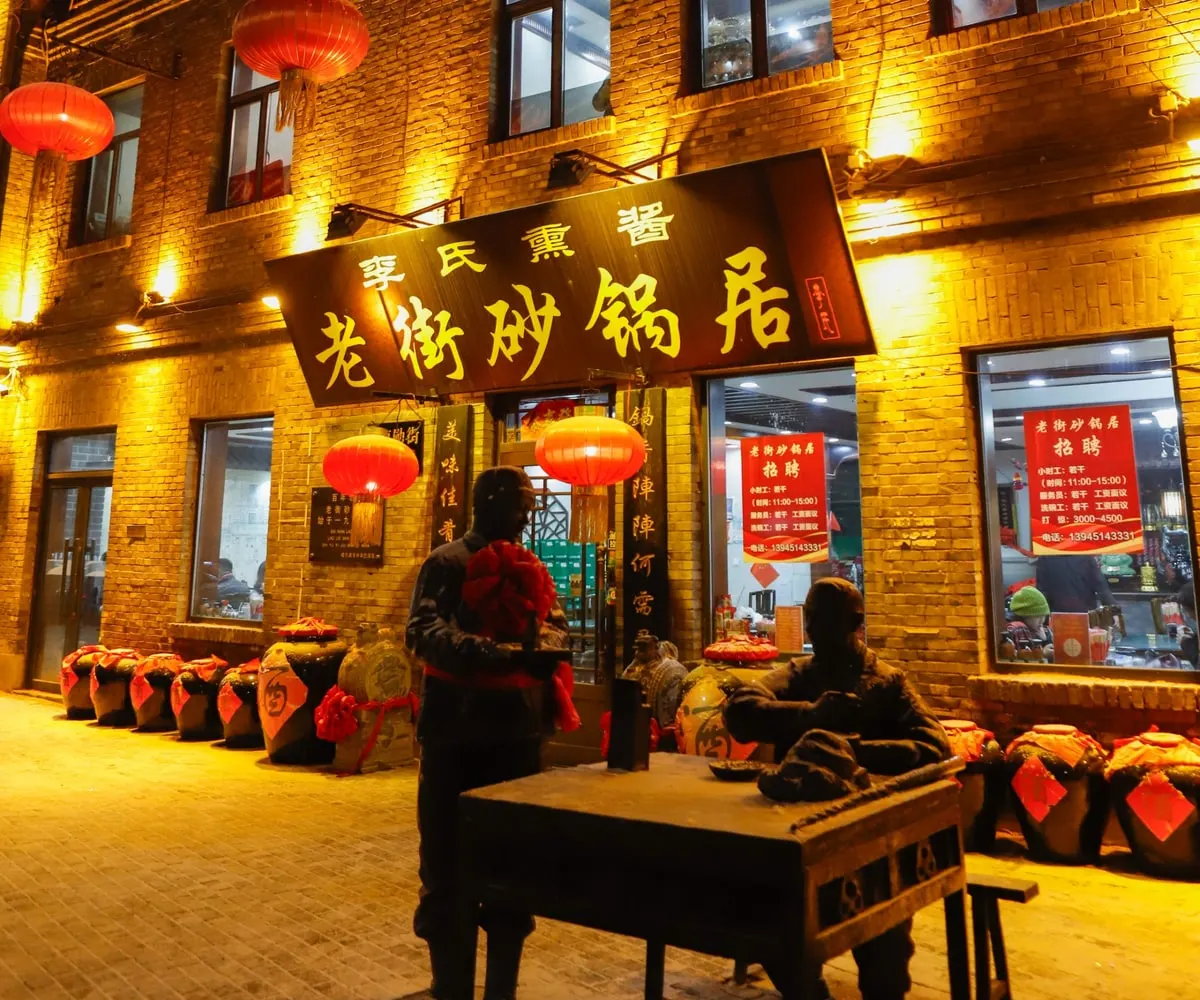
East of Daoli, Old Daowai is the other half of the story. Merchants who came north from elsewhere in China built here, and they put Chinese courtyard houses behind Western Baroque facades, so a shop sign hangs between classical columns and the inner yards connect one to the next. Look closely and you’ll see what the carving says: grapes and pomegranates for many children, peonies for wealth, bats because the word sounds like fortune, often next to coins and ruyi sceptres. The district has been restored one building at a time, keeping the old fronts, and where Central Street is polished, Old Daowai still feels like a neighbourhood of small shops and street life.
The Unit 731 site in Pingfang
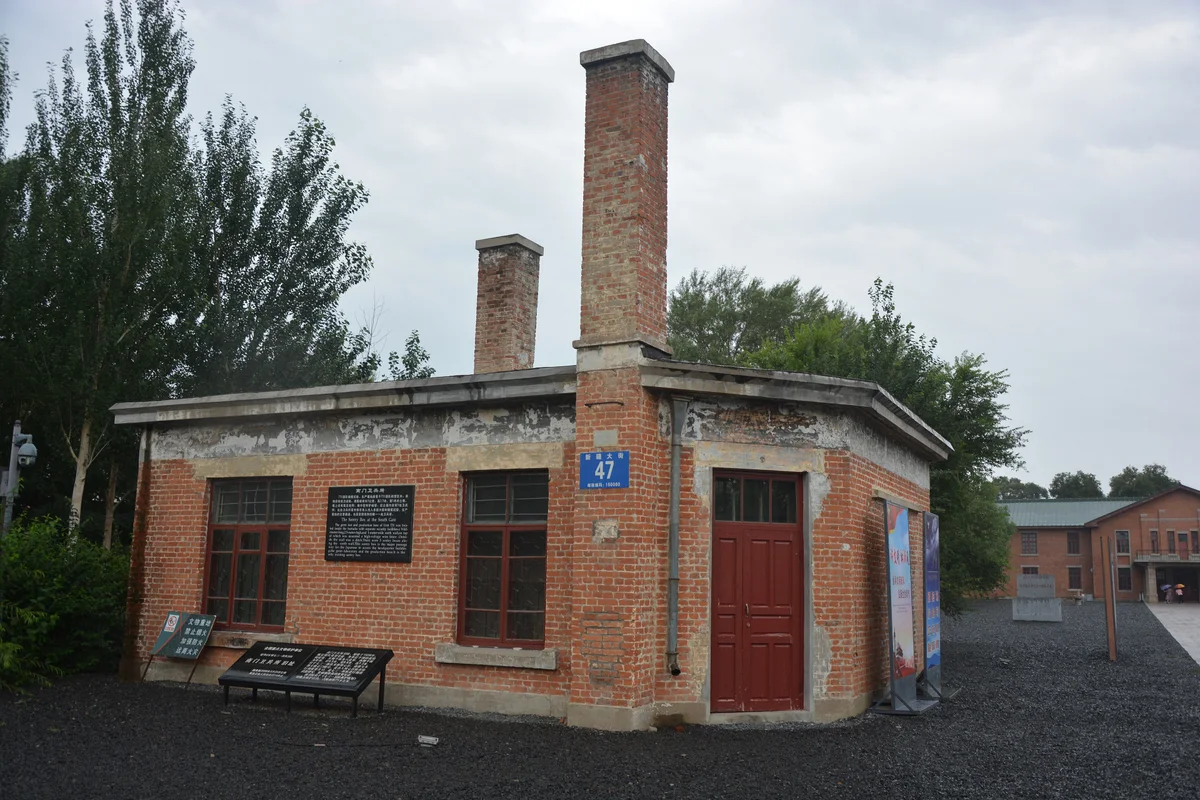
In Pingfang, on the southern edge of the city, stands what’s left of the headquarters of Unit 731, the Japanese army’s germ warfare unit in the Second World War, and next to it the Exhibition Hall of Evidences of Crime Committed by Unit 731 of the Japanese Imperial Army. The hall marked its 40th anniversary in August 2025 by publishing new evidence from Japanese archives and the testimony of former members of the unit. It’s a museum of wartime atrocity, and it isn’t a visit to rush or to squeeze in between lunch and shopping.
Entry is free, but you need a real-name booking, made one to seven days ahead on the museum’s WeChat account or the Changyou Harbin mini programme; at the gate staff check the original of the document you booked with, so it’s simplest to book with your passport. For the September and October 2026 holidays both parts opened 9:00-18:00, with last entry at 17:00 at the new hall and 17:30 at the former headquarters. On ordinary weeks the museum’s July 2025 notice gives Tuesday to Sunday, closed on Mondays except public holidays, with the new hall open 9:00-17:00 (last entry 16:00) and the former headquarters 9:00-17:30 (last entry 17:00), so don’t plan this day for a Monday. Line 1 runs out to Xinjiang Street station, about 600 metres from the new hall and 500 metres from the old headquarters.
Cathedral to river, then Pingfang and Daowai
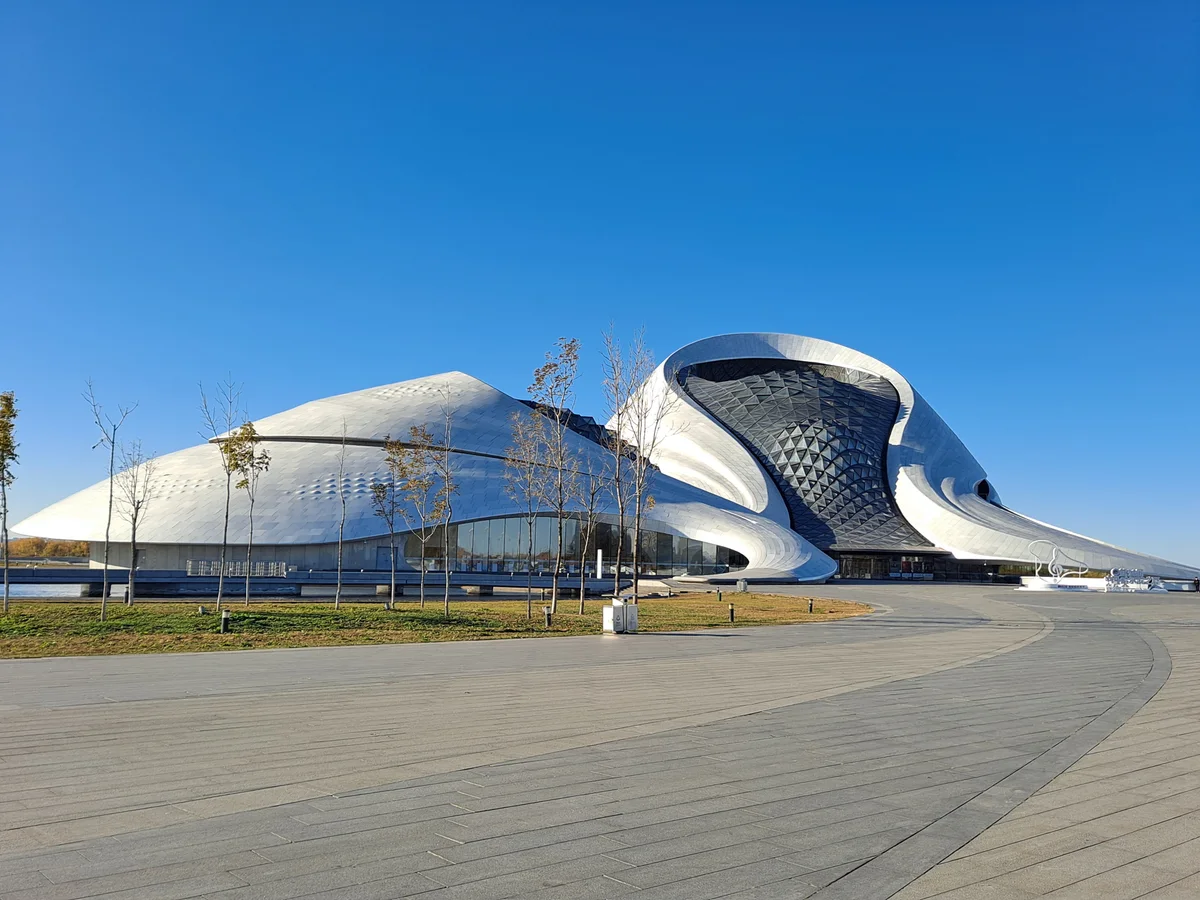
On the first day, see St Sophia in the morning, walk Central Street to the Flood Control Monument for lunch near the river, then take Line 2 from Central Street across the Songhua to Sun Island station for the north bank. The Harbin Grand Theatre stands on that side of the river, a building Xinhua likened to a silver ribbon and the city now counts among its landmarks. Come back across the river for dinner in Daoli.
On the second day, as long as it isn’t a Monday, take Line 1 out to Xinjiang Street for a morning booking at Unit 731, and spend the afternoon and evening in Daowai. A third day won’t add much to see, but it lets you slow both of these down, walk the river embankment and come back to Central Street when the lights go on.
Sleeping near the cathedral, the station or the river
Daoli, around Central Street and St Sophia, is the obvious base: most of the first day is on foot from the door, and Central Street station on Line 2 takes you across the river or to Harbin Station.
The streets around Harbin Station suit a short stay and an overnight train. The station is about a kilometre from St Sophia in a straight line, it’s on Line 2, and the sleepers from Beijing arrive there in the morning.
The north bank puts you next to Sun Island and the Grand Theatre, but every evening in the old town starts with a ride back across the river.
Two stations and an airport
Check which station your train uses. From Beijing, the fast G trains leave from Beijing Chaoyang and run to Harbin West in about four and a half hours, and the overnight sleepers to Harbin Station, by 12306’s timetable for 13 October 2026. The times, fares and every departure are in our Beijing to Harbin train guide. Harbin West is about 8 km from St Sophia and sits on the Line 3 loop, so you’ll change to Line 2 at People’s Square for Central Street. For booking those tickets from abroad, see our comparison of 12306 and Trip.com.
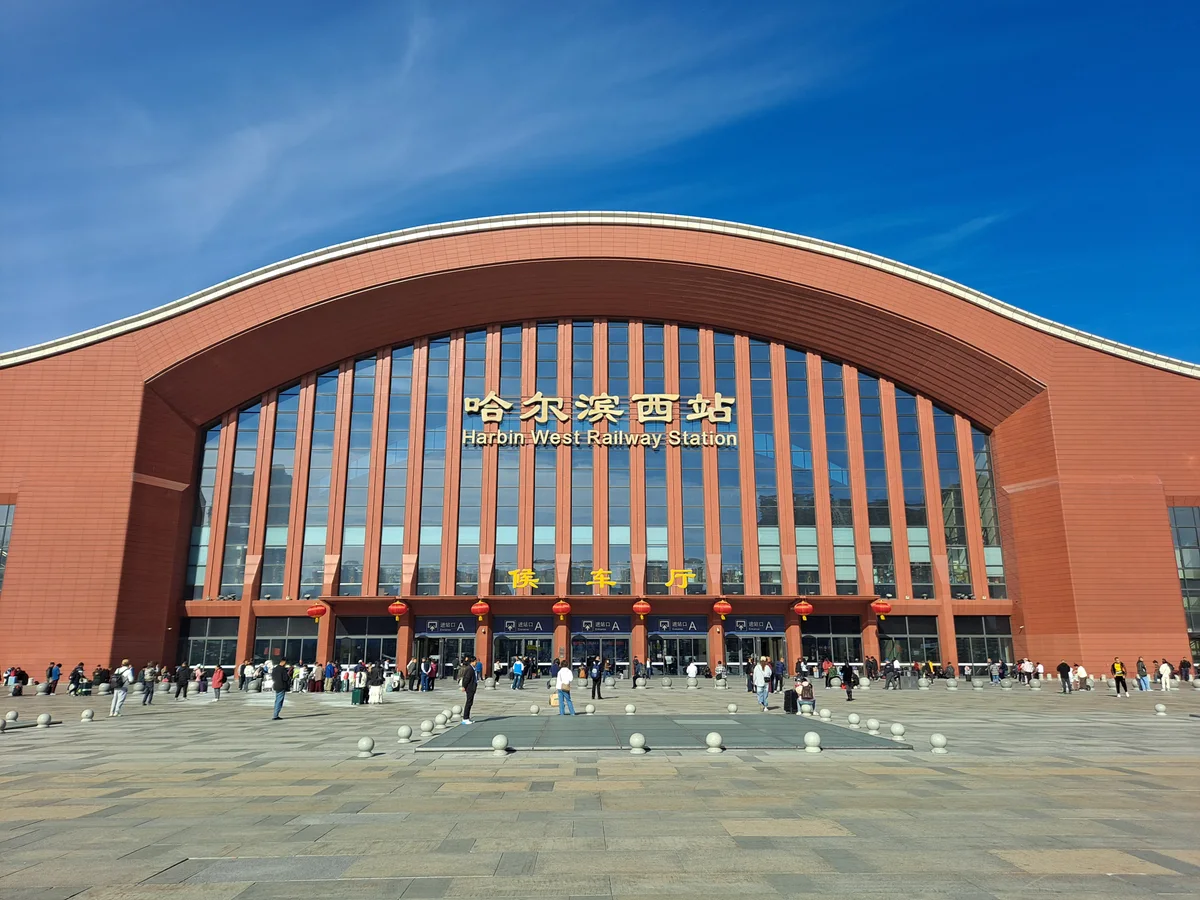
Taiping International Airport is about 35 km south-west of St Sophia in a straight line. It’s one of the ports for China’s 240-hour visa-free transit, which matters on a US passport as long as you hold a confirmed onward ticket to a third country or region, but note the area: for Harbin’s airport it’s Harbin City, not the whole province, as it is for Xi’an. The 240 hours aren’t tied to that one area, though: you can cross into another permitted area, Beijing’s among them, within the same stay. Our China visa guide sets out the scheme’s conditions and the main passports it covers.
Three metro lines and how to pay
Harbin’s metro is small, and it’s easy to read. Line 1 crosses the old city from east to west, Line 2 runs north to south across the Songhua, and Line 3 has been a full loop since November 2024, which gave the network 78 stations. Fares follow the distance table the city confirmed in November 2021: ¥2 for up to 6 km, ¥3 to 10 km, ¥4 to 14 km, ¥5 to 21 km and ¥6 to 28 km.
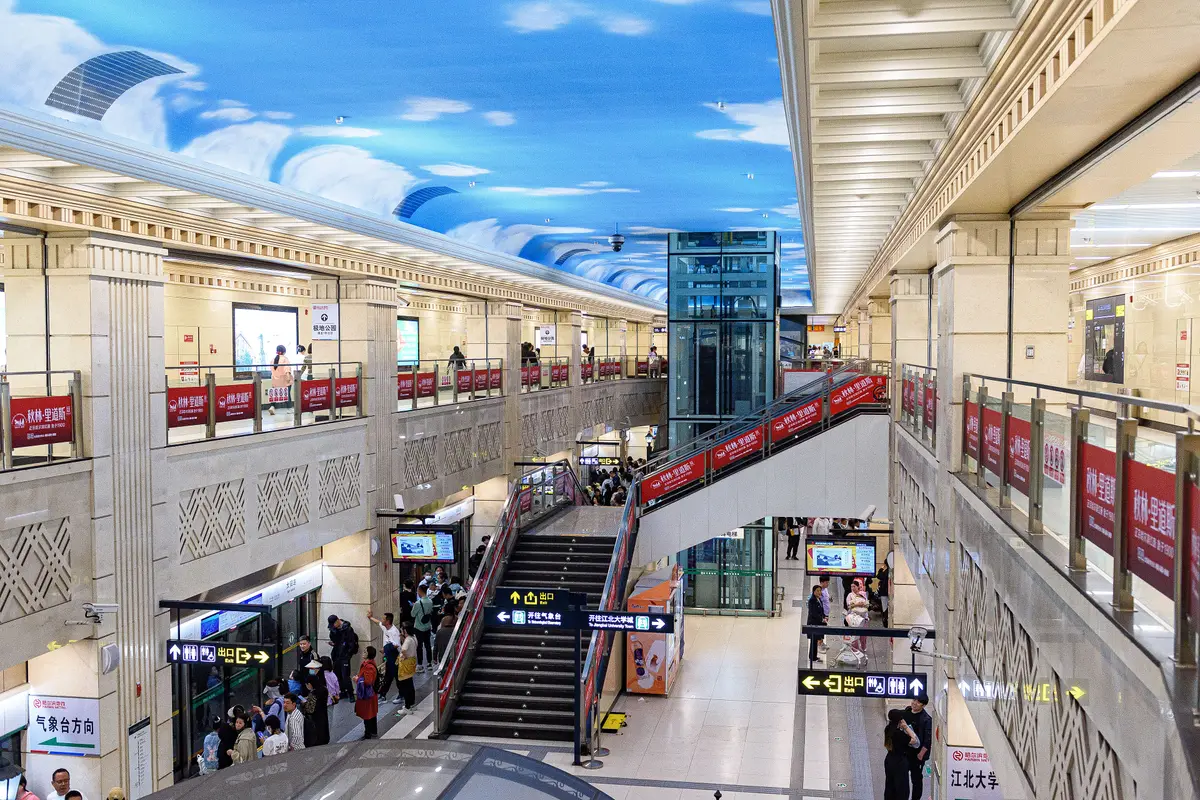
The gates take QR codes, UnionPay QuickPass cards and face recognition. For a visitor, the simplest way in is Alipay with your own Visa or Mastercard linked to it, which works on Harbin’s buses and metro; our guides to paying in China and the apps to install walk through linking the card.
Dressing for January, or coming in June
Winter is the season Harbin is known for, and it’s long: December, January and February average daytime highs of -9.2°C, -12.0°C and -6.3°C, and nights between -18°C and -23°C. You’ll be fine with layers, a down coat that covers your hips, a hat over your ears and insulated boots with a real tread, because the bread stones of Central Street are slippery under packed snow. The ice-and-snow parks that open in winter are a trip of their own, with separate tickets, and we’ve left them to our Harbin ice festival guide. For how January compares across the country, and what the heating line means for your hotel, see our China in winter guide.
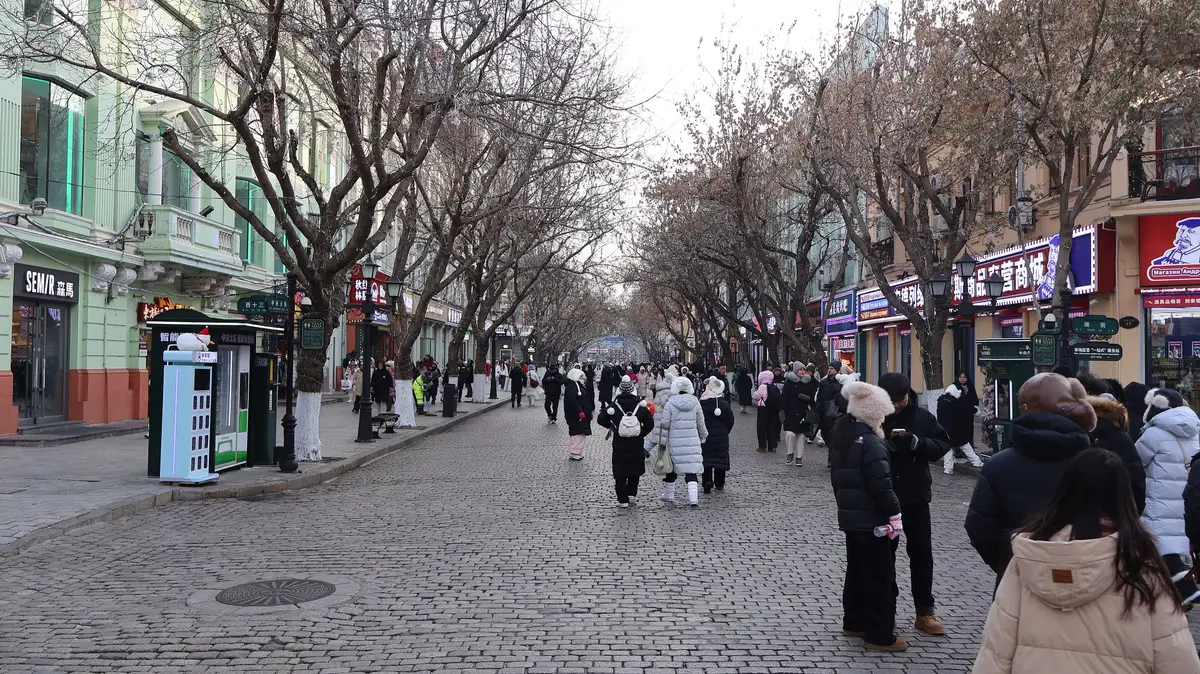
For walking the city in comfort, come in late May, June or September. June averages 26.5°C by day and September 21.2°C, and both are drier than July, the warmest month and the wettest, with 147.8 mm of rain on average.
Guobaorou, red sausage and Demoli fish
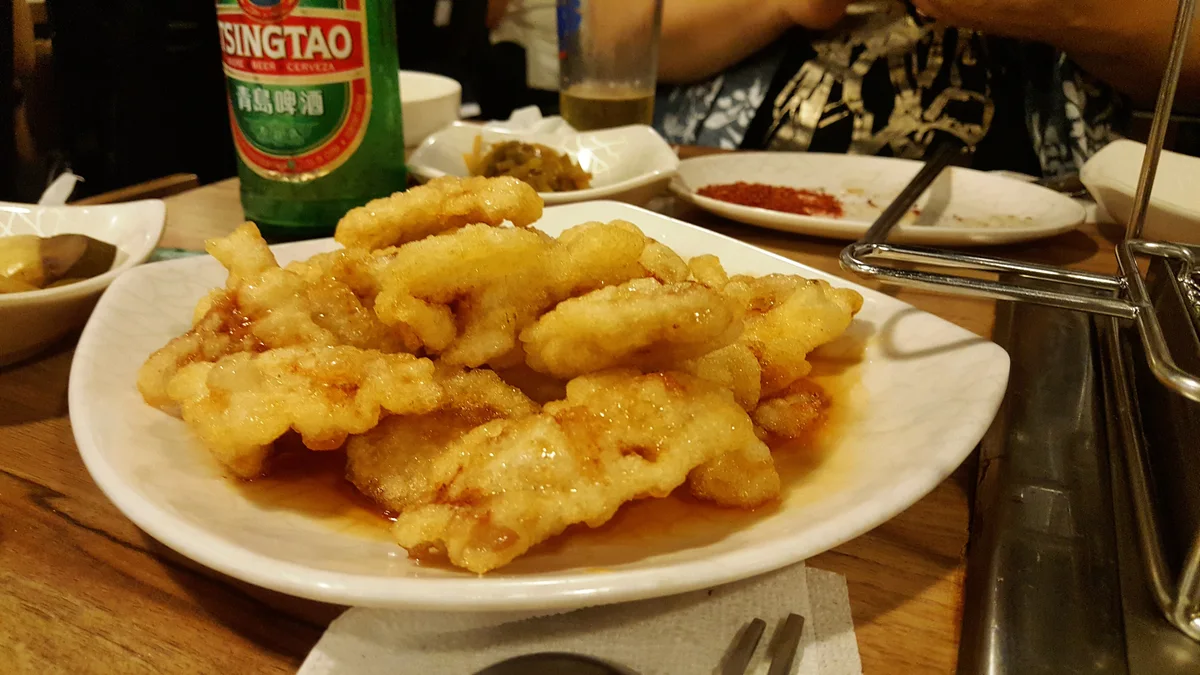
Harbin’s signature dish is guobaorou, slices of pork (sometimes beef) fried in batter and tossed in a sweet-and-sour sauce, a recipe that goes back to the late Qing dynasty. The city’s red sausage is marinated, smoked and roasted until it turns a deep red, and plenty of visitors take a few home with them. For a warmer plate in winter, you’ll want Demoli stewed fish, fresh local carp cooked with tofu, sweet-potato vermicelli and Chinese cabbage, first served by an elderly couple at a small restaurant in Demoli in the early 1980s.
If Harbin is the northern end of a longer trip, our Beijing guide picks up where the train from Harbin comes in.
On the map
The map loads on click, to keep the page light.
The map didn’t load. Check your connection and refresh the page.
Tickets and opening hours
- Ticket price
- St Sophia Cathedral ¥15, the price set by the Harbin Development and Reform Commission in 2019; the church reopened on 6 December 2025 after work on its murals, so check the current price at the entrance. Unit 731 museum and former headquarters site free with a real-name booking. Metro ¥2 for up to 6 km, then ¥1 more per band up to ¥6 for 28 km.
- Opening hours
- Unit 731 museum: on ordinary weeks Tuesday to Sunday, closed on Mondays except public holidays, new hall 9:00-17:00 (last entry 16:00) and former headquarters 9:00-17:30 (last entry 17:00), as the museum announced in July 2025; for the September and October 2026 holidays both parts opened 9:00-18:00, with last entry at 17:00 and 17:30.
Unit 731 hours and booking rules from the museum's notices of July 2025 and September 2026; the St Sophia price is the city's 2019 figure and metro fares the 2021 fare table, the latest we could confirm on 6 October 2026. Hours change for holidays and winter, so check before you go.
Details checked: 6 October 2026
Read also

Cities · 14 min read
Chengdu Guide 2026: Pandas, Teahouses and How Long to Stay
Verified · 6 October 2026Chengdu for a first trip: the panda base at opening time, Wuhou Shrine on a passport, tea in People's Park, trains from Xi'an and a museum shut until 2027.

Cities · 11 min read
Chongqing in Two Days, Plus a Yangtze Cruise (2026)
Verified · 6 October 2026Hongyadong lit up from the river, a monorail through a block of flats, the Yangtze cableway, hotpot, and which way to take a Three Gorges cruise.

Cities · 10 min read
Guilin and Yangshuo: the Li River Cruise and 3-4 Days (2026)
Verified · 6 October 2026Why the Li River cruise means a night in Yangshuo, booking it by passport, when the river closes, the 20-yuan view and trains from Hong Kong.

Cities · 14 min read
Lijiang Travel Guide 2026: Old Town and Snow Mountain
Verified · 6 October 2026Three days in Lijiang: the Old Town at 2,400 m and its ¥50 fee, booking Jade Dragon Snow Mountain's cable car, Tiger Leaping Gorge, where to stay, trains.