
Lama Temple Beijing: Tickets, Passport Entry and Halls
Adult entry is ¥25. How to buy with a passport, choose the right arrival time and follow the courtyards to the sandalwood Maitreya at Yonghegong.
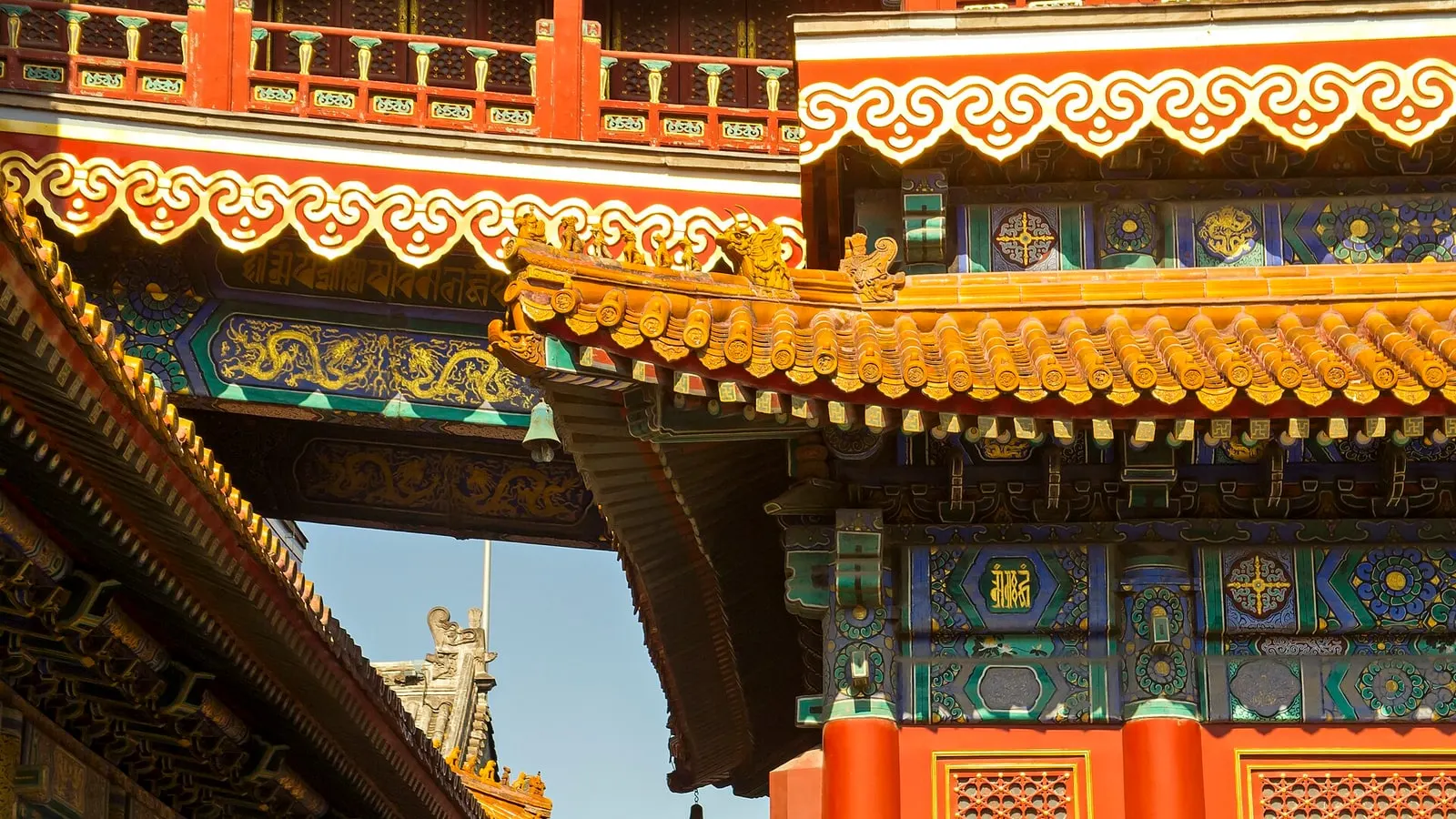
A standard adult ticket to Beijing’s Lama Temple, or Yonghegong, costs ¥25, about US$3.75, £2.80 or €3.35 at reference rates dated 14 October 2026. The temple’s visitor information, checked on 15 October 2026, offers its official WeChat channel and a Ticketing Processing Centre; passport holders buying full-price tickets online enter with a QR code. Give the visit room in your day: the courtyards lead towards a sandalwood Maitreya whose visible height is 18 metres.
It’s also a strong Monday choice. The Palace Museum, the halls of the Temple of Heaven and the Summer Palace’s inner sights all close on Mondays outside national holidays, and so does the nearby Confucian Temple. The city government’s cycling-routes page, read on 8 November 2026, flags a Monday closure for the Beijing Ancient Observatory but gives the Lama Temple plain daily hours with no closing day, and so does the city’s Visit Beijing listing. Buy through the temple’s own channels: it warns about third-party ticket offers, even if you’re booking a guide separately.
The ¥25 ticket and the passport route
Start at the temple’s own website, yonghegong.cn, and follow its ticket information. Use the WeChat account named on that page, matching the account name and temple details carefully. If you prefer to deal with a person, the published instructions also direct visitors to the Ticketing Processing Centre. Keep your original passport with you for the visit.
For a full-price online booking using a passport, the operator describes entry with the ticket’s QR code. Save the confirmation where you can retrieve it readily, and check the visit date before paying. Each valid identity document can be used for one ticket per day, while a WeChat account can buy up to five tickets per day. For a full-price ticket the form’s name and ID-number fields are optional, according to the operator.
The concession ticket is ¥12, about US$1.80, £1.35 or €1.60 at the same October 2026 reference rates. Passport holders seeking this fare are directed to the centre with their original document, where staff issue a paper ticket. The published categories cover visitors aged over six through eighteen, eligible full-time students up to undergraduate level and people aged sixty or over. Bring evidence of study and ask staff to check eligibility before counting on the reduced fare.
Children aged six or under, or measuring up to 1.2 metres, are listed for free admission with supporting documentation. For mobile payment preparation, the guide to paying in China explains the wider setup; acceptance of your particular card or phone number still needs checking in the booking channel you use.
Plan around the entry cut-off
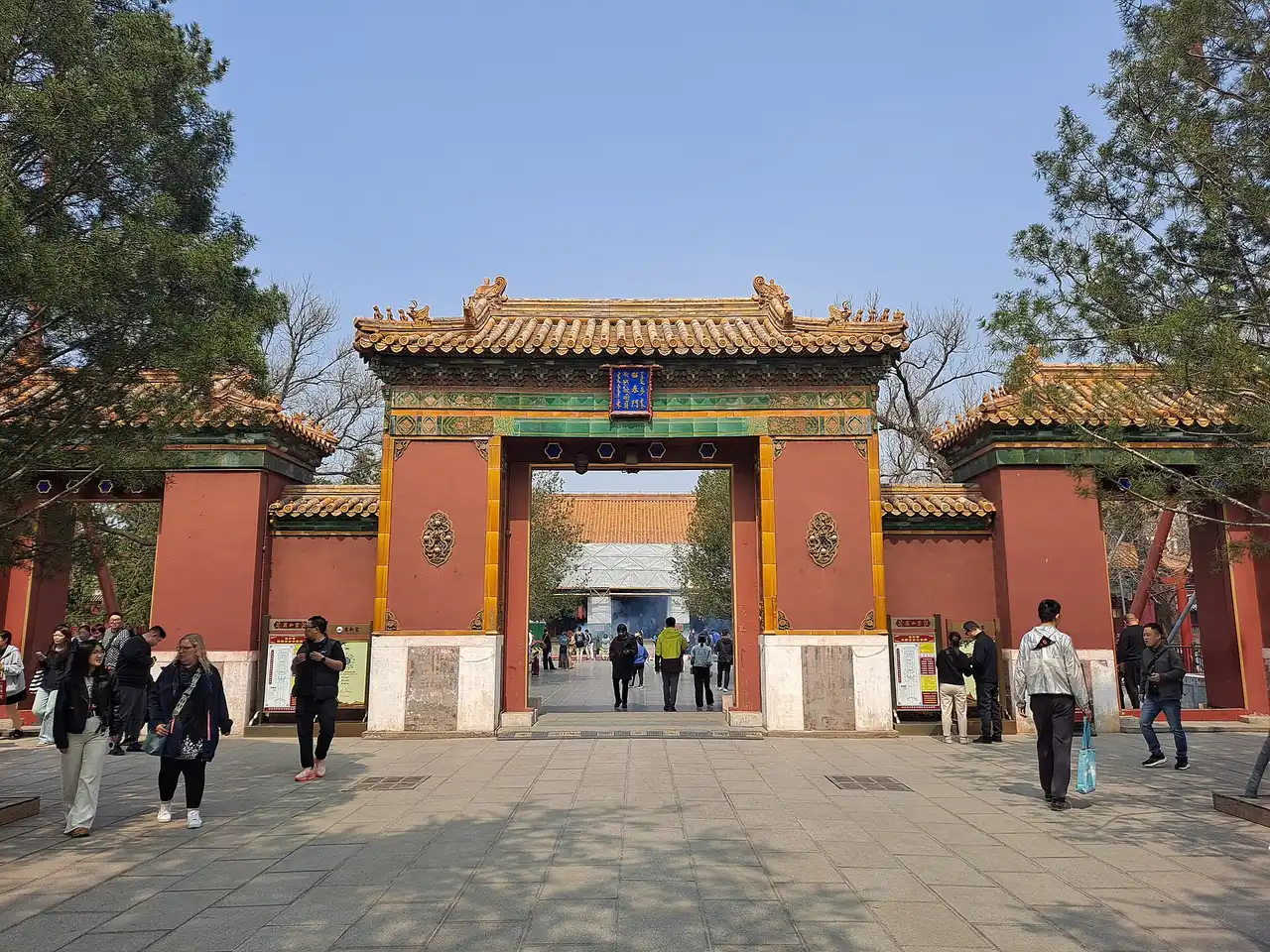
Closing time and admission cut-off are different. The schedule below gives the temple’s published April-October and November-March hours, checked on 15 October 2026. They’re the recurring seasons on the temple’s page, checked on 15 October 2026.
| Period in the published timetable | Grounds close | Ticket sales and entry finish |
|---|---|---|
| April-October, opening at 09:00 | 17:00 | 16:30 |
| November-March, opening at 09:00 | 16:30 | 16:00 |
You’ll have a more relaxed visit if you leave a substantial margin before the entry deadline. Arriving shortly before it may get you through the gate, but it squeezes the sequence of halls into the remaining opening time. For a winter afternoon, put the temple ahead of an unhurried lunch or a long walk through the surrounding streets.
Yonghegong station, the Lama Temple stop, is on Lines 2 and 5 (see our Beijing metro guide). The city’s account of the station even describes artwork drawing on Tibetan Buddhism and Confucianism, a useful introduction to the area you’re approaching. Check the station exit signs and the temple entrance on your map before starting the walk; a station name gets you to the neighbourhood, while the ticket check is at the attraction.
Follow the courtyards to Wanfuge
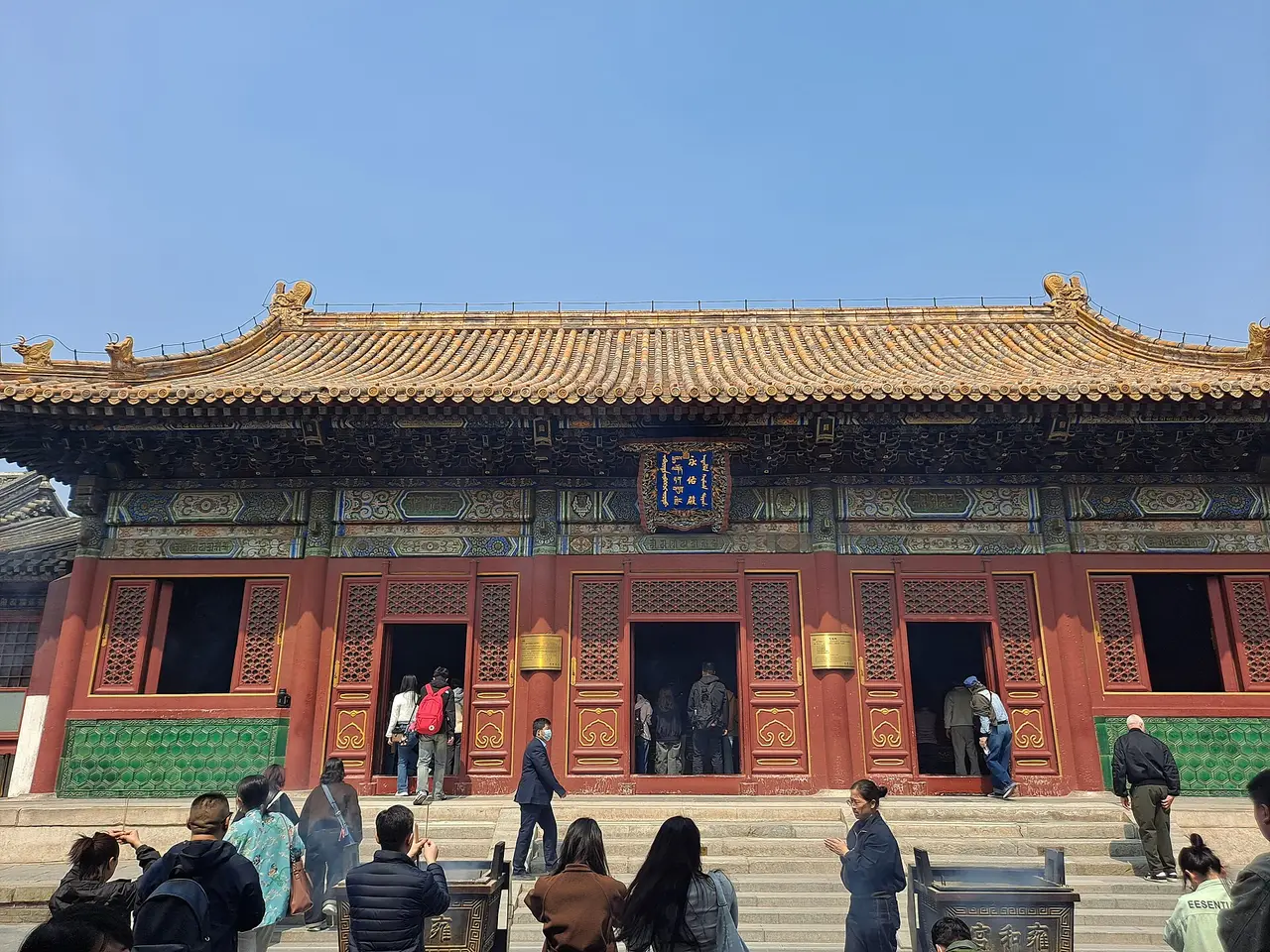
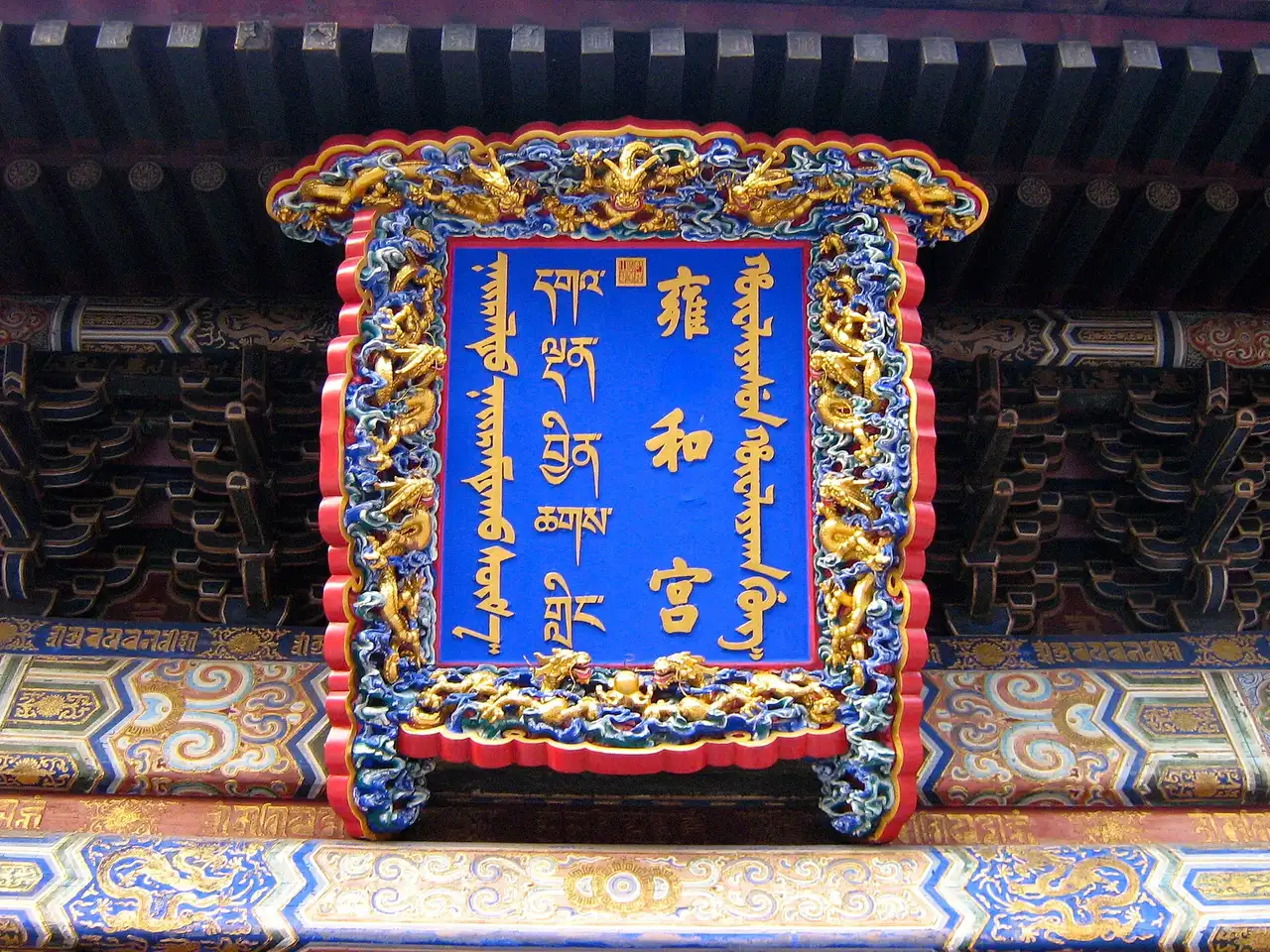
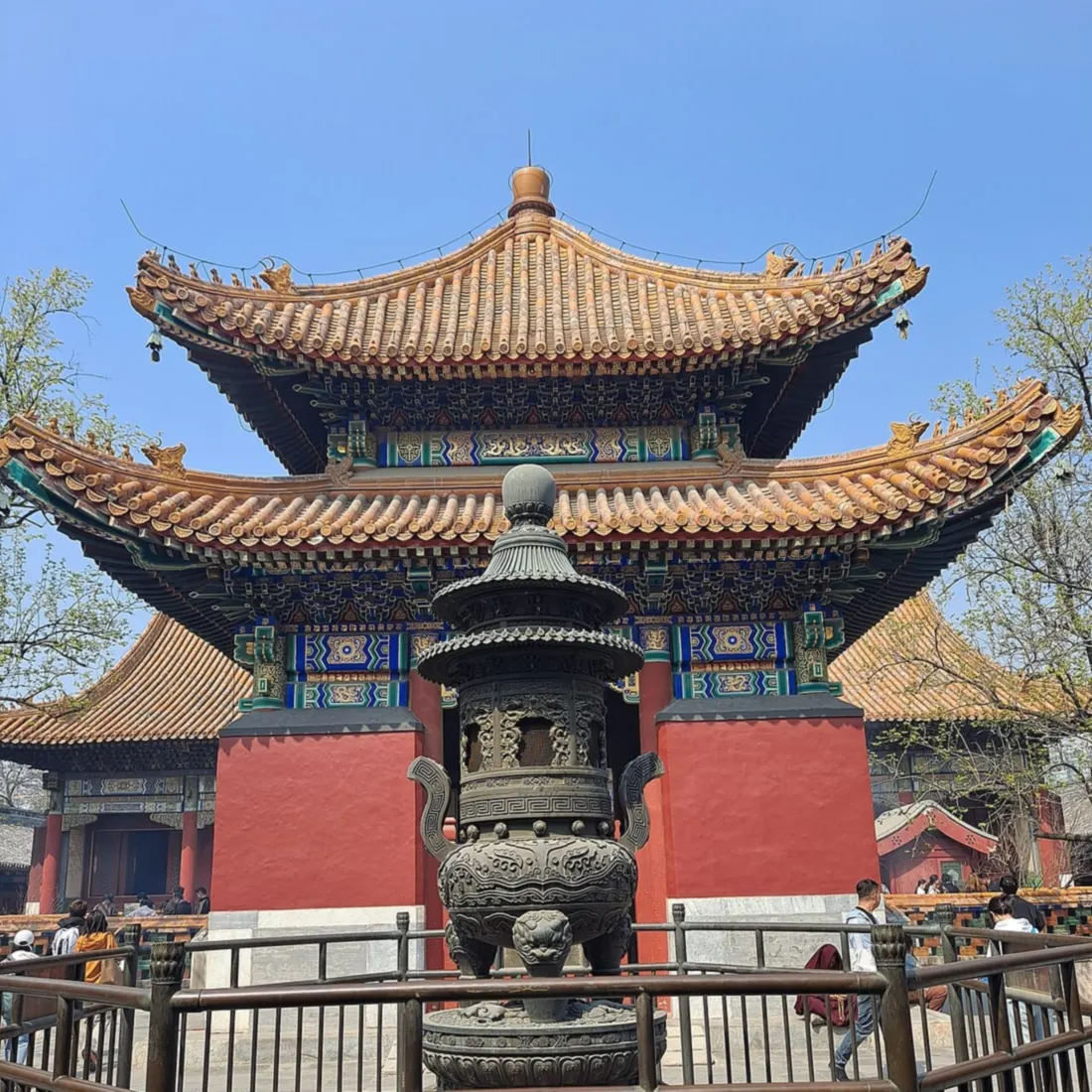
Use the official visitor plan to recognise the names as you move through the complex: Yonghe Gate Hall, Yonghegong Hall, Yongyou Hall, Falun Hall and Wanfuge Pavilion. You’ll notice changes in the figures and the purpose of the rooms as you go.
In Yonghe Gate Hall, look for Budai and the Four Heavenly Kings, with the protective figure Weituo also present. The objects held by the kings provide something specific to pick out: a musical instrument, a sword, a snake and a banner. Even without knowing every figure’s name, comparing those details gives this entrance hall more meaning than a quick glance through the doorway.
Falun Hall is used for major religious ceremonies. Its central figure is Tsongkhapa, founder of the Gelug school of Tibetan Buddhism. Outside, look up towards the five gilded finials on the roof; inside, the operator’s description draws attention to a carved mountain of arhats behind the main figure. Let worshippers use the space and take your time where the visitor route allows.
At Wanfuge, the Maitreya is carved from white sandalwood. Two heights often appear in descriptions: 18 metres is the visible figure; 26 metres is the full trunk, with eight metres below ground forming its base. They’re measurements of different parts of the same carving. The pavilion was built between 1748 and 1750, and the temple also describes a series of 41 thangkas illustrating previous lives of Shakyamuni. Look beyond the central statue if the rooms and displays are accessible during your visit.
What the imperial rooms became
The site was the residence of the future Yongzheng emperor, and Qianlong was born and raised here. It became a temporary imperial palace in 1725, then a Gelug Buddhist monastery in 1744. That change of use explains why a visit brings palace architecture and Buddhist imagery together rather than presenting a single-purpose monument from the outset.
The more recent history matters too. The temple opened to the public as a place of worship in February 1981, and its Tibetan Buddhist art museum was established in 1995. You’re walking through a place with both religious activity and collections to interpret. A room used for worship calls for a different pace from an outdoor courtyard where people are studying the roof decoration.
The temple’s art overview distinguishes serene images in the central halls from fierce protective figures in side rooms. Try looking for that contrast as you move between spaces. It gives you a thread to follow through the statuary without needing to turn the whole visit into a lesson in names and dates.
Incense and the rhythm of worship
The operator asks visitors to use three sticks of incense. Follow the marked arrangements and the staff’s instructions where burning is taking place. If you’d rather observe, stand clear of people making offerings and leave the approach to the worship spaces open. You can appreciate the courtyards and the architecture while giving religious practice its room.
Follow the photography signs at each hall, and outdoors pick a spot that leaves paths and doorways clear. Good pictures here take in a whole roofline or a painted beam rather than someone else’s prayer.
For families, the objects held by the Heavenly Kings and the difference between the statue’s visible and total height offer concrete things to discuss. Keep the visit flexible if a child becomes tired or sensitive to incense. Pick a few details to look for and allow the rest of the complex to be a walk, with pauses where appropriate.
When a guide adds something
A guide is worth it if you want the imagery read for you: who the fierce figures in the side halls are, what the Gelug school teaches, how a prince’s house became a monastery. Admission is a separate ¥25 bought from the temple; if a package bundles a ticket, ask where it came from. On a multi-stop tour, check how many minutes Yonghegong actually gets. You can also explore on your own with the operator’s visitor plan.
Leave space for the surrounding streets
Beijing’s culture and tourism bureau suggests an area route linking Ditan Park, Yonghegong, and the Confucian Temple and Imperial College. That offers a sensible direction for continuing the day, with the temple visit placed around its admission deadline. Treat entry to the neighbouring attractions as separate planning decisions and check their own opening arrangements.
If you’re still choosing your base, the Beijing city guide shows how this corner of the old city fits a wider stay. The 10-day and two-week China itinerary gives the lanes around the temple its last Beijing day, before the evening train out.
Tickets and opening hours
- Ticket price
- Full adult admission ¥25; concession ¥12 with the required original documents. Passport holders seeking a concession use the Ticketing Processing Centre.
- Opening hours
- Published seasonal hours: 09:00-17:00 April-October, entry until 16:30; 09:00-16:30 November-March, entry until 16:00.
Operator information checked 15 October 2026. Recheck the temple notice before travelling, particularly for a visit in 2027.
Details checked: 15 October 2026
Read also

What to see · 8 min read
Huashan from Xi'an: Choose Your Cableway Route
Verified · 15 October 2026Huashan day trip from Xi'an: West or North cableway, what admission, bus and ride cost, and a 28-minute fast train from Xi'an North.

What to see · 8 min read
Longmen Grottoes Tickets: Follow the Four-Part Route
Verified · 15 October 2026Plan a daytime Longmen Grottoes visit with the four included areas, seasonal entry deadlines, passport booking checks and transport from Luoyang.

What to see · 8 min read
Summer Palace Tickets: Park Entry or Combined Ticket?
Verified · 8 November 2026Compare Beijing Summer Palace admission and combined tickets, their four extra sights, winter hours and the passport route at the ticket window.

What to see · 7 min read
Temple of Heaven Tickets: Through Entry and Park Gates
Verified · 8 November 2026Which ticket includes the Hall of Prayer, how to buy with a passport, and why winter last entry to the inner sights matters more than park closing.