
China in Summer: Heat, Rain and School Holidays
Compare summer weather in Beijing, Shanghai and Kunming, check local 2027 school breaks and plan days with room for heat and changing weather.

For a summer China trip, pick the climate you can live with, then keep room to swap outdoor days for indoor ones. Kunming has the coolest July average of the three cities below, 20.5°C against 27.2°C in Beijing and 28.8°C in Shanghai, but also the wettest July at 216.6 mm. For travel in 2027, check the school calendars too: Shanghai and Beijing begin their summer breaks on different dates.
If July or August is fixed by your own holiday, you can still build a rewarding trip. You’ll gain more by keeping the places you most want to see and cutting the extra journeys, and by choosing a hotel that makes a midday return practical.
June to August: three cities, three kinds of heat and rain
The comparison below uses Japan Meteorological Agency ClimatView normals for 1991-2020, read on 15 October 2026. Temperatures are monthly means, nights included, so afternoons run hotter than these figures; rainfall is the average monthly total.
| Station | June | July | August |
|---|---|---|---|
| Beijing | 25.3°C, 72.7 mm | 27.2°C, 170.6 mm | 26.0°C, 114.1 mm |
| Shanghai Baoshan | 24.4°C, 181.5 mm | 28.8°C, 144.1 mm | 28.5°C, 215.5 mm |
| Kunming | 20.7°C, 177.4 mm | 20.5°C, 216.6 mm | 20.3°C, 196.1 mm |
Added up, the three summer months bring about 590 mm to Kunming, 541 mm to Shanghai Baoshan and 357 mm to Beijing. Beijing’s rain also comes in one lump: the Beijing guide’s 1981-2010 series has July and August bringing 299 mm of the year’s 532 mm, and in the JMA table July alone is nearly half the summer total, while Beijing’s June is the driest month of the nine in the table.
Afternoons are the real test. Beijing’s average July high is 32.1°C on the China Meteorological Administration’s 1981-2010 figures (Beijing guide), and that guide’s 160 mm for July rain comes from the same 1981-2010 series, so the two pages differ by period, not by station. Shanghai’s July and August highs average about 31-32°C and often passed 35°C in 2024 (Shanghai guide). Start outdoor sights early, keep the middle of the day for museums and a rest, and you’ll want to carry water.
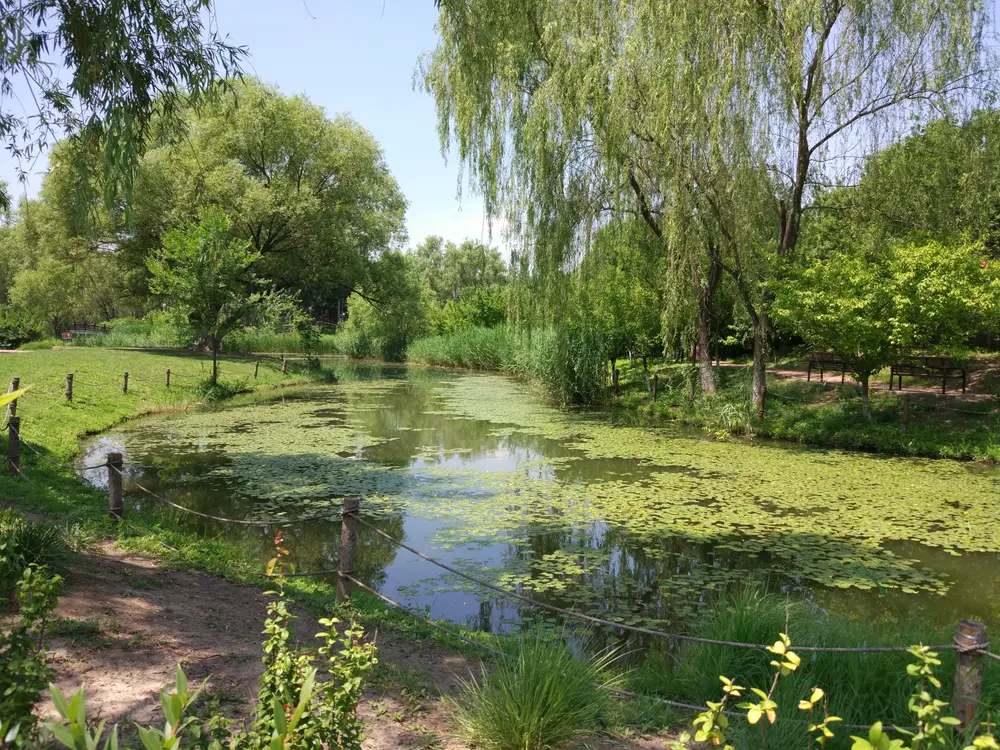
Shanghai’s wettest summer month is August
June is cooler in Shanghai, but not drier. At Shanghai Baoshan the June monthly mean is 24.4°C against July’s 28.8°C, yet June brings 181.5 mm of rain to July’s 144.1 mm. Shanghai Baoshan’s August is the wettest of its three summer months: 215.5 mm, with the monthly mean still at 28.5°C.
The China Meteorological Administration describes the broad Meiyu, or plum-rain, season in the Jianghuai and middle-lower Yangtze region as extending from early June into mid-July. In Shanghai itself, the city government puts the plum rains at mid-June to early July (Shanghai guide). Beijing’s June rain is less than half of either southern station’s: 72.7 mm against 181.5 mm in Shanghai Baoshan and 177.4 mm in Kunming. Beijing is the one place where June is clearly the easy month: 25.3°C and 72.7 mm, against 170.6 mm in July.
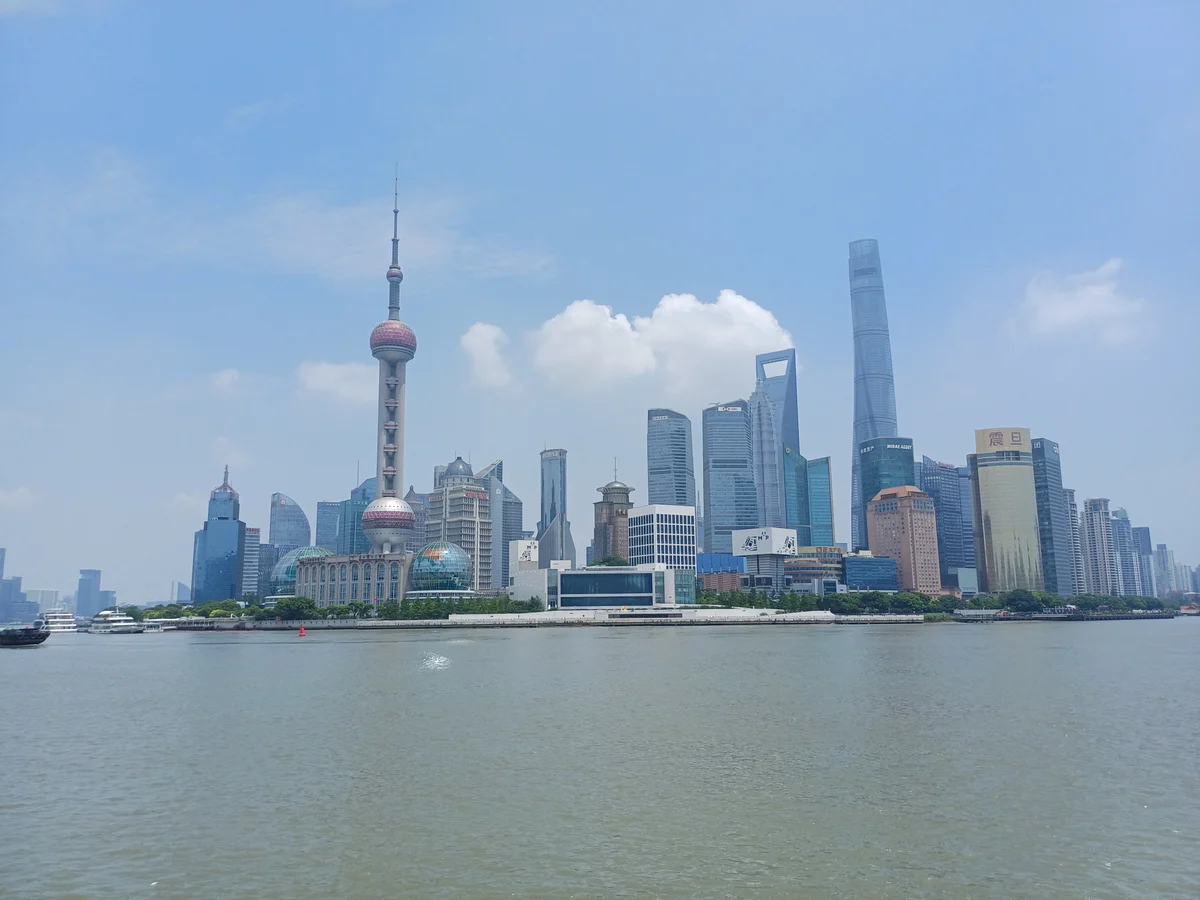
Between the two big cities, Shanghai pulls ahead of Beijing once July arrives: 1.6°C warmer in July and 2.5°C warmer in August. June is the one month Beijing is the warmer of the two, at 25.3°C against 24.4°C.
Kunming: cool, but not dry
Kunming’s appeal is a July mean of 20.5°C, 6.7°C below Beijing and 8.3°C below Shanghai. Its rain is the catch: 216.6 mm in July and 196.1 mm in August, at a mean of 20.3°C. That station describes Kunming itself, so treat each Yunnan town beyond it, and any mountain excursion, as its own check.
Yunnan’s rain follows the same rhythm further north-west. Lijiang gets about 789 mm of its 980 mm a year from June to September, with July alone averaging 242 mm, and its daytime highs peak at 24.1°C in June (Lijiang guide). If you’re going on to the mountains, keep a spare day in case the cable cars stop for rain; our Dali vs Lijiang guide shows how the two towns’ mountain days compare.
For a first trip centred on Beijing and Shanghai, the table is a reason to reshape the sightseeing day, and it isn’t a reason to drop either city: put the outdoor visit you care about first and find an indoor alternative nearby.

School holidays: when families travel
School calendars are local. These dates were published by the two municipal education commissions and checked again on 16 October 2026.
| School calendar | Scheduled summer holiday in 2027 |
|---|---|
| Shanghai primary and secondary schools | 1 July-31 August |
| Beijing compulsory education stage | 6 July-31 August |
| Beijing non-compulsory school stage | 13 July-31 August |
The dates matter because Chinese families travel once school is out; June comes before both breaks. If your dates fall between 1 and 5 July, Shanghai’s schools are already out while Beijing’s compulsory ones aren’t. Counted in days, Shanghai’s break runs 62 days, Beijing’s compulsory-stage break 57 and its non-compulsory break 50. These are school breaks, separate from the national public-holiday arrangements, and university calendars and other cities need their own checks. For a trip with children of your own, our China with kids guide covers ages, train seats and pushchairs.
Which month for which trip
June is the pick for Beijing: 72.7 mm and 25.3°C, with the school breaks still ahead (1 July in Shanghai, 6 July in Beijing). In Shanghai it sits inside the plum-rain window, so plan indoor options.
In short, June suits Beijing, August is the month to be wary of in Shanghai, and Kunming is cool in every month but never dry.
July is the hottest month for Shanghai Baoshan (28.8°C) and the month Beijing’s rain peaks (170.6 mm). Shanghai’s schools are out from 1 July and Beijing’s from 6 July (13 July for the non-compulsory stage), and Kunming is at its wettest.
Kunming barely changes across the three months (20.7°C, 20.5°C, 20.3°C); what moves is the rain, which peaks in July at 216.6 mm.
August is Shanghai’s wettest month (215.5 mm, at a still-warm 28.5°C) and sits in the July-to-September typhoon window below. Beijing eases to 114.1 mm.
When the weather moves the outing
Rainfall at a city station gives broad context; the day’s route conditions and the operator’s current notice decide whether a mountain, river or coastal excursion runs. Keep a spare morning in the same base, and read how the product handles a changed departure or an operator closure before paying.
CMA identifies July to September as an active period for typhoon landfalls, and the Shanghai guide puts the city’s peak typhoon season at late August to mid-September. For coastal travel, watch your carrier’s and attraction’s messages as the date approaches. Don’t stack a weather-dependent excursion directly against a train or flight you must catch.

In the evening, look at tomorrow’s forecast, the attraction notice and the transport message together, and decide whether to keep the outdoor visit, swap it for your indoor option or shorten the day. For the other seasons, see China in spring and autumn.
Read also

Before you go · 7 min read
China in Spring: March, April or May?
Verified · 16 October 2026Choose a spring month and route using comparable climate normals for Beijing, Shanghai, Kunming and Guilin, with practical plans for rain and wind.

Before you go · 8 min read
China with Kids: Ages, Train Seats and Pushchairs
Verified · 16 October 2026Plan a family trip around child tickets, passports, train seats and pushchairs, with specific rules for Shanghai Disneyland and Chengdu Panda Base.

Before you go · 7 min read
Dali vs Lijiang: Town Walks and Mountain Choices
Verified · 15 October 2026Dali or Lijiang? Lake and old-town base against canals and a 4,506 m glacier cable car, with ticket rules, altitudes and how to see both.

Before you go · 7 min read
Golden Week China 2027: What to Book and When
Verified · 16 October 2026National Day 2027 runs 1-7 October: the dates, what the week does to trains and sights, and a countdown of when to book each one.