
China in Autumn: Routes from September to November
September to November in China: which region suits which month, from Beijing's 16-degree drop to Guilin's dry season and the National Day week.

Autumn in China splits in two: September and October work almost anywhere, while by November the north is close to winter and the south is still mild. On the Japan Meteorological Agency’s 1991-2020 normals, read on 7 November 2026, Beijing’s monthly mean falls from 21.2°C in September to 5.2°C in November, a drop of 16 degrees, while Guilin’s November mean is still 16.7°C. The week to plan around has nothing to do with the weather: the National Day holiday at the start of October, when China’s long public holidays fill trains and sights at once (the 10-day itinerary has the official dates).
Reading this in November 2026, only the last month of the season is still ahead this year. A September or October trip now means autumn 2027, so treat those months’ figures as planning context for next year and recheck current notices when you book. The figures are monthly means of days and nights together, so an October afternoon in Beijing feels warmer than the 13.8°C below and the night colder; for your own week, the forecast is what counts.
| JMA station, 1991-2020 | September | October | November |
|---|---|---|---|
| Beijing | 21.2°C · 53.3 mm | 13.8°C · 29.3 mm | 5.2°C · 13.7 mm |
| Shanghai (Baoshan) | 24.8°C · 122.2 mm | 19.7°C · 61.5 mm | 13.9°C · 60.5 mm |
| Kunming | 18.8°C · 121.4 mm | 16.2°C · 80.8 mm | 12.5°C · 30.6 mm |
| Guilin | 26.5°C | 22.0°C | 16.7°C |
Three things stand out. Shanghai’s September brings twice October’s rain, so October is the drier month for a city break. Kunming dries out as the season goes on: November has under half of October’s rainfall. And Shanghai in November, at 13.9°C, is about where Beijing is in October. JMA’s Guilin table leaves the rainfall column empty; the Guilin guide has the China Meteorological Administration’s figures, and autumn is the dry season there.
Start by deciding where the journey should finish
If your dates run into late autumn, compare the northern part of the trip with the final destination before buying the international flights. A route that ends in Beijing asks different things of your clothing and outdoor days from one that ends around Guilin.
Three shapes work, and the month decides between them:
- September: Beijing first, the south later or not at all. Beijing’s mean is still 21.2°C, the easiest of the three months for long days outside, while Guilin is at 26.5°C. Finish in Shanghai if you’d rather skip the heat.
- October: the classic Beijing, Xi’an and Shanghai line. Beijing is down to 13.8°C and Shanghai Baoshan to 19.7°C, with half September’s rain (61.5 mm against 122.2 mm). Plan around the National Day week below, and take the Beijing to Xi’an train once it’s over.
- November: north first, finish in Kunming or Guilin. Beijing’s mean falls to 5.2°C, so put museums ahead of long walls there, then end where it’s milder: Kunming at 12.5°C in its driest autumn month (30.6 mm), or Guilin at 16.7°C.
These are planning choices. You’ll still need to compare the actual train or flight, station, arrival time and nights in each base. A warmer final destination earns its place when you want to spend time there; the transfer should serve the trip you have chosen.
Dates in early October need one extra check. China’s National Day holiday starts on 1 October, and the State Council’s yearly schedule sets how long the break runs; the ten-day and two-week itinerary explains how the long holidays fill trains and sights. On 1 October 2026 the railways carried 25.2 million passengers, a single-day record. For autumn 2027, check that year’s State Council holiday notice before fixing an early-October trip. Our Golden Week guide is the one to read before you fix dates around that holiday.
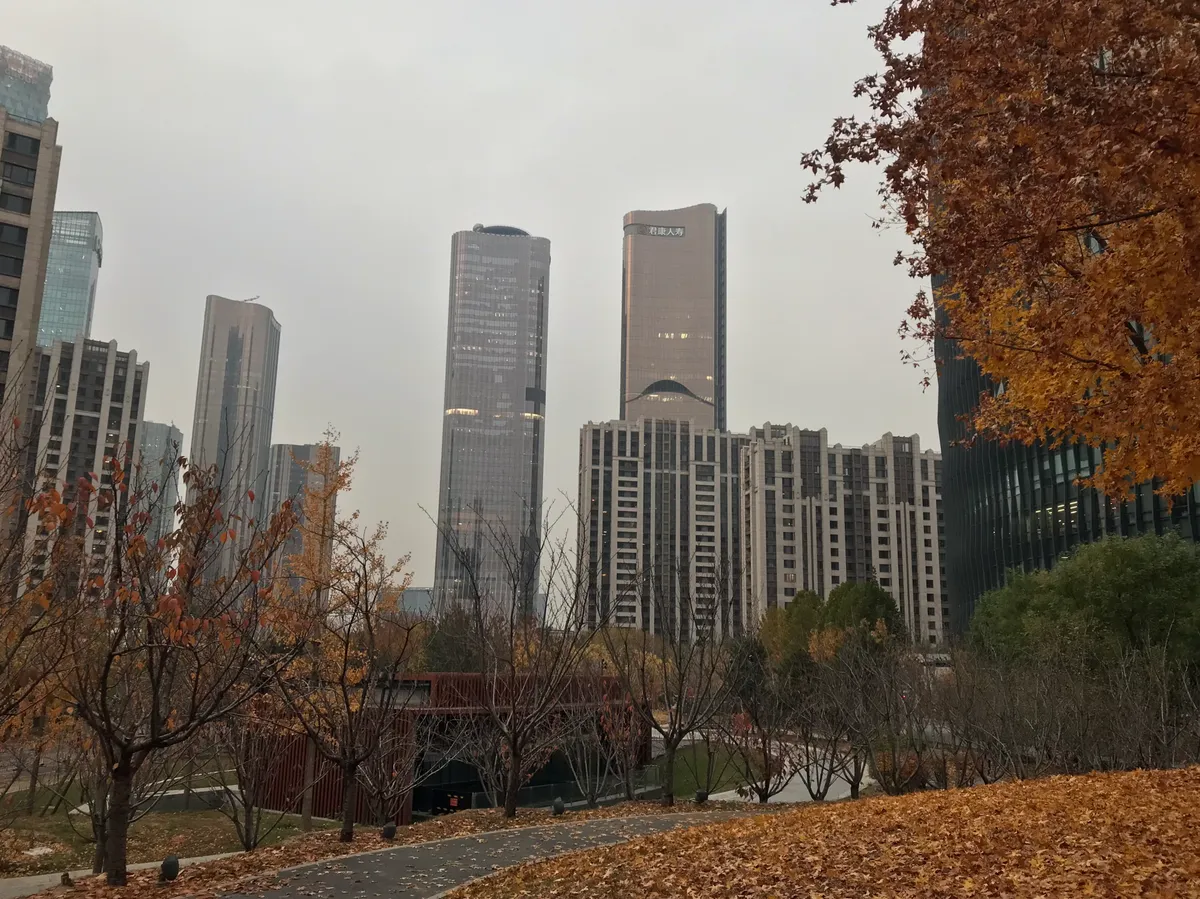
Keep northern walks within the day you want to spend outside
At Beijing’s station, the monthly mean is 13.8°C in October, between the September and November values above. The change matters when you are deciding how much of the visit should be spent walking, queuing or travelling to an outdoor site.
October is the month for Beijing’s long outdoor days: the Great Wall, the Summer Palace, a hutong walk that runs into the evening. By November, put the walls and the parks in the middle of the day and keep the late afternoon for a museum.
If you’re visiting in November, the big sights don’t all switch to winter hours on the same day: the Palace Museum and Badaling change before Mutianyu and the Terracotta Army. The China in winter guide has the dates, with links to each sight’s hours.
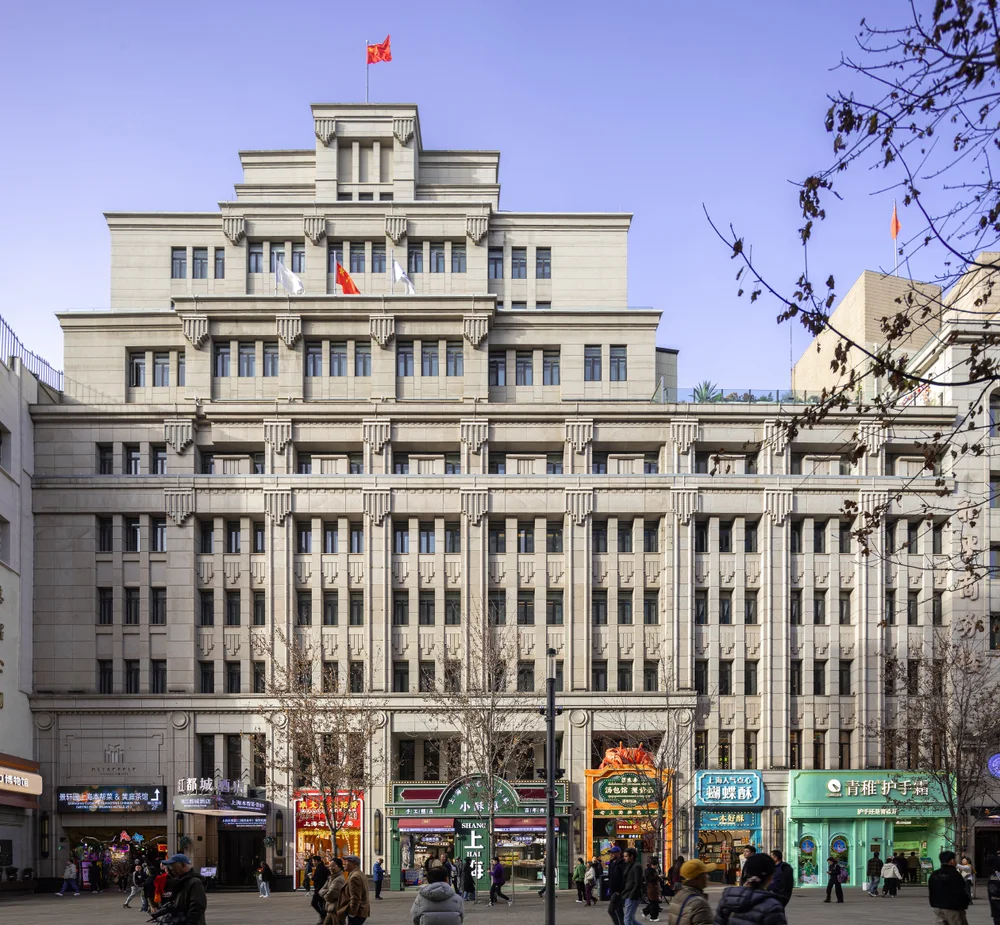
Shanghai: October is drier, November has the plane trees
Shanghai Baoshan’s October monthly mean is 19.7°C, with a 61.5 mm precipitation normal. In November, the corresponding temperature is 13.9°C. These are the same 1991-2020 station series, giving a useful comparison with Beijing for the latter part of an autumn trip.
For Shanghai, the city guide’s own advice is October after the holiday week, or November. November has a reason of its own: the plane trees of the former French Concession turn yellow, and the walk the city publishes, In the Shade of Plane Trees, starts at the Wukang Building (the walk).
September has a different rainfall background at Baoshan: 122.2 mm, compared with October’s 61.5 mm. That supports comparing the months if your dates are flexible. Both are historical monthly totals; rain during your own stay still needs a forecast and a workable indoor alternative.
On a short city break, add a night in Shanghai before you add a day trip: a wet afternoon is easier to give up when there’s a second one. If you do go out, Suzhou and Hangzhou are the day trips we’ve covered, and Huangshan is the granite-peak option for a longer break.

Kunming is a separate autumn option
Kunming’s October monthly mean is 16.2°C, alongside 80.8 mm of precipitation. Its November figures are 12.5°C and 30.6 mm. In the same station’s historical record, that is a cooler and drier average as autumn progresses.
Kunming works as the base for a trip that stays in one province. The quickest trains on to Lijiang leave from Kunming station in the city, not Kunming South (12306 guide), and Lijiang’s own big outing, Jade Dragon Snow Mountain, sells entry tickets ahead with a compulsory scenic bus on top; the Lijiang guide has the current rules. If Yunnan appeals, the Dali guide covers a lake-town stop on the same loop.
The higher you go, the less Kunming’s figures tell you. A mountain day needs its own forecast, and if it depends on a cableway or a lift, as it does at Zhangjiajie Forest Park, book it for a day you can move.

A southern finish still needs a river plan
Guilin’s monthly mean changes from 26.5°C in September to 22.0°C in October and 16.7°C in November. A September visit therefore deserves its own clothing and walking plan, rather than the one you might pack for northern China late in the season.
Autumn is the dry season in Guilin, and from September it’s also the start of the Li River’s low-water season, which runs to March. Low water has cut the main cruise short before, in a dry January, so read the scenic area’s notices a few days before you go; the Guilin guide has the piers, the booking rules and what each season has meant for the route. Sleep in Guilin the night before the cruise and in Yangshuo after it, where the boat drops you. A morning on the Yulong River by bamboo raft is the quieter follow-up.
Typhoons on the coast
CMA counts storms that form from September to November as autumn typhoons, and the Shanghai guide puts the city’s peak typhoon season from late August to mid-September. If your route touches the coast in those weeks, leave a spare day near the end and read your airline’s or railway’s notices on the morning you travel.
Which autumn month for which route
| Travelling in | Works well for | Watch for |
|---|---|---|
| September (2027) | Guilin and Yangshuo, Beijing | Shanghai’s wettest autumn month; typhoons on the coast |
| October (2027) | Almost anywhere | The National Day week at the start of the month |
| November (2026 or 2027) | Shanghai, Kunming, Guilin | Beijing’s winter hours and a 5.2°C monthly mean |
Whichever you pick, treat autumn colour as a bonus: the leaves turn when they turn, so read the park’s own announcements for the week you’re going. If you’re weighing a summer departure instead, our China in summer guide covers that season. The spring guide does the same for the other shoulder season.
Read also

Before you go · 7 min read
China in Spring: March, April or May?
Verified · 16 October 2026Choose a spring month and route using comparable climate normals for Beijing, Shanghai, Kunming and Guilin, with practical plans for rain and wind.

Before you go · 7 min read
China in Summer: Heat, Rain and School Holidays
Verified · 15 October 2026Compare summer weather in Beijing, Shanghai and Kunming, check local 2027 school breaks and plan days with room for heat and changing weather.

Before you go · 8 min read
China with Kids: Ages, Train Seats and Pushchairs
Verified · 16 October 2026Plan a family trip around child tickets, passports, train seats and pushchairs, with specific rules for Shanghai Disneyland and Chengdu Panda Base.

Before you go · 7 min read
Dali vs Lijiang: Town Walks and Mountain Choices
Verified · 15 October 2026Dali or Lijiang? Lake and old-town base against canals and a 4,506 m glacier cable car, with ticket rules, altitudes and how to see both.