
China Train Classes: Is the Upgrade Worth It?
Compare second, first and business class by seating, a dated fare example, family prices and baggage rules before paying to upgrade your group.
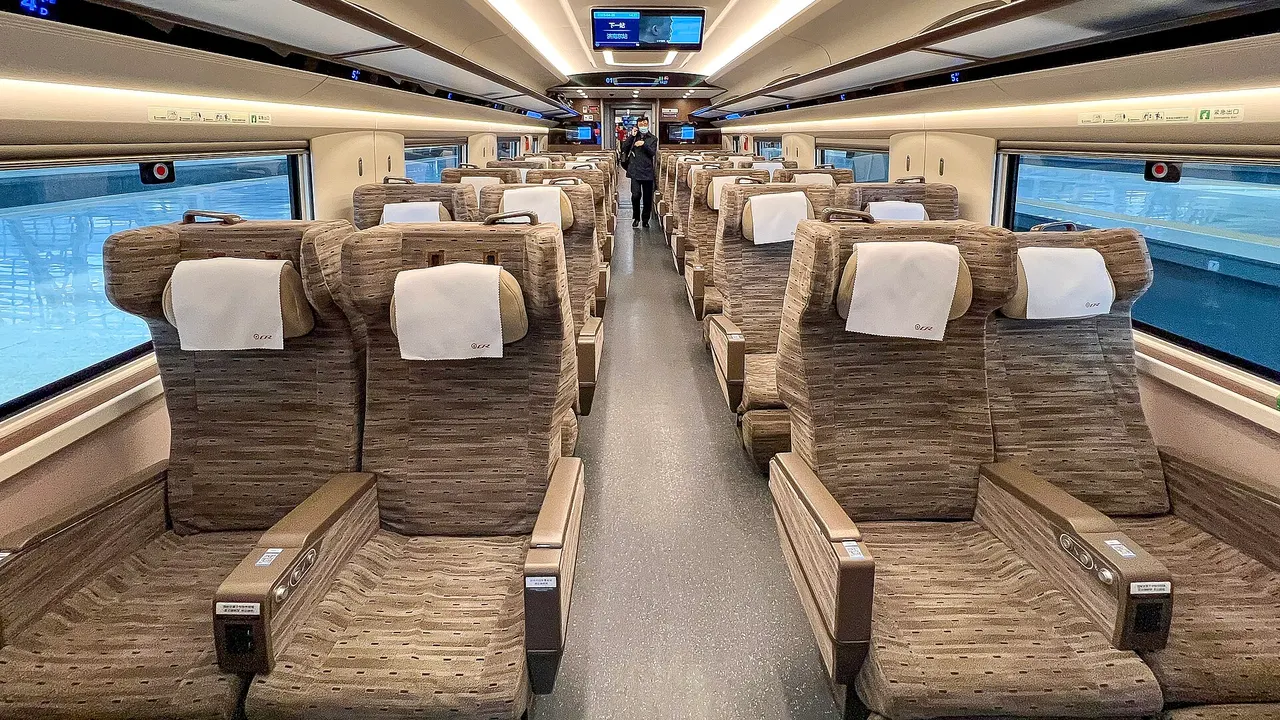
On the departure we checked, first class cost 1.6 times the second-class fare and business class three times it, and the main thing first class buys is the end of the middle seat. China’s high-speed trains usually seat five across in second class (3+2), four in first (2+2) and two or three in business. With a child aged 6 to 13, compare the family total rather than the adult supplement: the railway charges a child 80% of the adult fare in business but 50% in first and second. The same 1.6 shows up on the Beijing-Shanghai line.
The fares are 12306’s for C86, Kunming to Lijiang, on 17 November 2026, read on 7 November; the layouts are the ones China Railway calls usual, and a particular train can differ.
Read the row before choosing the class
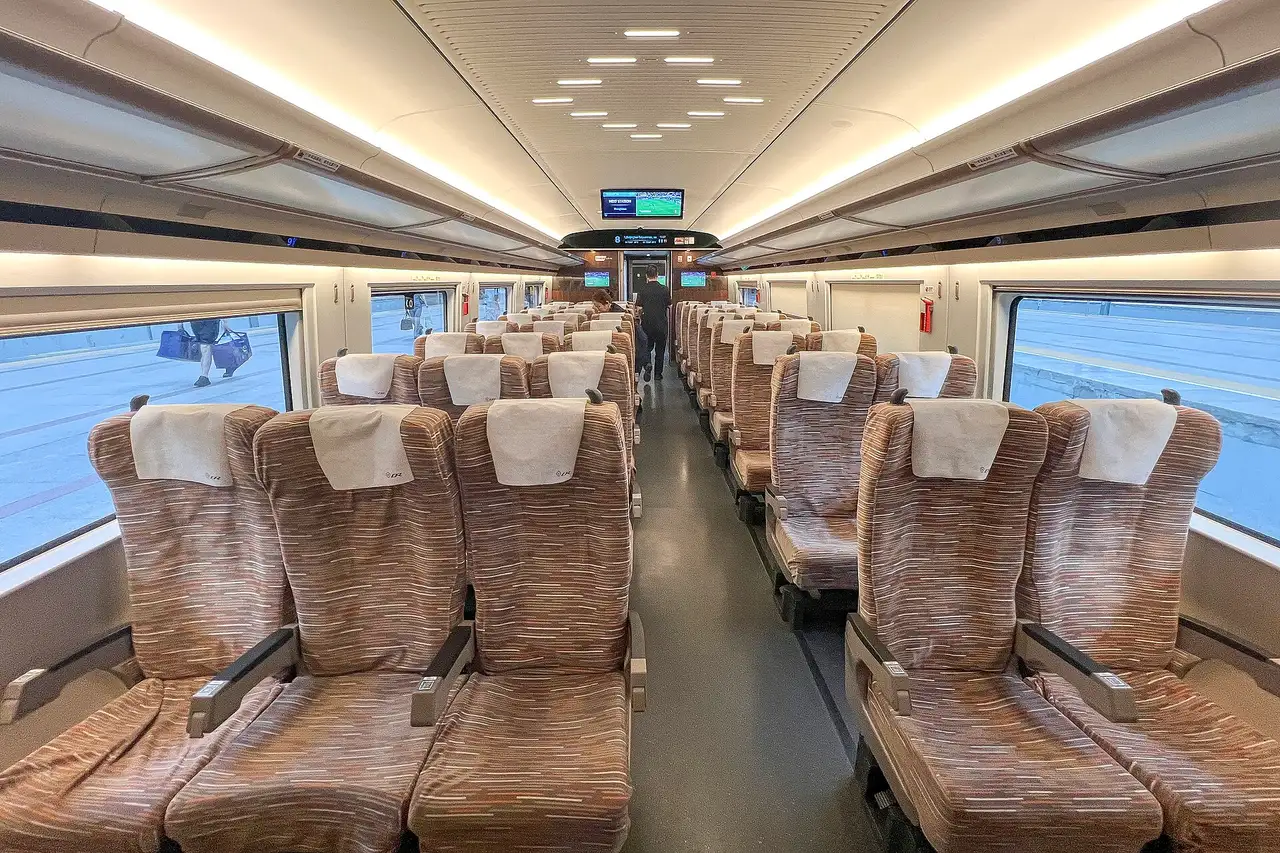
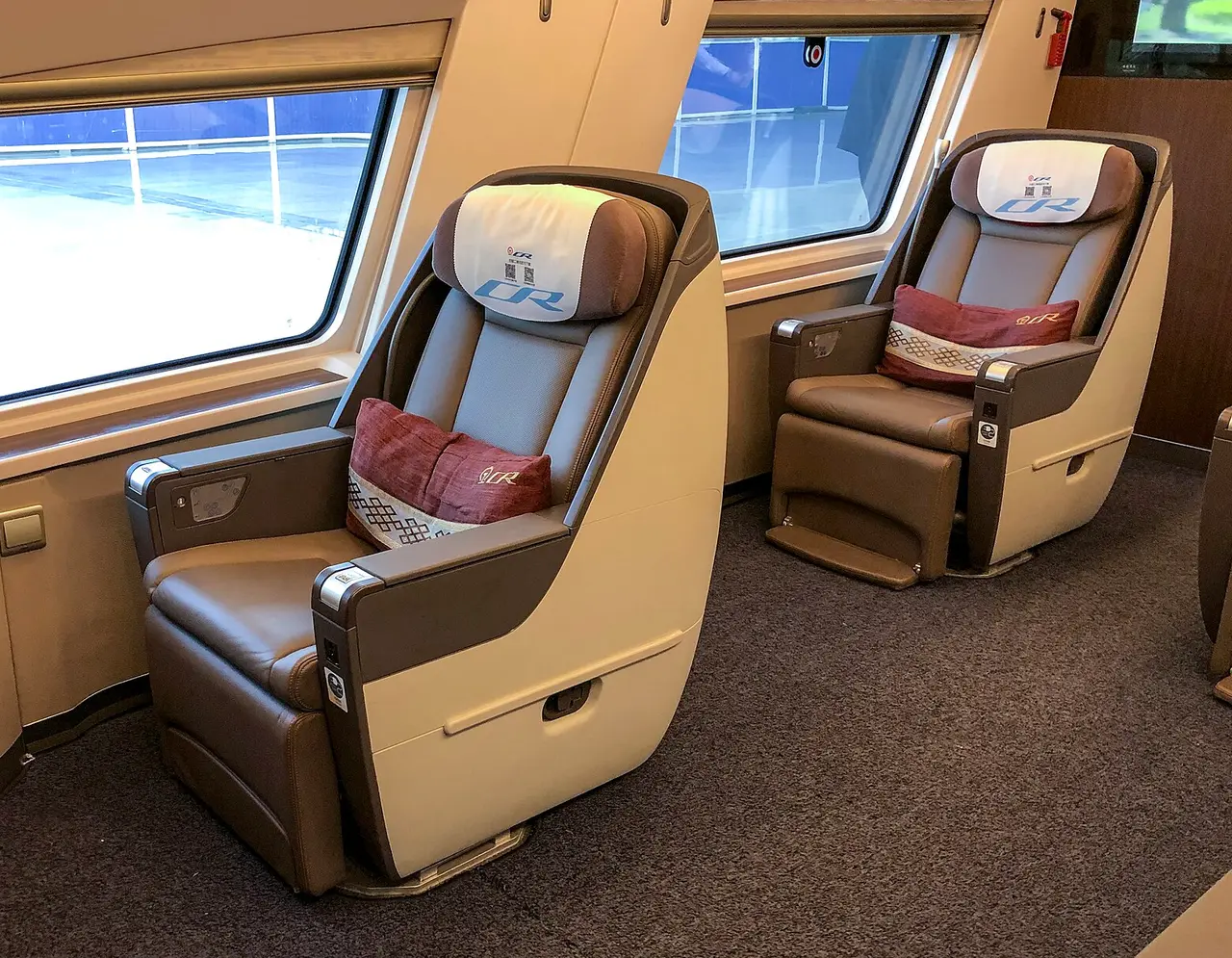
Chengdu Railway’s guide describes the usual layouts. In second class the row is A, B, C | D, F: A and F by the windows, C and D on the aisle, B in the middle of the three. First class drops the middle seat, leaving A, C | D, F. Business is 2+1 or 1+1. Train models vary, so check the layout for your departure; our 12306 guide shows the same rows in photos, along with premium first class on the Beijing-Shanghai line.
Which seats for two, three or four
Two adults: in second class, pick D and F, the pair side. You get a window and no stranger beside you, which is most of what first class gives a couple, so on a ride of an hour or two second class does the job. On a long leg, first class’s wider seat counts for more.
Three friends: second class has a row of three side by side, A, B and C, and the middle seat is the price of that. In first class a group of three is split across the aisle.
Four: a first-class row, A, C, D and F, seats all four abreast with the aisle in the middle. In second class it’s A, B and C plus one across the aisle, or two D-and-F pairs, one behind the other.
12306 lets you ask for particular seats, but if the ones you want are gone it assigns others automatically, so check the carriage and seat numbers on the issued ticket before you count on sitting together. That matters most if someone in your group needs help on the journey.
See what the supplement looks like on one departure
A dated railway example makes the price decision more concrete. On 7 November 2026, 12306’s public fare query returned these adult fares for C86 from Kunming to Lijiang on 17 November 2026, the same as for departures on 10 and 21 November. This is an EMU fare example for that route and date. Confirm the actual carriage layout before paying for an upgrade.
| Class on the queried departure | Railway fare | Approximate US dollars / pounds / euros |
|---|---|---|
| Second | ¥190 | US$28.40 / £21.45 / €25.35 |
| First | ¥303 | US$45.30 / £34.20 / €40.40 |
| Business | ¥568 | US$84.90 / £64.10 / €75.75 |
The first-class supplement in that example is ¥113 per adult, about US$16.90 / £12.75 / €15.05. Business adds ¥378 over second class, about US$56.50 / £42.65 / €50.40. Those differences are arithmetic from the queried fares; currency estimates use the ECB’s 15 October 2026 rates. The ride is 3 hours 29 minutes, 10:15 to 13:44, so the upgrade costs roughly ¥32 an hour on board in first and ¥109 an hour in business. Ask whether you’d pay that rate for the seat alone.
For two adults on C86, first class adds ¥226 to the trip, about US$33.80 / £25.50 / €30.15, and business ¥756, about US$113 / £85.30 / €100.80. Run the same sum on 12306 for each leg you’re thinking of upgrading.
Calculate the family price in the actual class
Under the 12306 child-fare rules checked on 7 November 2026, a child aged 6 to under 14 on the travel date pays a child fare: 50% of the applicable adult fare in EMU second, first and multifunction seats, and 80% in special class, preferred first class and business. From 14 the full adult fare applies, and each adult can take one child under 6 free if the child doesn’t occupy a seat. The child’s class must match the accompanying adult’s.
There’s a floor as well: a child’s ticket can’t drop below 40% of the published fare, and if the discounted adult fare is already under that line, the child pays the adult fare. 12306 works the child’s price out for you once you choose the departure and class.
That’s why a family’s business upgrade can’t be read off the adult supplement: the child’s share of the fare rises from half in second and first class to four-fifths in business. Add the child to the order on 12306 and it shows the railway’s own child price for each class; compare those two totals, not the adult fares.
Luggage and a pushchair
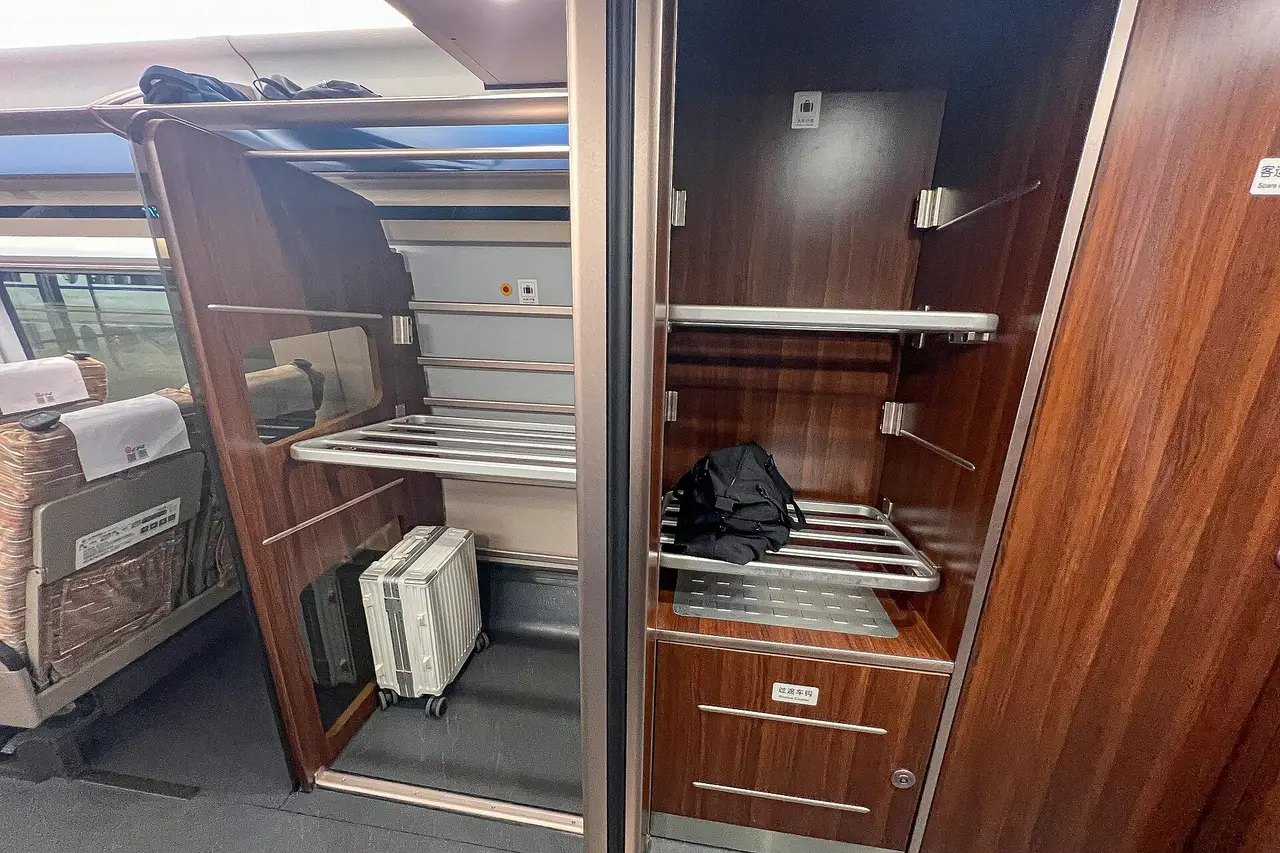
Luggage is a separate question from the seat: under China State Railway’s rules effective 1 June 2026, read on 7 November 2026, the allowance is set per passenger, 10 kg for a child, and the 12306 guide has the adult limit and the size rule on high-speed trains. A qualifying folding pushchair for an accompanying infant travels outside the allowance, so plan who carries it, and the bags, through the station while someone else looks after the child. Our train vs flight comparison sets the railway’s allowance against an airline’s cabin bag.
What business class adds
What business class includes beyond the seat isn’t in the railway’s layout guide, so if a meal or a lounge is the reason you’re paying, look for it in the description of the train you’re booking. One upgrade our 12306 guide does describe is the premium first class in car 17 of upgraded 17-car Beijing-Shanghai trains, with seats that turn 180 degrees and a separate waiting area at the station.
For booking-platform and passport procedures, use the 12306 and Trip.com guide.
Spend extra where it changes the journey
On a trip with several trains, you can make the choice separately for each leg. Use the ten-day and two-week itinerary to see how a sequence of journeys fits around the nights, then decide which ride gets more of the budget.
Our rule of thumb from the fares above: on a ride of an hour or two, D and F in second class give a couple most of what first class would; on a long leg, first class’s wider seat and missing middle seat are worth paying for; and business, at three times the second-class fare, makes sense when you want the seat itself, not just to sit together.
Read also

Transport · 8 min read
Beijing Subway for Tourists: Cards, Gates and Stations
Verified · 8 November 2026Use a foreign bank card, a single ticket or BEIJING PASS on the metro, avoid mixing payment devices and find the right line for your railway station.

Transport · 7 min read
Beijing to Datong Train: 1h46-2h36, ¥148-170 (2026)
Verified · 8 November 2026Beijing North to Datong South takes 1h46-2h36, second class ¥148-170 on 10 November 2026. One day works for Yungang; the Hanging Temple needs a night.

Transport · 8 min read
Beijing to Xi’an by Train: Day Seats or a Sleeper?
Verified · 7 November 2026Compare direct daytime and overnight trains, the stations each uses, passport boarding and an overnight stop in Pingyao between Beijing and Xi’an.

Transport · 7 min read
Hong Kong to Guangzhou Trains: Fares and Border Checks
Verified · 7 November 2026Choose Guangzhou South or East, read dated train and fare examples, and plan passport checks at Hong Kong West Kowloon before travelling to mainland China.