
Train vs Flight in China: Compare the Complete Journey
Train or plane in China? Compare stations, airports, baggage limits, check-in deadlines and change rules, using China Railway and Air China examples.
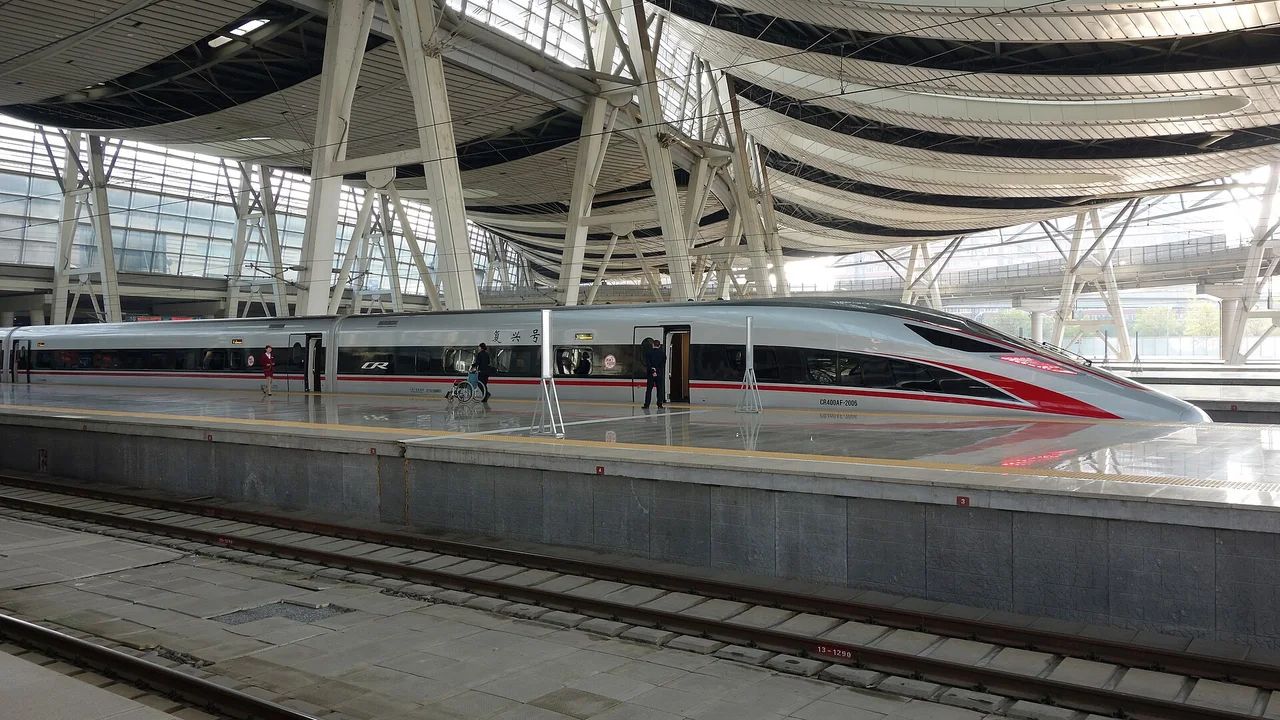
For a trip of a few hours between Chinese cities, compare the whole day, and two things the timetable doesn’t show tend to favour the train: luggage and changes. China Railway lets an adult carry 20 kg on board free, four times Air China’s 5 kg economy cabin piece, and changes a ticket with no change fee more than 48 hours before departure. Beijing to Shanghai shows the trade: the fastest trains run Beijing South to Shanghai Hongqiao in under five hours, and a flight has to beat that after the trip to Capital Airport, a check-in that closes 40 minutes before departure on Air China’s express flights if you’re checking a bag, and the wait at the carousel.
Below are the rules that decide most comparisons, each with its source date. For times and fares on a given route, our route guides have them, and the 12306 guide covers buying the train ticket.
Three pairs on one date: the number a flight has to beat
On 7 November 2026, 12306 listed these as the fastest direct G trains for Tuesday 17 November, with the second-class fare for that date. Fares move from day to day, so treat the yuan as a snapshot and read your own date.
| Pair | Fastest G train on 17 November | Station to station | Second class |
|---|---|---|---|
| Beijing - Shanghai | G25, Beijing South 17:00 to Shanghai Hongqiao 21:18 | 4h18 | ¥626 |
| Beijing - Xi’an | G351, Beijing West 07:55 to Xi’an North 12:05 (G365 matches it at 09:55-14:05) | 4h10 | ¥587 |
| Shanghai - Guangzhou | G251, Shanghai Hongqiao 14:00 to Guangzhou North 20:14 (G253 reaches Guangzhou South at 22:27 in 6h27, ¥930) | 6h14 | ¥855 |
A train’s clock starts at the platform; a flight’s starts earlier. With a hold bag on Air China’s express flights from Beijing Capital Terminal 3 to Shanghai, Guangzhou and Shenzhen, check-in closes 40 minutes before departure. After the flight come the carousel and a ride from the airport, and at the other end of the day a ride to it. We’ve left flight times out of the table on purpose: they change by date and fare, and Air China’s own booking page is the place to read the one for your day.
On the two Beijing routes the train is close enough to the plane that the extras decide it. For 17 November, 12306 listed all 19 G trains with one- or two-digit numbers (G1 to G37) from Beijing South to Shanghai at 4h18 to 4h54, while the three-digit trains took 5h34 and more. Those 19 leave between 06:30 and 19:24, so you aren’t tied to one departure. For Xi’an, our Beijing to Xi’an train guide lists every train on the date, and on a 4-hour ride the plane’s saving shrinks to what’s left after a 40-minute cut-off, the carousel and two airport rides. For many travellers that’s very little, and the 20 kg allowance and fee-free change below are what remain to decide it.
Shanghai to Guangzhou turns the sum round. At 6h14 to 6h27 on board, the train takes most of a working day, and at ¥855 to ¥930 it also costs more than either Beijing fare. Price a flight for the same date, and if its fare includes the bag you need, the plane is the likelier winner there. The train still makes sense if your dates may move or you’re carrying more than the fare’s bag allowance.
Start with where each option leaves you
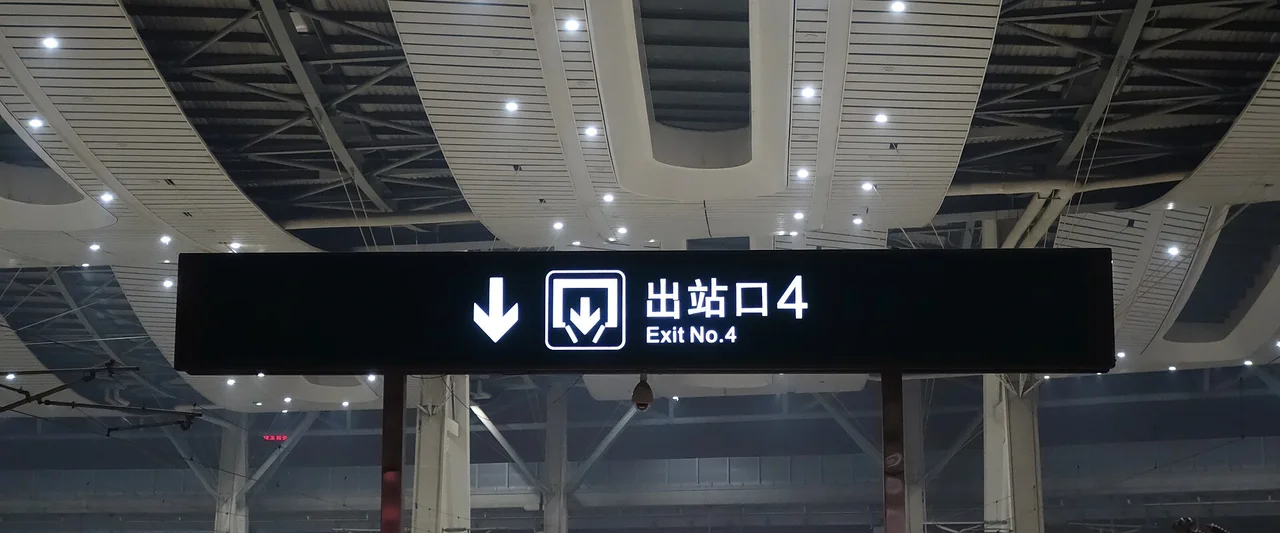
Beijing alone has several big stations, and the fastest trains to Shanghai, Xi’an and Harbin leave from three different ones: Beijing South, Beijing West and Beijing Chaoyang. Put the station and the airport terminal from each option into your map app from the hotel door, and on the flight side add the wait for a hold bag at the carousel. A plan that works on an afternoon metro may not work after a late landing, so check the hour as well as the route.
Compare the whole fare
On price, compare what you’d actually pay: the train fare in your class, plus any agent’s service charge, against the flight fare with the hold bag your trip needs. The railway charges nothing for an adult’s 20 kg; an airline fare may or may not include a checked bag, so read that line first. Then add the journeys at both ends, using a real quote for any pickup, not a guess.
Then consider what happens around the journey. A late arrival may change how you’ll check into the accommodation, and a very early departure may change the transfer you need. Establish those arrangements before treating an attractive ticket as a saving. Our Shanghai to Xi’an train guide works through a 23:00 arrival.
20 kg on the train, 5 kg in the cabin
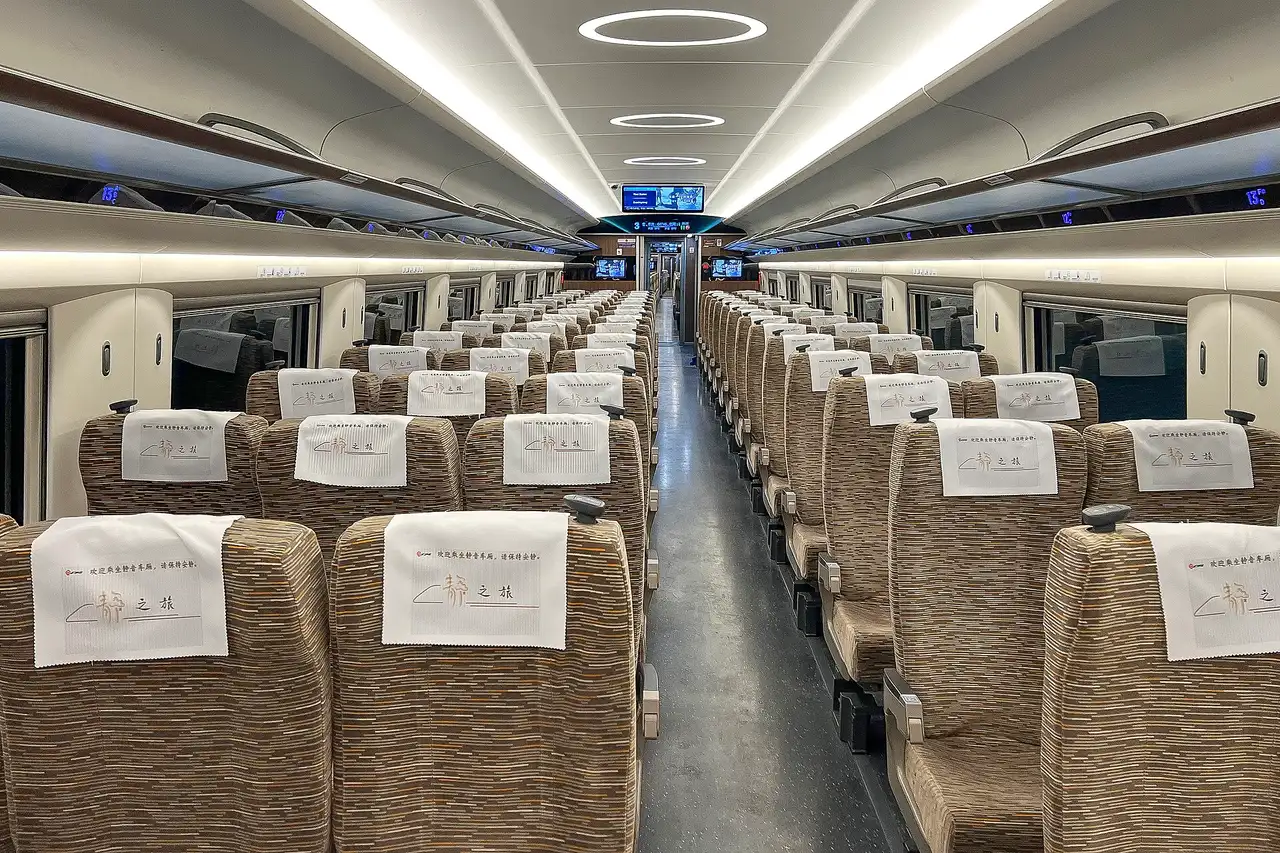
Under China Railway’s passenger regulations effective from 1 June 2026, checked on 15 October 2026, an ordinary adult may carry 20 kg free. For EMU trains, an item’s combined dimensions are limited to 130 cm, with an individual item weighing no more than 20 kg. This is luggage you bring aboard and manage yourself, rather than a bag handed over to an airline for carriage in the hold.
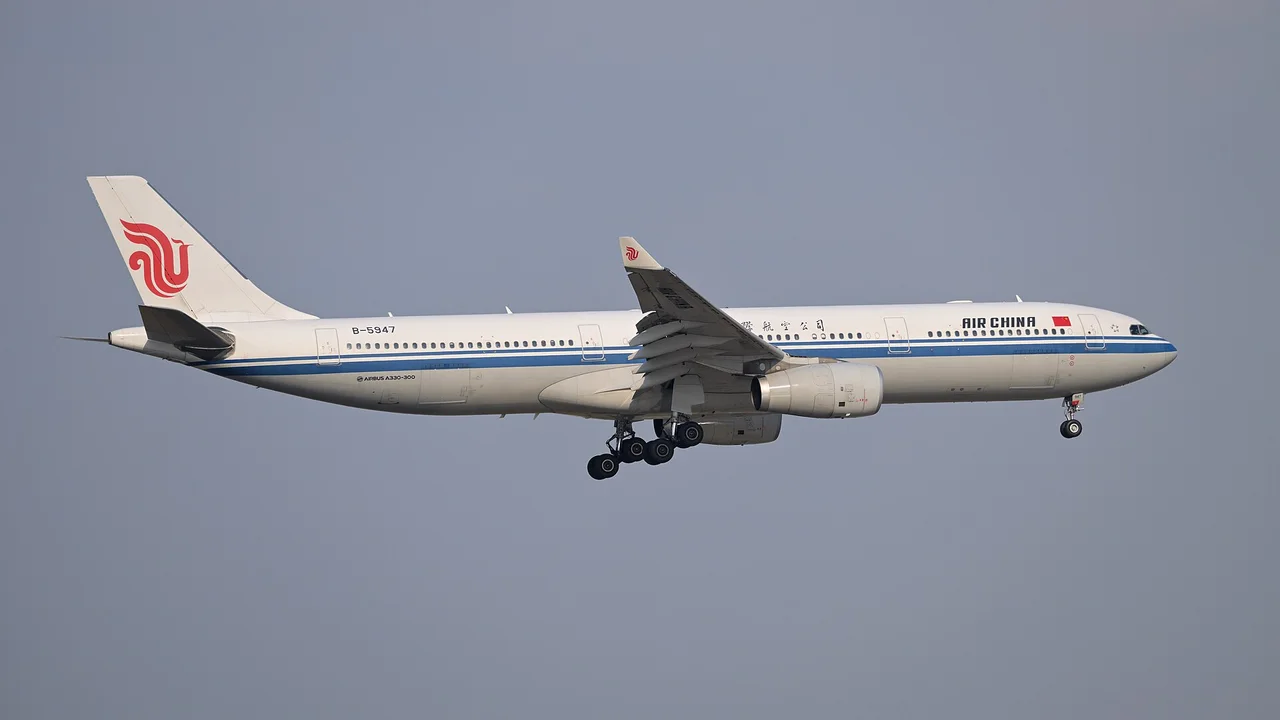
Air China’s economy cabin allowance, checked on 16 October 2026, is one piece up to 5 kg and no larger than 55 × 40 × 20 cm. This is an Air China example, not a rule for every airline operating in China. Read the checked-baggage entitlement on the actual fare separately, including the operating carrier if the booking involves another airline.
That’s the train’s edge for luggage. Air China’s cabin bag, 55 × 40 × 20 cm, adds up to 115 cm, so anything that fits an airline cabin fits the railway’s 130 cm rule with room to spare, and a case somewhat bigger than a cabin bag, which would go in the hold on a plane, can still travel with you on the train if it stays within 130 cm and 20 kg.
Air China wants power banks and spare batteries in the cabin with their terminals protected; check its baggage page for the current limits on your particular devices. The railway keeps its own list of restricted items, so check that separately for the train.
Check-in deadlines end a step, they aren’t an arrival time
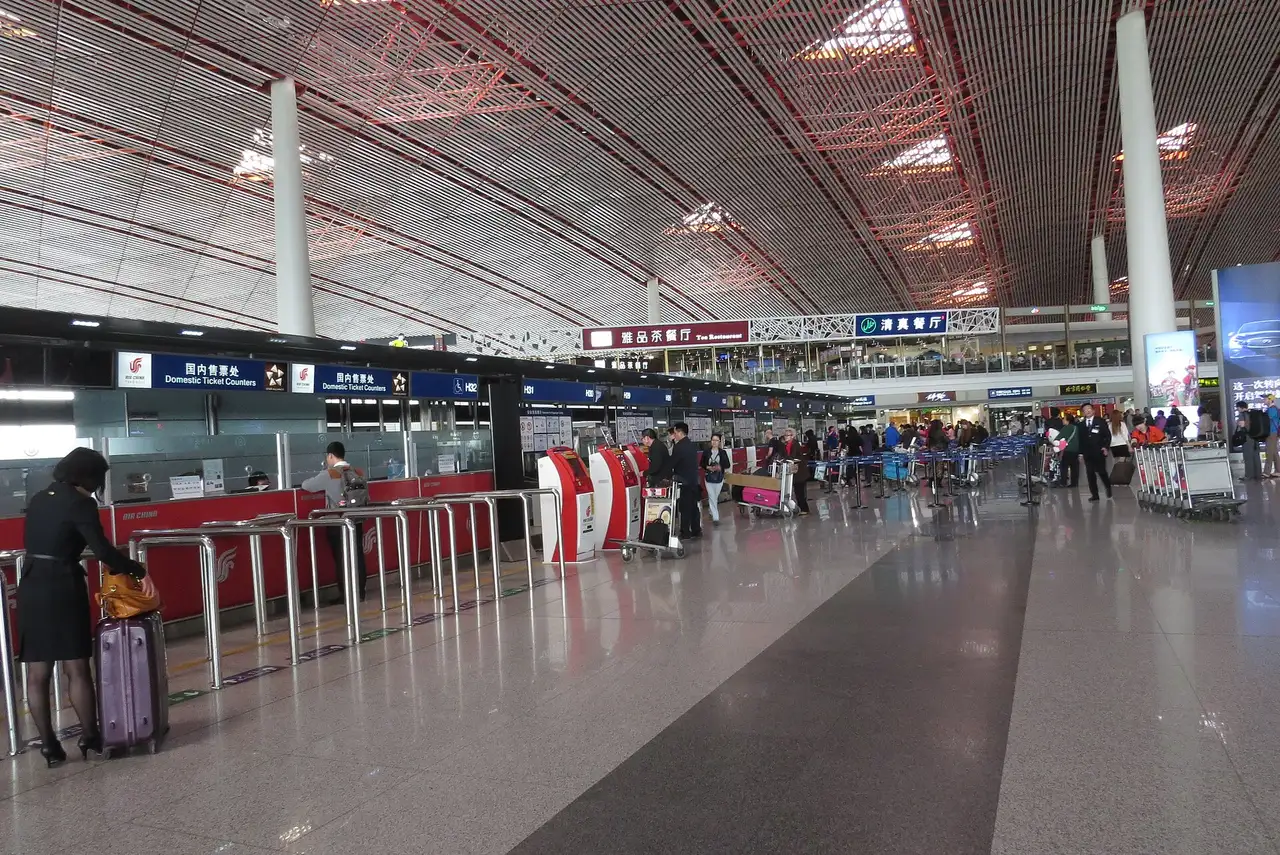
Air China’s notice dated 29 May 2026, effective from 1 June and checked again on 7 November 2026, illustrates the distinction. For its named Air China-operated express departures from Beijing Capital Terminal 3 to Shanghai, Guangzhou and Shenzhen, passengers with checked baggage or a special-service request must complete check-in by 40 minutes before the scheduled departure.
For eligible passengers on those flights with no hold bag and no special services, the notice requires check-in and security to be done and the passenger at the gate 15 minutes before departure. So with hand luggage only, the cut-off is at the gate, 15 minutes out; with a hold bag, it’s at the check-in desk, 40 minutes out, with security still to come.
On the railway, ticket checks close before departure at a time each station sets, and security comes first; the 12306 guide covers the station side.
Changes: the train’s quiet advantage
Changes favour the train. China Railway lets you change a ticket once, with no change fee more than 48 hours before departure, paying any fare difference and as long as a train is on sale; the 12306 guide has the full scale of change and refund fees closer to the day. A flight’s change fee and refund terms depend on the fare you buy, and “economy” on its own tells you nothing about them, so read those two lines before you count the plane as the flexible option.
Train or plane: the short version
- Take the train when it’s about as quick as the flight plus the airport at both ends, when you’re carrying more than a cabin bag, or when your dates might move.
- Take the plane when the train would take most of a day, as it does from Beijing West or Shanghai Hongqiao to Guilin (Guilin guide), and your fare includes the bag you need.
- Either way, save the confirmation offline with the full station or terminal name (China travel apps) and send that, not the city, to whoever is meeting you.
Read also

Transport · 8 min read
Beijing Subway for Tourists: Cards, Gates and Stations
Verified · 8 November 2026Use a foreign bank card, a single ticket or BEIJING PASS on the metro, avoid mixing payment devices and find the right line for your railway station.

Transport · 7 min read
Beijing to Datong Train: 1h46-2h36, ¥148-170 (2026)
Verified · 8 November 2026Beijing North to Datong South takes 1h46-2h36, second class ¥148-170 on 10 November 2026. One day works for Yungang; the Hanging Temple needs a night.

Transport · 8 min read
Beijing to Xi’an by Train: Day Seats or a Sleeper?
Verified · 7 November 2026Compare direct daytime and overnight trains, the stations each uses, passport boarding and an overnight stop in Pingyao between Beijing and Xi’an.

Transport · 7 min read
China Train Classes: Is the Upgrade Worth It?
Verified · 7 November 2026Compare second, first and business class by seating, a dated fare example, family prices and baggage rules before paying to upgrade your group.